Department of Organismic and Evolutionary Biology, Museum of Comparative Zoology, Cambridge, Massachusetts 02138, USA.
Nature. 2010 Feb 11;463(7282):801-3. doi: 10.1038/nature08736. Epub 2010 Jan 20.
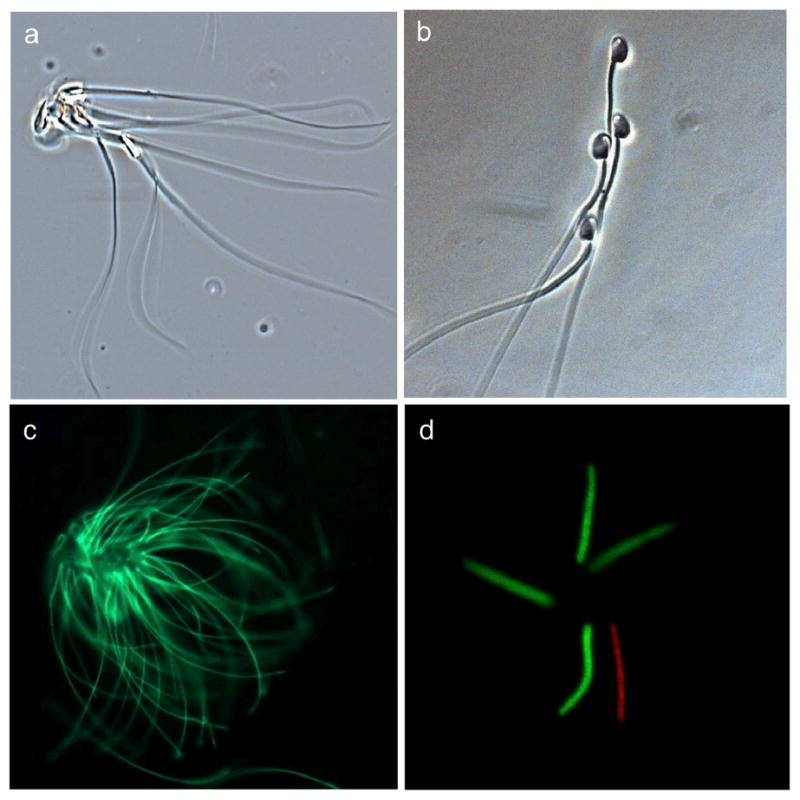
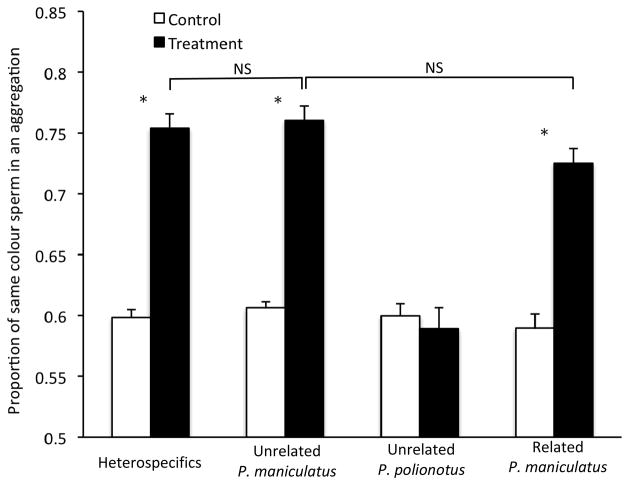
Among the extraordinary adaptations driven by sperm competition is the cooperative behaviour of spermatozoa. By forming cooperative groups, sperm can increase their swimming velocity and thereby gain an advantage in intermale sperm competition. Accordingly, selection should favour cooperation of the most closely related sperm to maximize fitness. Here we show that sperm of deer mice (genus Peromyscus) form motile aggregations, then we use this system to test predictions of sperm cooperation. We find that sperm aggregate more often with conspecific than heterospecific sperm, suggesting that individual sperm can discriminate on the basis of genetic relatedness. Next, we provide evidence that the cooperative behaviour of closely related sperm is driven by sperm competition. In a monogamous species lacking sperm competition, Peromyscus polionotus, sperm indiscriminately group with unrelated conspecific sperm. In contrast, in the highly promiscuous deer mouse, Peromyscus maniculatus, sperm are significantly more likely to aggregate with those obtained from the same male than with sperm from an unrelated conspecific donor. Even when we test sperm from sibling males, we continue to see preferential aggregations of related sperm in P. maniculatus. These results suggest that sperm from promiscuous deer mice discriminate among relatives and thereby cooperate with the most closely related sperm, an adaptation likely to have been driven by sperm competition.
在由精子竞争驱动的非凡适应中,有一种精子的合作行为。通过形成合作群体,精子可以提高游泳速度,从而在雄性间的精子竞争中获得优势。因此,选择应该有利于最密切相关的精子合作,以最大限度地提高适应性。在这里,我们展示了鹿鼠(Peromyscus 属)的精子形成游动的聚集物,然后我们使用这个系统来测试精子合作的预测。我们发现,精子与同种精子的聚集比与异源精子的聚集更频繁,这表明个体精子可以基于遗传亲缘关系进行区分。接下来,我们提供了证据表明,近亲精子的合作行为是由精子竞争驱动的。在没有精子竞争的一夫一妻制物种中,Peromyscus polionotus 的精子会与无关的同种精子随机聚集。相比之下,在高度滥交的鹿鼠 Peromyscus maniculatus 中,精子与来自同一雄性的精子比与来自无关的同种供体的精子更有可能聚集。即使我们测试来自同卵雄性的精子,我们仍然可以看到 P. maniculatus 中近亲精子的优先聚集。这些结果表明,来自滥交鹿鼠的精子可以区分亲属,并与最密切相关的精子合作,这种适应可能是由精子竞争驱动的。