Department of Microbiology and Immunology, University of Texas Medical Branch, Galveston, Texas, United States of America.
PLoS One. 2010 Jan 15;5(1):e8729. doi: 10.1371/journal.pone.0008729.
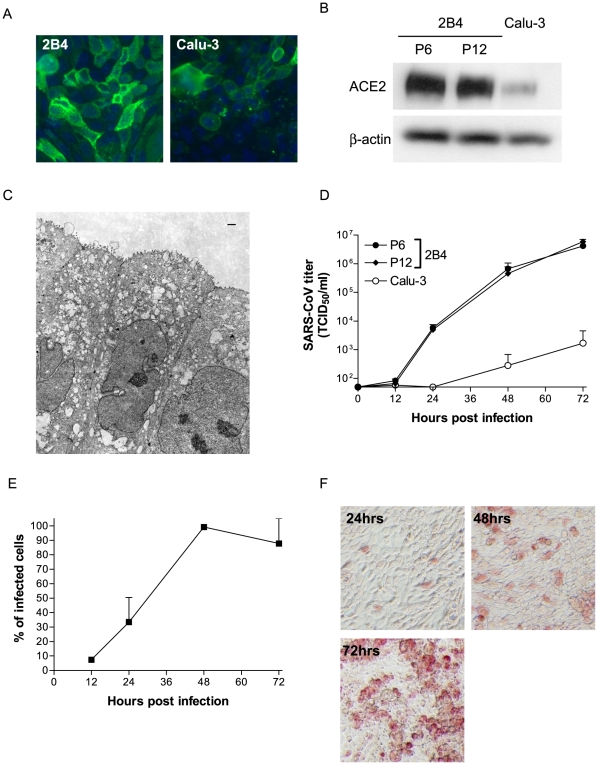
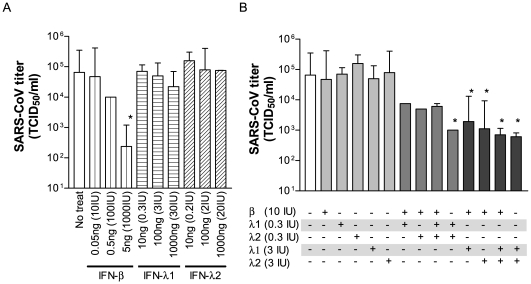
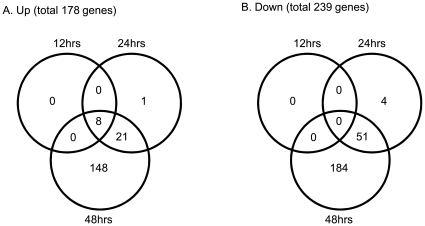
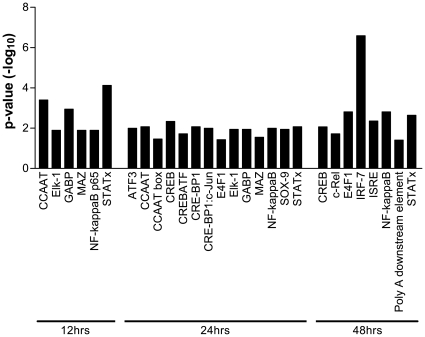
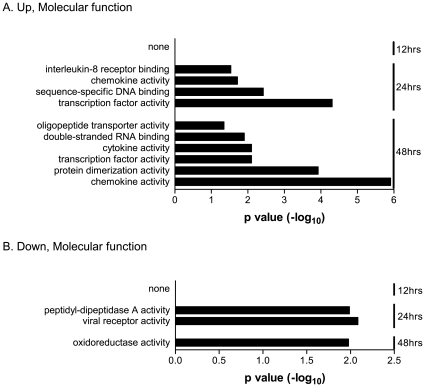
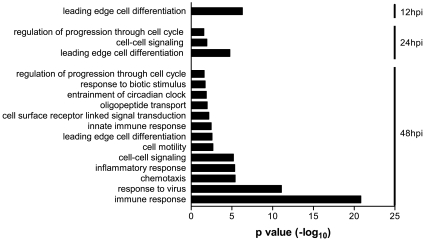
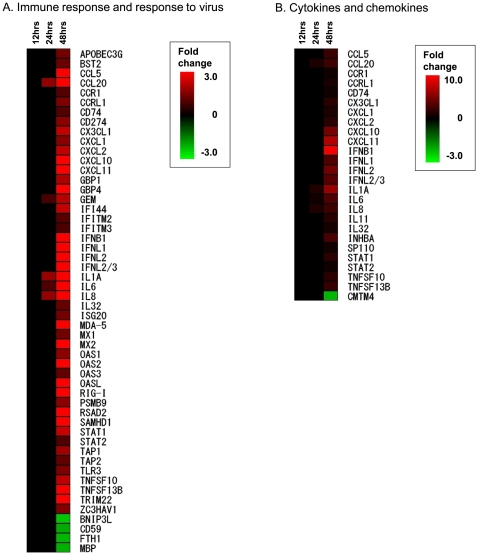
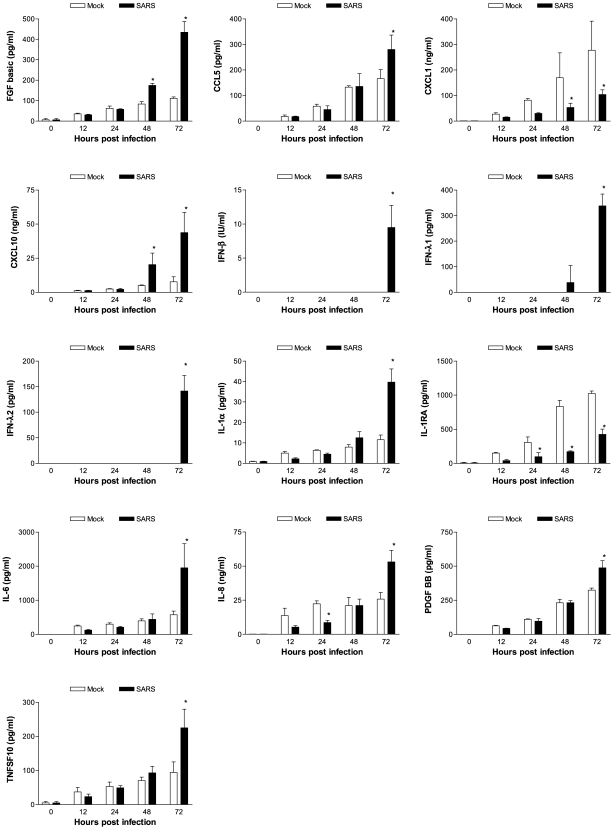
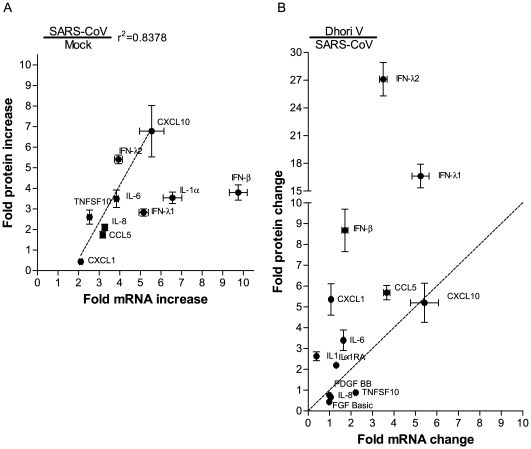
Human lung epithelial cells are likely among the first targets to encounter invading severe acute respiratory syndrome-associated coronavirus (SARS-CoV). Not only can these cells support the growth of SARS-CoV infection, but they are also capable of secreting inflammatory cytokines to initiate and, eventually, aggravate host innate inflammatory responses, causing detrimental immune-mediated pathology within the lungs. Thus, a comprehensive evaluation of the complex epithelial signaling to SARS-CoV is crucial for paving the way to better understand SARS pathogenesis. Based on microarray-based functional genomics, we report here the global gene response of 2B4 cells, a cloned bronchial epithelial cell line derived from Calu-3 cells. Specifically, we found a temporal and spatial activation of nuclear factor (NF)kappaB, activator protein (AP)-1, and interferon regulatory factor (IRF)-3/7 in infected 2B4 cells at 12-, 24-, and 48-hrs post infection (p.i.), resulting in the activation of many antiviral genes, including interferon (IFN)-beta, -lambdas, inflammatory mediators, and many IFN-stimulated genes (ISGs). We also showed, for the first time, that IFN-beta and IFN-lambdas were capable of exerting previously unrecognized, non-redundant, and complementary abilities to limit SARS-CoV replication, even though their expression could not be detected in infected 2B4 bronchial epithelial cells until 48 hrs p.i. Collectively, our results highlight the mechanics of the sequential events of antiviral signaling pathway/s triggered by SARS-CoV in bronchial epithelial cells and identify novel cellular targets for future studies, aiming at advancing strategies against SARS.
人肺上皮细胞可能是最早接触入侵性严重急性呼吸综合征相关冠状病毒 (SARS-CoV) 的靶细胞之一。这些细胞不仅可以支持 SARS-CoV 感染的生长,还能够分泌炎症细胞因子,启动并最终加重宿主固有炎症反应,导致肺部免疫介导的损伤性病理变化。因此,全面评估 SARS-CoV 复杂的上皮信号转导对于更好地理解 SARS 发病机制至关重要。基于基于微阵列的功能基因组学,我们在此报告了克隆支气管上皮细胞系 2B4 细胞对 SARS-CoV 的全基因反应。具体来说,我们发现感染后 12、24 和 48 小时,NF-κB、激活蛋白 (AP)-1 和干扰素调节因子 (IRF)-3/7 在感染的 2B4 细胞中呈时空激活,导致许多抗病毒基因的激活,包括干扰素 (IFN)-β、-λ、炎症介质和许多 IFN 刺激基因 (ISGs)。我们还首次表明,IFN-β和 IFN-λs 能够发挥以前未被认识到的、非冗余和互补的能力来限制 SARS-CoV 的复制,尽管它们的表达在感染的 2B4 支气管上皮细胞中直到 48 小时才被检测到。总之,我们的结果强调了 SARS-CoV 在支气管上皮细胞中触发的抗病毒信号通路/的顺序事件的机制,并确定了未来研究的新的细胞靶标,旨在推进针对 SARS 的策略。