Division of Neurology, The Children's Hospital of Philadelphia, Department of Neurology, University of Pennsylvania, Philadelphia, PA 19104, USA.
Neurobiol Dis. 2010 May;38(2):226-36. doi: 10.1016/j.nbd.2010.01.010. Epub 2010 Jan 21.
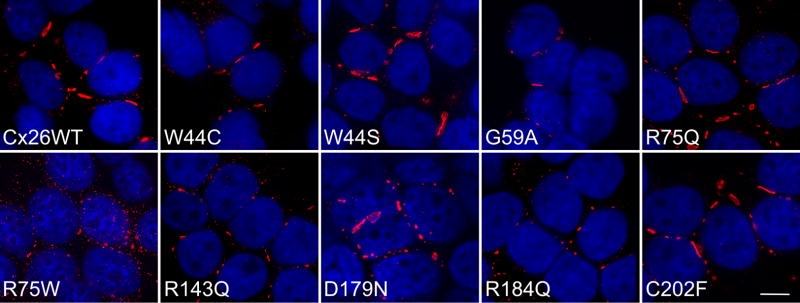
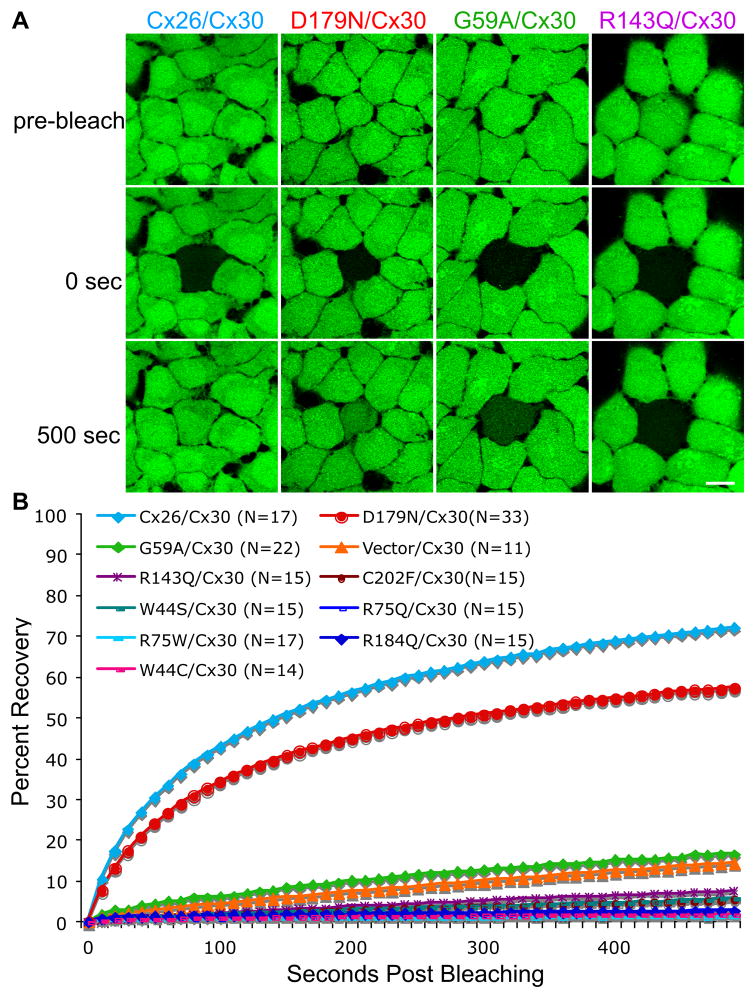
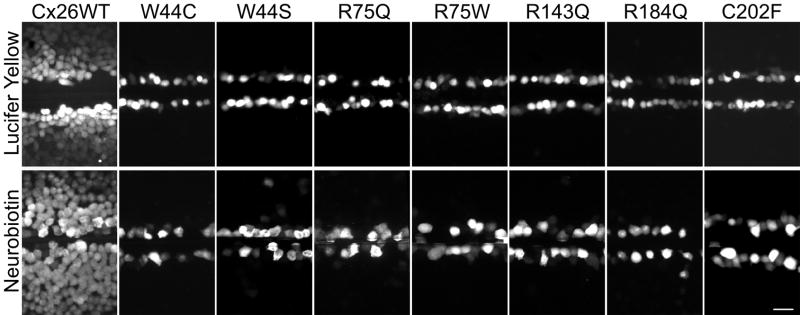
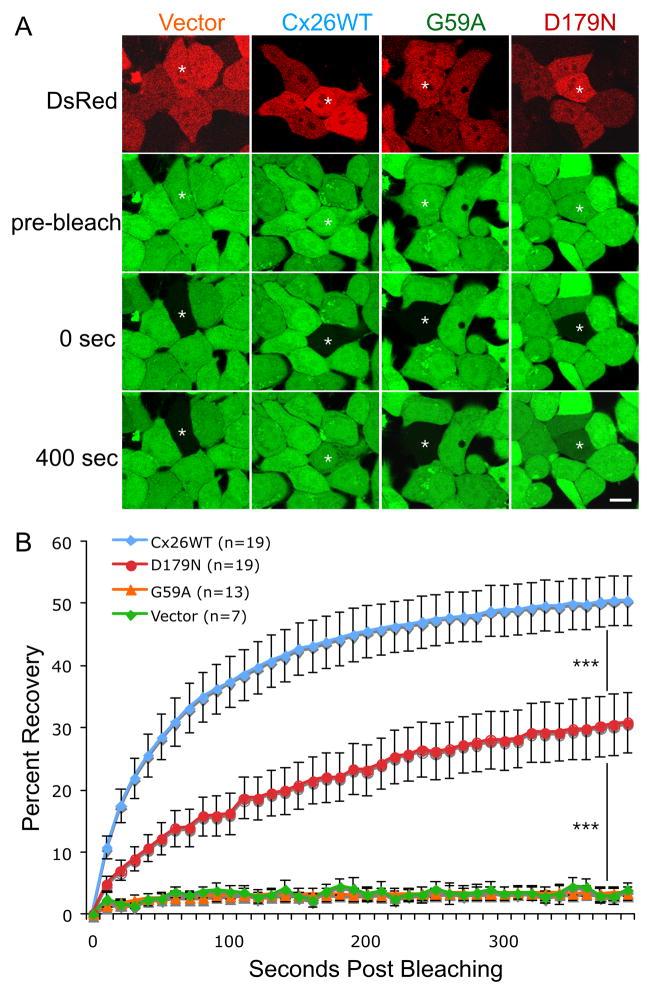
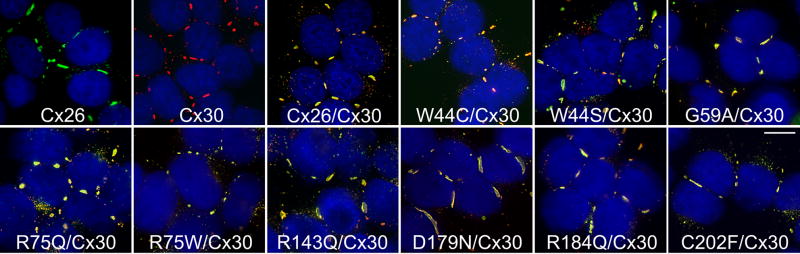
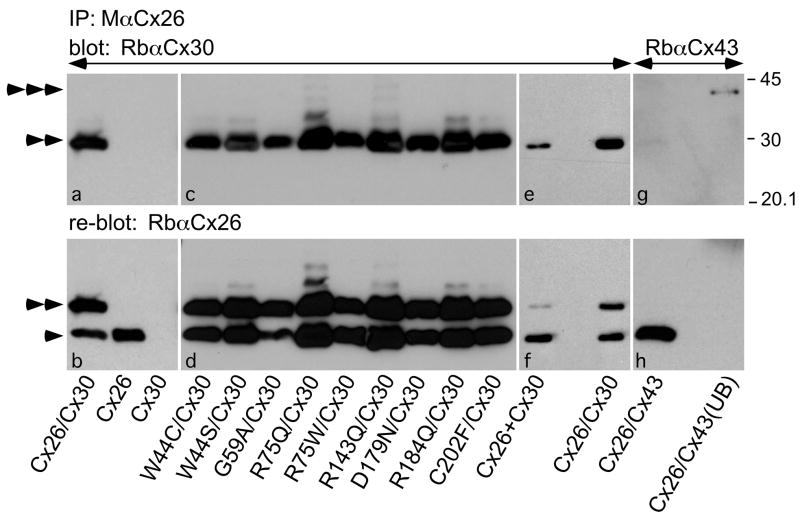
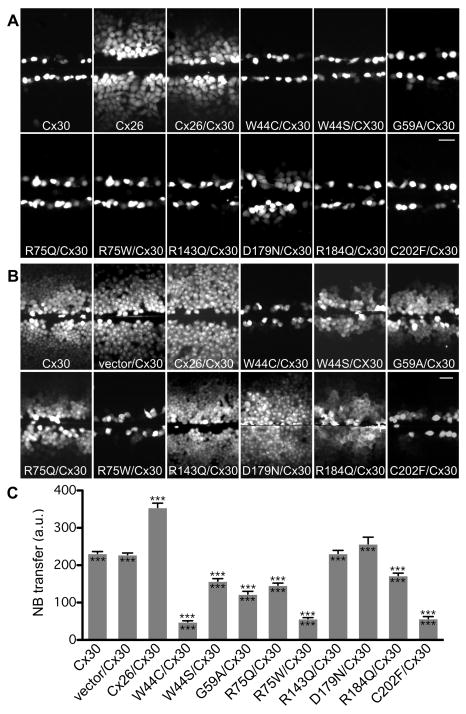
Dominant mutations in GJB2, the gene encoding the human gap junction protein connexin26 (Cx26), cause hearing loss. We investigated whether dominant Cx26 mutants interact directly with Cx30. HeLa cells stably expressing nine dominant Cx26 mutants, six associated with non-syndromic hearing loss (W44C, W44S, R143Q, D179N, R184Q and C202F) and three associated with hearing loss and palmoplantar keratoderma (G59A, R75Q and R75W), individually or together with Cx30, were analyzed by immunocytochemistry, co-immunoprecipitation, and functional assays (scrape-loading and/or fluorescence recovery after photobleaching). When expressed alone, all mutants formed gap junction plaques, but with impaired intercellular dye transfer. When expressed with Cx30, all mutants co-localized and co-immunoprecipitated with Cx30, indicating they likely co-assembled into heteromers. Furthermore, 8/9 Cx26 mutants inhibited the transfer of neurobiotin or calcein, indicating that these Cx26 mutants have trans-dominant effects on Cx30, an effect that may contribute to the pathogenesis of hearing loss.
GJB2 基因编码的人类缝隙连接蛋白 connexin26(Cx26)的显性突变会导致听力损失。我们研究了显性 Cx26 突变体是否与 Cx30 直接相互作用。通过免疫细胞化学、共免疫沉淀和功能测定(划痕加载和/或光漂白后荧光恢复)分析了稳定表达 9 种显性 Cx26 突变体(6 种与非综合征性听力损失相关:W44C、W44S、R143Q、D179N、R184Q 和 C202F,3 种与听力损失和掌跖角化症相关:G59A、R75Q 和 R75W)的单独或与 Cx30 一起表达的 HeLa 细胞。当单独表达时,所有突变体均形成缝隙连接斑,但细胞间染料转移受损。当与 Cx30 共表达时,所有突变体均与 Cx30 共定位和共免疫沉淀,表明它们可能共同组装成异源二聚体。此外,8/9 种 Cx26 突变体抑制了神经生物素或钙黄绿素的转移,表明这些 Cx26 突变体对 Cx30 具有跨显性作用,这种作用可能有助于听力损失的发病机制。