Yasarbas S Suheda, Inal Ece, Yildirim M Azra, Dubrac Sandrine, Lamartine Jérôme, Mese Gulistan
Izmir Institute of Technology, Faculty of Science, Department of Molecular Biology and Genetics, Izmir, Turkiye.
Department of Dermatology, Venereology and Allergology, Medical University of Innsbruck, Innsbruck, Austria.
Front Physiol. 2024 May 7;15:1346971. doi: 10.3389/fphys.2024.1346971. eCollection 2024.
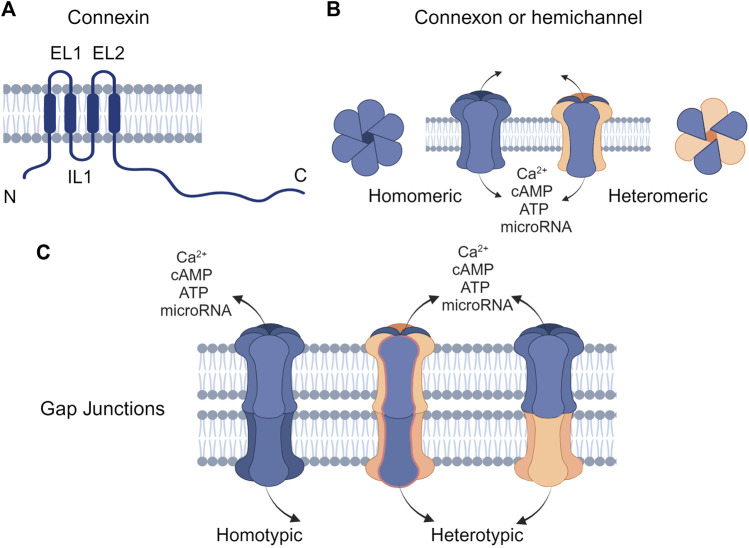
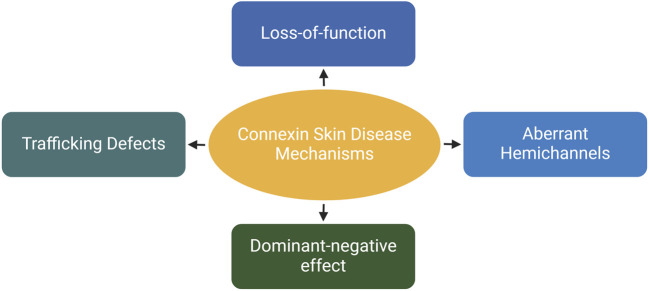
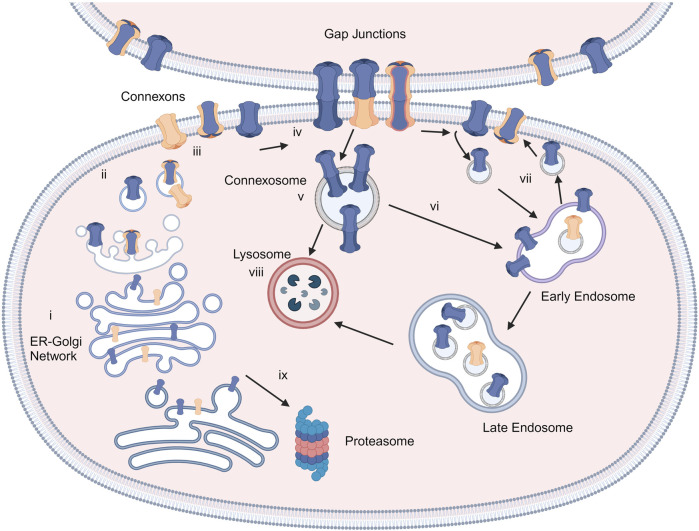
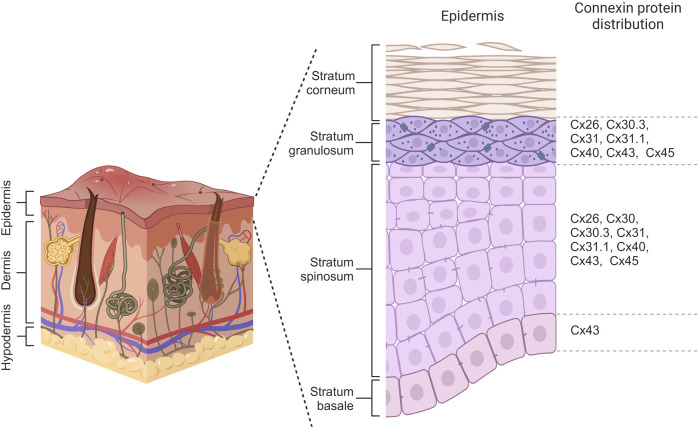
The epidermis, the outermost layer of the skin, serves as a protective barrier against external factors. Epidermal differentiation, a tightly regulated process essential for epidermal homeostasis, epidermal barrier formation and skin integrity maintenance, is orchestrated by several players, including signaling molecules, calcium gradient and junctional complexes such as gap junctions (GJs). GJ proteins, known as connexins facilitate cell-to-cell communication between adjacent keratinocytes. Connexins can function as either hemichannels or GJs, depending on their interaction with other connexons from neighboring keratinocytes. These channels enable the transport of metabolites, cAMP, microRNAs, and ions, including Ca, across cell membranes. At least ten distinct connexins are expressed within the epidermis and mutations in at least five of them has been linked to various skin disorders. Connexin mutations may cause aberrant channel activity by altering their synthesis, their gating properties, their intracellular trafficking, and the assembly of hemichannels and GJ channels. In addition to mutations, connexin expression is dysregulated in other skin conditions including psoriasis, chronic wound and skin cancers, indicating the crucial role of connexins in skin homeostasis. Current treatment options for conditions with mutant or altered connexins are limited and primarily focus on symptom management. Several therapeutics, including non-peptide chemicals, antibodies, mimetic peptides and allele-specific small interfering RNAs are promising in treating connexin-related skin disorders. Since connexins play crucial roles in maintaining epidermal homeostasis as shown with linkage to a range of skin disorders and cancer, further investigations are warranted to decipher the molecular and cellular alterations within cells due to mutations or altered expression, leading to abnormal proliferation and differentiation. This would also help characterize the roles of each isoform in skin homeostasis, in addition to the development of innovative therapeutic interventions. This review highlights the critical functions of connexins in the epidermis and the association between connexins and skin disorders, and discusses potential therapeutic options.
表皮作为皮肤的最外层,充当抵御外部因素的保护屏障。表皮分化是一个严格调控的过程,对表皮稳态、表皮屏障形成和皮肤完整性维持至关重要,由多种因素协调,包括信号分子、钙梯度和连接复合体如间隙连接(GJs)。间隙连接蛋白,即连接蛋白,促进相邻角质形成细胞之间的细胞间通讯。连接蛋白可作为半通道或间隙连接发挥作用,这取决于它们与相邻角质形成细胞的其他连接子的相互作用。这些通道能够跨细胞膜转运代谢物、环磷酸腺苷(cAMP)、微小核糖核酸(microRNAs)以及包括钙在内的离子。表皮内至少表达十种不同的连接蛋白,其中至少五种的突变与各种皮肤疾病相关。连接蛋白突变可能通过改变其合成、门控特性、细胞内运输以及半通道和间隙连接通道的组装而导致异常通道活性。除了突变外,连接蛋白的表达在其他皮肤疾病中也失调,包括银屑病、慢性伤口和皮肤癌,这表明连接蛋白在皮肤稳态中起关键作用。目前针对连接蛋白突变或改变的疾病的治疗选择有限,主要侧重于症状管理。几种治疗方法,包括非肽类化学物质、抗体、模拟肽和等位基因特异性小干扰RNA,在治疗与连接蛋白相关的皮肤疾病方面具有前景。由于连接蛋白在维持表皮稳态中起关键作用,如与一系列皮肤疾病和癌症相关所示,有必要进一步研究以破译细胞内由于突变或表达改变导致的分子和细胞变化,这些变化会导致异常增殖和分化。这除了有助于开发创新治疗干预措施外,还将有助于确定每种异构体在皮肤稳态中的作用。本综述强调了连接蛋白在表皮中的关键功能以及连接蛋白与皮肤疾病之间的关联,并讨论了潜在的治疗选择。