Samuel Lunenfeld Research Institute, Mt. Sinai Hospital, University of Toronto, Toronto, Ontario, Canada.
Diabetes. 2010 Apr;59(4):1063-73. doi: 10.2337/db09-0955. Epub 2010 Jan 22.
Glucagon-like peptide-1 (7-36)amide (GLP-1) is cleaved by dipeptidyl peptidase-4 (DPP-4) to GLP-1 (9-36)amide. We examined whether chemical inhibition or genetic elimination of DPP-4 activity affects cardiovascular function in normoglycemic and diabetic mice after experimental myocardial infarction.
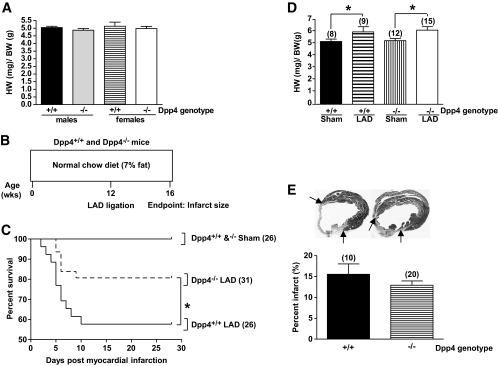
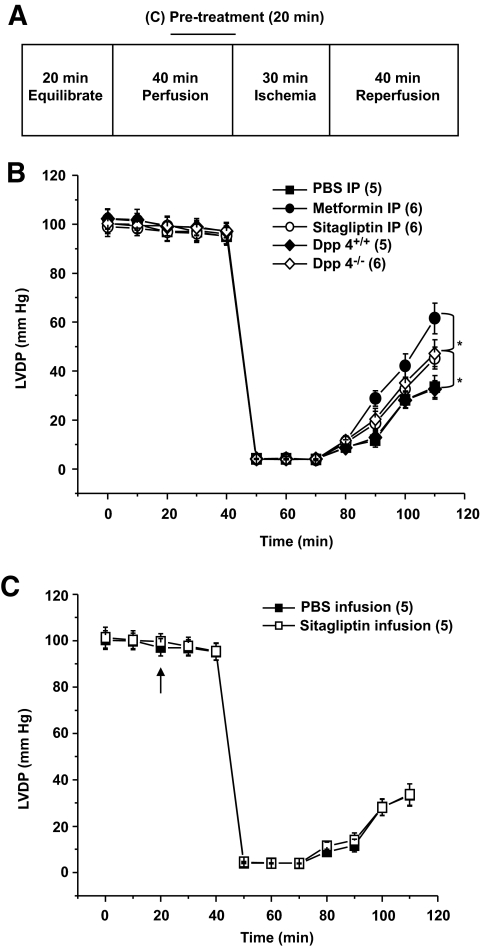
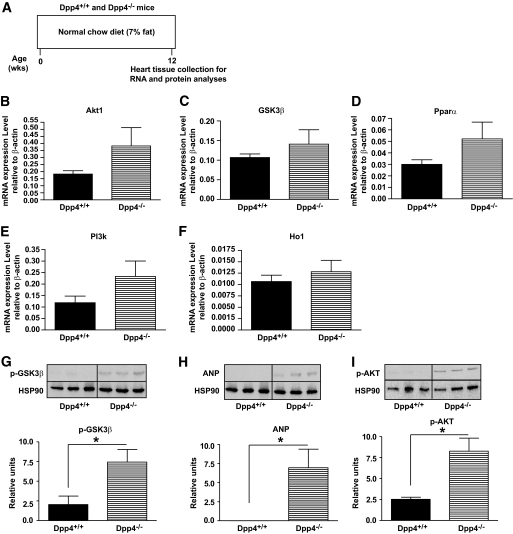
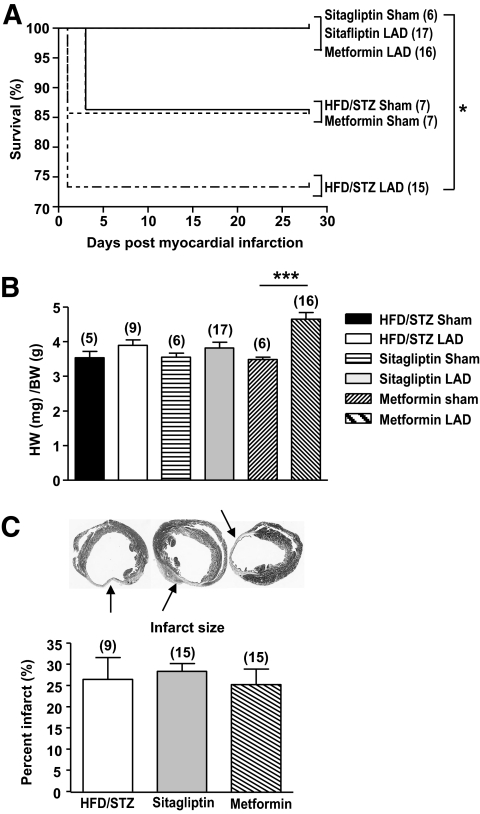
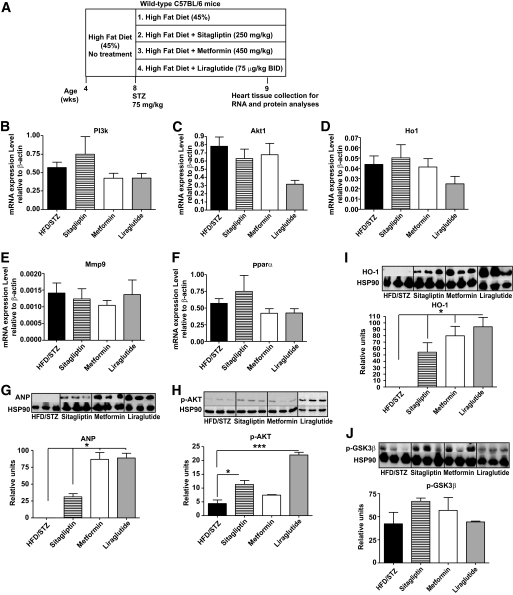
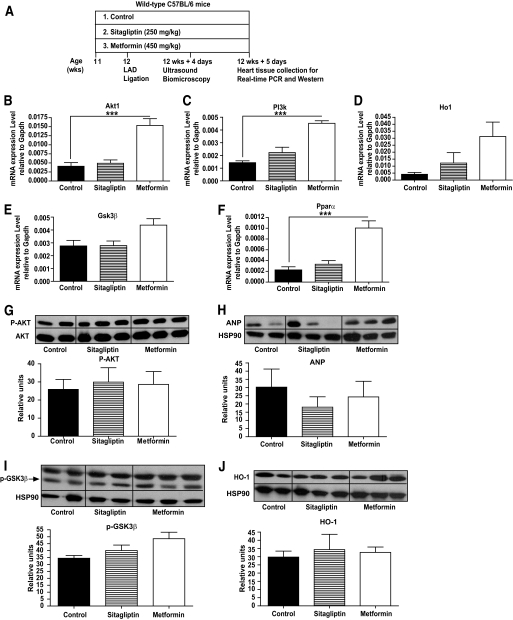
Cardiac structure and function was assessed by hemodynamic monitoring and echocardiography in DPP-4 knockout (Dpp4(-/-)) mice versus wild-type (Dpp4(+/+)) littermate controls and after left anterior descending (LAD) coronary artery ligation-induced myocardial infarction (MI). Effects of sustained DPP-4 inhibition with sitagliptin versus treatment with metformin were ascertained after experimental MI in a high-fat diet-streptozotocin model of murine diabetes. Functional recovery from ischemia-reperfusion (I/R) injury was measured in isolated hearts from Dpp4(-/-) versus Dpp4(+/+) littermates and from normoglycemic wild-type (WT) mice treated with sitagliptin or metformin. Cardioprotective signaling in the murine heart was examined by RT-PCR and Western blot analyses.
Dpp4(-/-) mice exhibited normal indexes of cardiac structure and function. Survival post-MI was modestly improved in normoglycemic Dpp4(-/-) mice. Increased cardiac expression of phosphorylated AKT (pAKT), pGSK3beta, and atrial natriuretic peptide (ANP) was detected in the nonischemic Dpp4(-/-) heart, and HO-1, ANP, and pGSK3beta proteins were induced in nonischemic hearts from diabetic mice treated with sitagliptin or metformin. Sitagliptin and metformin treatment of wild-type diabetic mice reduced mortality after myocardial infarction. Sitagliptin improved functional recovery after I/R injury ex vivo in WT mice with similar protection from I/R injury also manifest in hearts from Dpp4(-/-) versus Dpp4(+/+) mice.
Genetic disruption or chemical inhibition of DPP-4 does not impair cardiovascular function in the normoglycemic or diabetic mouse heart.
胰高血糖素样肽-1(7-36)酰胺(GLP-1)被二肽基肽酶-4(DPP-4)切割成 GLP-1(9-36)酰胺。我们研究了在实验性心肌梗死后,正常血糖和糖尿病小鼠中,DPP-4 活性的化学抑制或遗传消除是否会影响心血管功能。
通过血流动力学监测和超声心动图评估 DPP-4 基因敲除(Dpp4(-/-))小鼠与野生型(Dpp4(+/+))同窝对照小鼠以及左前降支(LAD)冠状动脉结扎诱导心肌梗死(MI)后的心脏结构和功能。在高脂肪饮食-链脲佐菌素诱导的糖尿病小鼠模型中,通过实验性 MI 后持续给予西他列汀抑制 DPP-4 与给予二甲双胍的作用进行了评估。通过 Dpp4(-/-)与 Dpp4(+/+)同窝对照和给予西他列汀或二甲双胍的正常血糖野生型(WT)小鼠的离体心脏测量缺血再灌注(I/R)损伤后的功能恢复。通过 RT-PCR 和 Western blot 分析检测小鼠心脏中的心脏保护信号。
Dpp4(-/-)小鼠的心脏结构和功能正常指标正常。正常血糖 Dpp4(-/-)小鼠的 MI 后存活率略有提高。在非缺血性 Dpp4(-/-)心脏中检测到磷酸化 AKT(pAKT)、pGSK3beta 和心钠肽(ANP)的心脏表达增加,并且在给予西他列汀或二甲双胍的糖尿病小鼠的非缺血性心脏中诱导 HO-1、ANP 和 pGSK3beta 蛋白。西他列汀和二甲双胍治疗野生型糖尿病小鼠可降低心肌梗死后的死亡率。西他列汀可改善 WT 小鼠的 I/R 损伤后的体外功能恢复,并且在 Dpp4(-/-)与 Dpp4(+/+)小鼠的心脏中也具有类似的 I/R 损伤保护作用。
DPP-4 的遗传缺失或化学抑制不会损害正常血糖或糖尿病小鼠心脏的心血管功能。