Macarie C, Stoian Ioana, Dermengiu D, Barbarii Ligia, Piser Ileana Tepes, Chioncel O, Carp A, Stoian I
Prof. Dr. C.C. Iliescu National Institute of Cardiovascular Diseases, Bucharest, Romania.
J Med Life. 2009 Oct-Dec;2(4):361-72.
Electrocardiograms in elite endurance athletes sometimes show bizarre patterns suggestive of inherited channelopathies (Brugada syndrome, long QTc, catecholaminergic polymorphic ventricular tachycardia) and cardiomyopathies (arrhythmogenic right ventricular cardiomyopathy, hypertrophic cardiomyopathy) responsible for unexpected sudden cardiac death. Among other methods, genetic analyses are required for correct diagnosis.
To correlate 12-lead electrocardiographic patterns suggestive of inherited channelopathies and cardiomyopathies to specific genetic analyses.
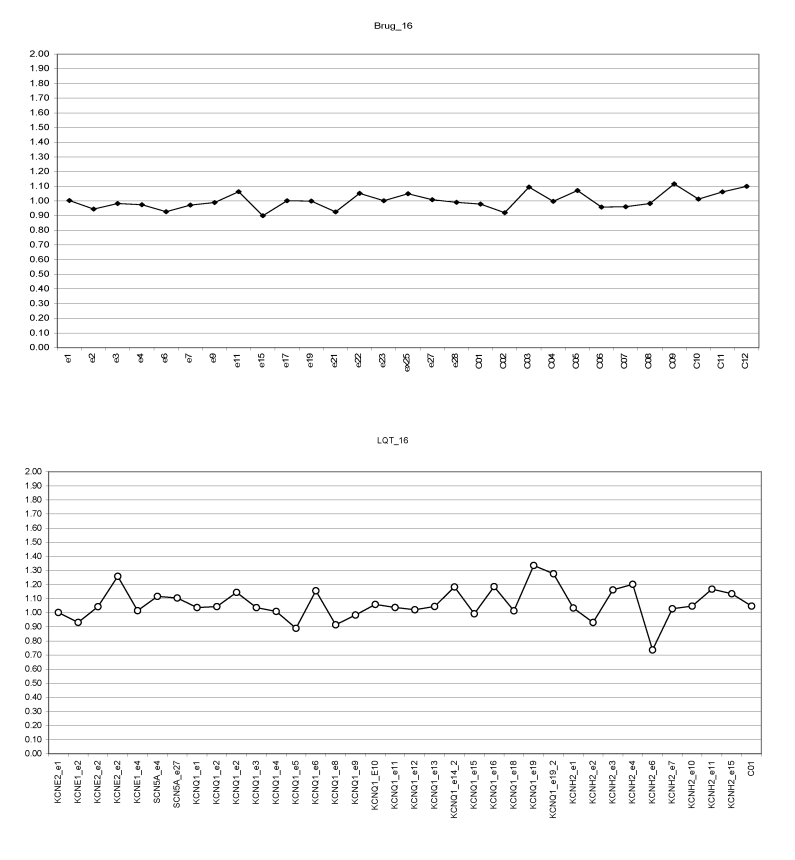
Prospective study (2004-2007) of screening 12-lead ECG tracings in standard position and higher intercostal spaces V1 to V3 precordial leads, performed in athletes and normal sedentary subjects aged match. Genetic analyses of subjects with ECG abnormalities suggested inherited channelopathies and cardiomyopathies.
All cardiologic exams and electrocardiograms were performed at "Prof. Dr. C.C. Iliescu" National Institute of Cardiovascular Diseases (Bucharest, Romania). The genetic studies were done at "Mina Minovici" National Institute of Forensic Medicine (Bucharest, Romania).
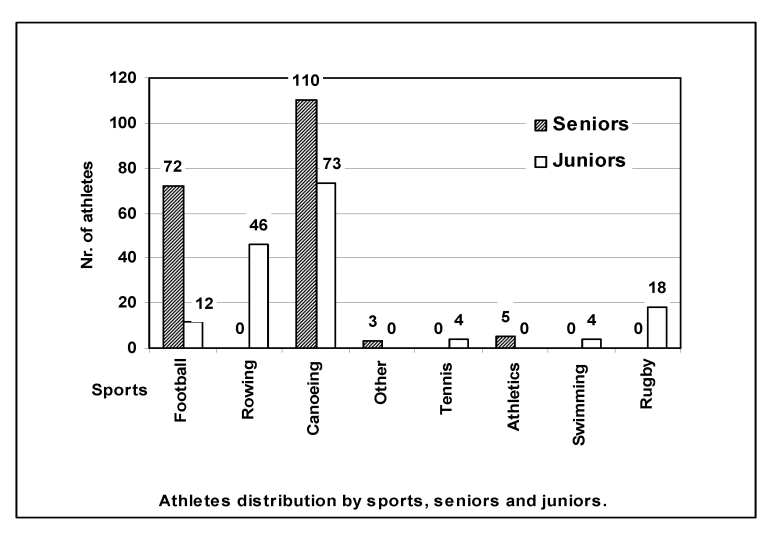
347 elite endurance athletes (seniors--190, juniors--157), mean age of 20; 200 subjects mean age of 21, belonging to the control group of 505 normal sedentary population.
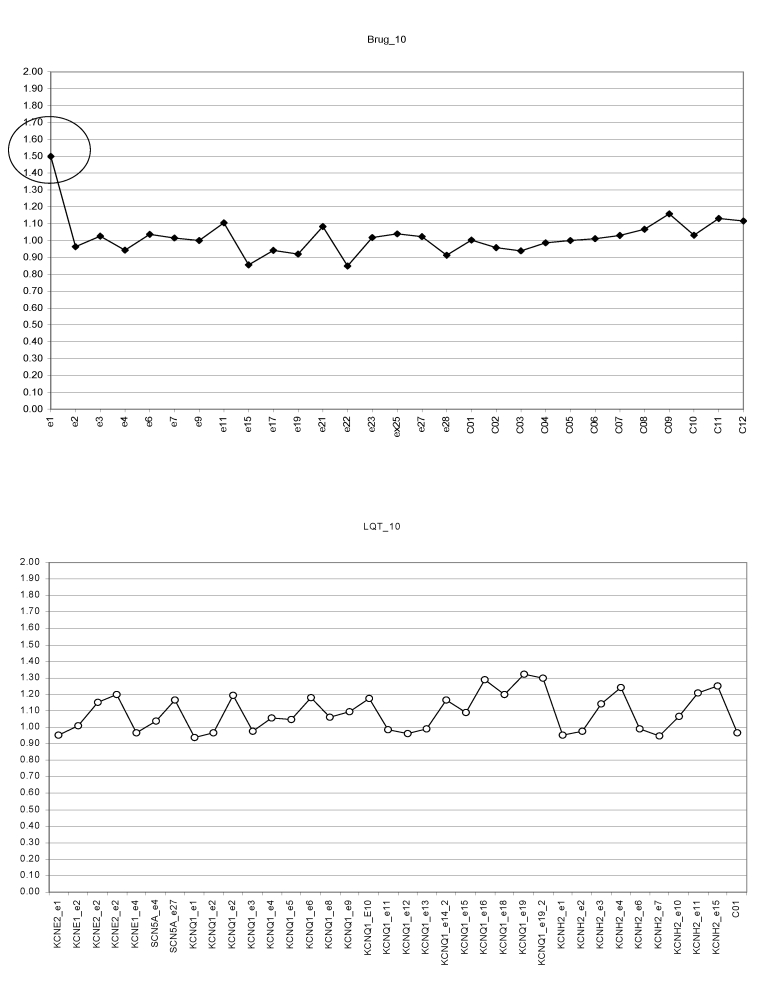
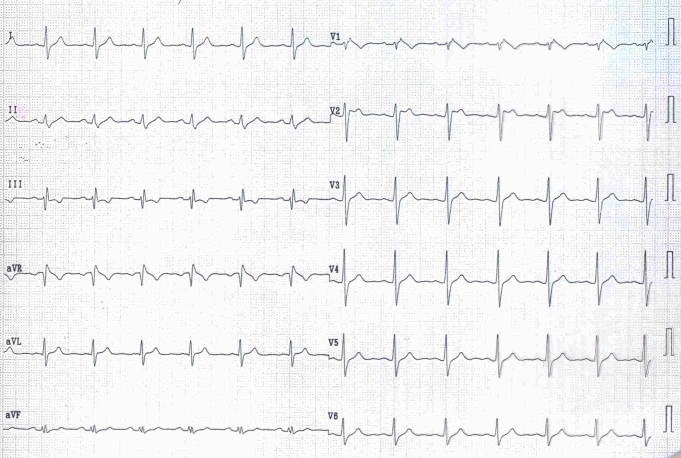
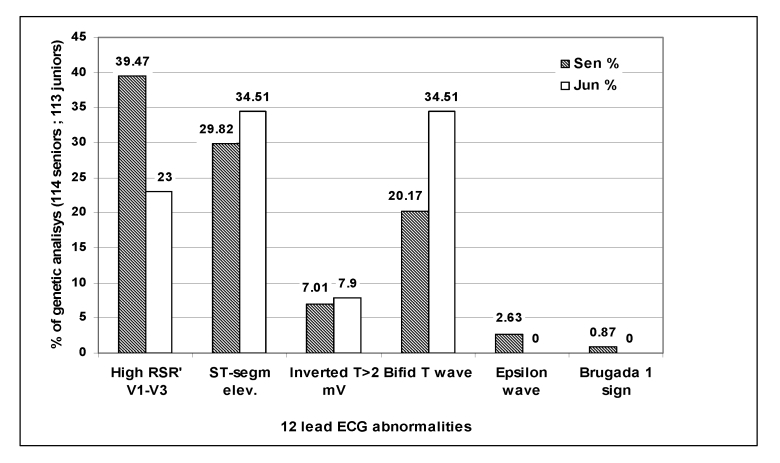
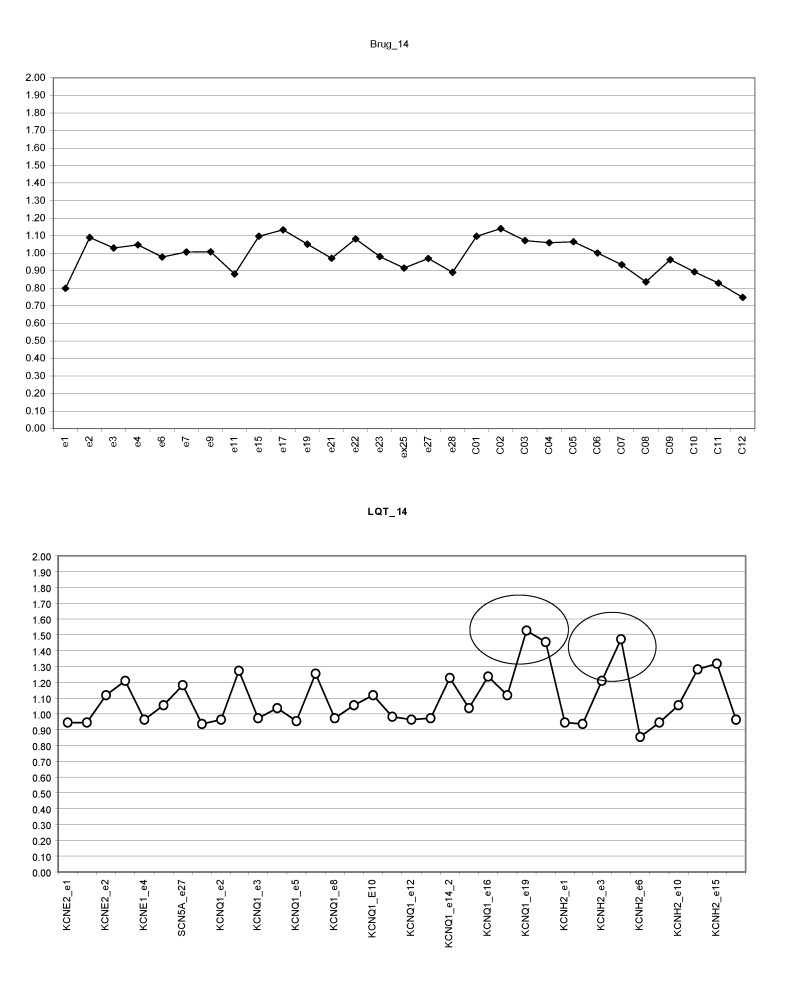
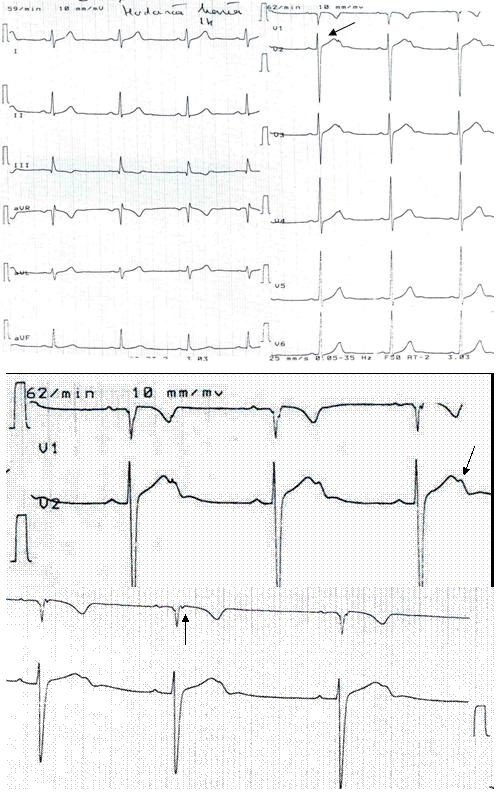
Seniors. RSR' (V1 to V3) pattern, in 45 cases (23.68%), 5 of them with questionable Brugada sign (elevated J wave and "coved" ST segment, < 2 mm in one lead, V1. Typically, Brugada 1 sign was found in one case (0.52%) with no SCN5A abnormalities. One athlete (0.52%) had normal ECG and exon1 SCN5A duplication. MRI confirmed three arrhythmic right ventricular cardiomypathy epsilon waves (1.57%), in one case. ST-segment elevation myocardial injury like in V1-V3 precordial leads in 34 athletes (17.89%). Genetic analyses-no gene mutations. Juniors. Upright J wave was found in 43 cases (27.38%). Convex ST segment elevation in V1-V3/V4, in 39 cases (24.84%). Bifid T wave with two distinct peaks was found in 39 cases (24.84%), 5 of them with mild prolonged QTc (0.48"-0.56") and KCN genes mutations. Nine (5.73%) of the elevated ST segment juniors had questionable Brugada sign, two of which with KCN (n=1) and SCN5A (n=1) gene mutations. Ajmaline provocative test was negative in 4 and was refused by 5 subjects.
Bizarre QRS, ST-T patterns suggestive of abnormal impulse conduction in the right ventricle, including the right outflow tract, associated with prolonged QTc interval in some cases were observed in highly trained endurance athletes. The genetic analyses, negative in most athletes, identified surprising mutations in SCN5A and KCN genes in some cases.
精英耐力运动员的心电图有时会显示出怪异的模式,提示存在遗传性离子通道病(Brugada综合征、长QTc、儿茶酚胺能多形性室性心动过速)和心肌病(致心律失常性右室心肌病、肥厚型心肌病),这些疾病可导致意外的心源性猝死。除其他方法外,正确诊断需要进行基因分析。
将提示遗传性离子通道病和心肌病的12导联心电图模式与特定的基因分析相关联。
前瞻性研究(2004 - 2007年),对年龄匹配的运动员和正常久坐受试者进行标准位置及更高肋间位置V1至V3胸前导联的12导联心电图筛查。对心电图异常提示遗传性离子通道病和心肌病的受试者进行基因分析。
所有心脏检查和心电图均在“C.C. Iliescu教授”国家心血管疾病研究所(罗马尼亚布加勒斯特)进行。基因研究在“Mina Minovici”国家法医学研究所(罗马尼亚布加勒斯特)进行。
347名精英耐力运动员(成年人——190名,青少年——157名),平均年龄20岁;200名受试者,平均年龄21岁,属于505名正常久坐人群的对照组。
成年人。45例(23.68%)出现RSR'(V1至V3)模式,其中5例有可疑的Brugada征(J波抬高和“穹隆形”ST段,一个导联V1中<2mm)。典型的Brugada 1型征在1例(0.52%)中发现,无SCN5A异常。1名运动员(0.52%)心电图正常,但外显子1 SCN5A重复。MRI在1例中证实有3个致心律失常性右室心肌病ε波(1.57%)。34名运动员(17.89%)在V1 - V3胸前导联出现ST段抬高型心肌损伤。基因分析——无基因突变。青少年。43例(27.38%)出现直立J波。39例(约24.84%)在V1 - V3/V4出现凸面ST段抬高。39例(24.84%)出现双峰T波,其中5例有轻度QTc延长(0.48" - 0.56")及KCN基因突变。9名(5.73%)ST段抬高的青少年有可疑的Brugada征,其中2例有KCN(n = 1)和SCN5A(n = 1)基因突变。阿义马林激发试验4例为阴性,5名受试者拒绝接受。
在训练有素的耐力运动员中观察到怪异的QRS、ST - T模式,提示右心室包括右流出道冲动传导异常,部分病例伴有QTc间期延长。大多数运动员基因分析为阴性,但在部分病例中发现了SCN5A和KCN基因的惊人突变。