Ocean Sciences Centre, Memorial University of Newfoundland, St, John's, NL, Canada.
BMC Genomics. 2010 Jan 28;11:72. doi: 10.1186/1471-2164-11-72.
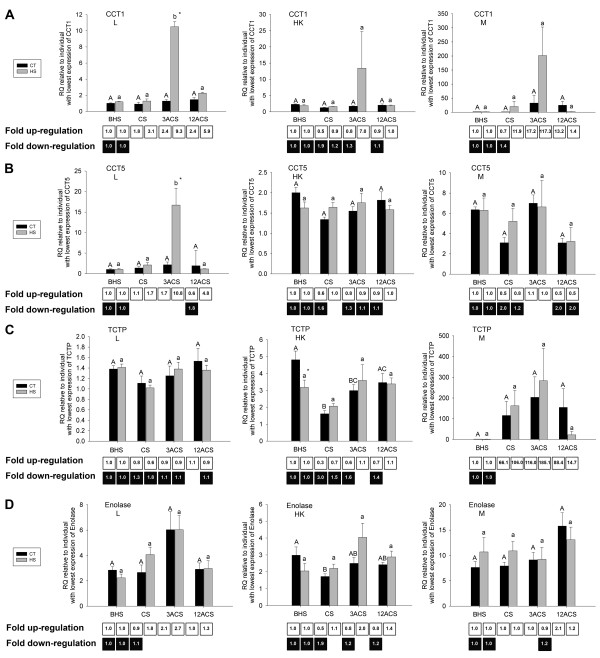
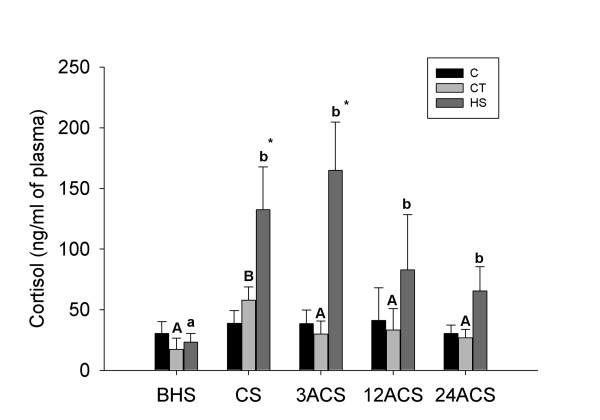
Daily and seasonal changes in temperature are challenges that fish within aquaculture settings cannot completely avoid, and are known to elicit complex organismal and cellular stress responses. We conducted a large-scale gene discovery and transcript expression study in order to better understand the genes that are potentially involved in the physiological and cellular aspects of stress caused by heat-shock. We used suppression subtractive hybridization (SSH) cDNA library construction and characterization to identify transcripts that were dysregulated by heat-shock in liver, skeletal muscle and head kidney of Atlantic cod. These tissues were selected due to their roles in metabolic regulation, locomotion and growth, and immune function, respectively. Fish were exposed for 3 hours to an 8 degrees C elevation in temperature, and then allowed to recover for 24 hours at the original temperature (i.e. 10 degrees C). Tissue samples obtained before heat-shock (BHS), at the cessation of heat-shock (CS), and 3, 12, and 24 hours after the cessation of heat-shock (ACS), were used for reciprocal SSH library construction and quantitative reverse transcription - polymerase chain reaction (QPCR) analysis of gene expression using samples from a group that was transferred but not heat-shocked (CT) as controls.
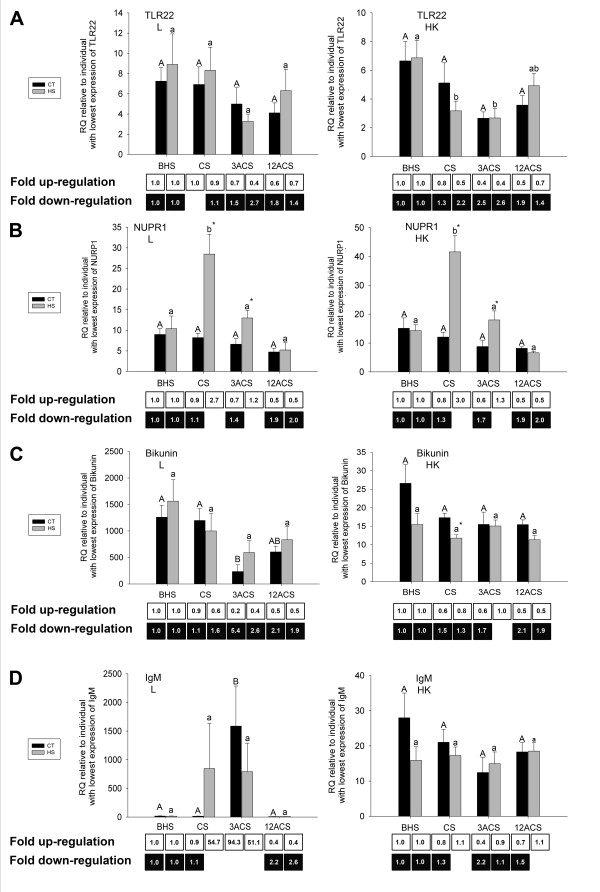
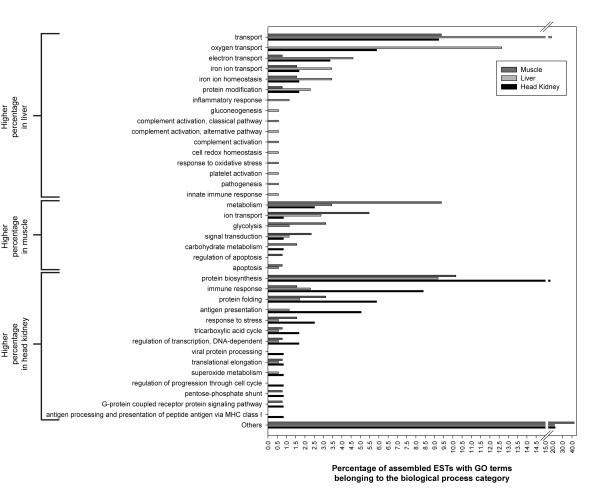
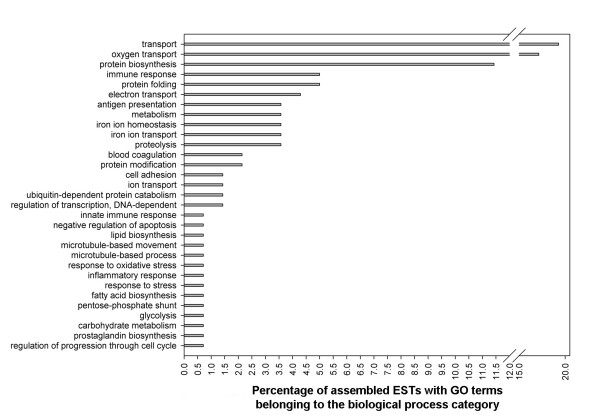
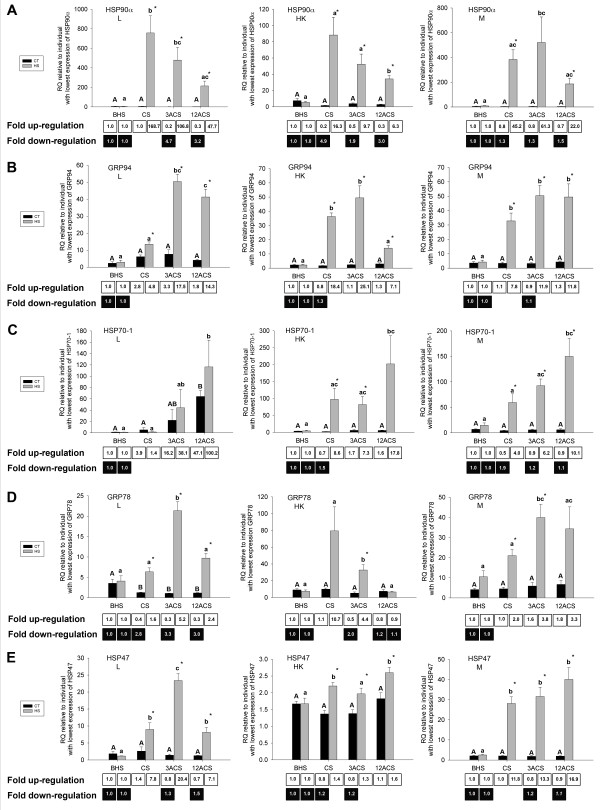
We sequenced and characterized 4394 ESTs (1524 from liver, 1451 from head kidney and 1419 from skeletal muscle) from three "forward subtracted" libraries (enriched for genes up-regulated by heat-shock) and 1586 from the liver "reverse subtracted" library (enriched for genes down-regulated by heat-shock), for a total of 5980 ESTs. Several cDNAs encoding putative chaperones belonging to the heat-shock protein (HSP) family were found in these libraries, and "protein folding" was among the gene ontology (GO) terms with the highest proportion in the libraries. QPCR analysis of HSP90alpha and HSP70-1 (synonym: HSPA1A) mRNA expression showed significant up-regulation in all three tissues studied. These transcripts were more than 100-fold up-regulated in liver following heat-shock. We also identified HSP47, GRP78 and GRP94-like transcripts, which were significantly up-regulated in all 3 tissues studied. Toll-like receptor 22 (TLR22) transcript, found in the liver reverse SSH library, was shown by QPCR to be significantly down-regulated in the head kidney after heat-shock.
Chaperones are an important part of the cellular response to stress, and genes identified in this work may play important roles in resistance to thermal-stress. Moreover, the transcript for one key immune response gene (TLR22) was down-regulated by heat-shock, and this down-regulation may be a component of heat-induced immunosuppression.
鱼类在水产养殖环境中无法完全避免温度的日常和季节性变化,这些变化会引发复杂的机体和细胞应激反应。为了更好地了解热休克引起的生理和细胞方面可能涉及的基因,我们进行了大规模的基因发现和转录表达研究。我们使用抑制性消减杂交(SSH)cDNA 文库构建和表征技术,鉴定了肝、骨骼肌和头肾中因热休克而失调的转录本。选择这些组织是因为它们分别在代谢调节、运动和生长以及免疫功能方面发挥作用。鱼在 3 小时内暴露于 8°C 的温度升高,然后在原始温度(即 10°C)下恢复 24 小时。在热休克前(BHS)、热休克停止时(CS)以及热休克停止后 3、12 和 24 小时(ACS)获得的组织样本用于构建互易 SSH 文库,并使用未经转移但经热休克处理的对照组(CT)的样本进行定量逆转录-聚合酶链反应(QPCR)分析基因表达。
我们从三个“正向消减”文库(富集因热休克而上调的基因)和一个肝“反向消减”文库(富集因热休克而下调的基因)中测序并表征了 4394 个 EST(肝中 1524 个,头肾中 1451 个,骨骼肌中 1419 个),共获得 5980 个 EST。这些文库中发现了几个编码热休克蛋白(HSP)家族假定伴侣的 cDNA,并且“蛋白质折叠”是文库中比例最高的基因本体(GO)术语之一。HSP90alpha 和 HSP70-1(同义词:HSPA1A)mRNA 表达的 QPCR 分析显示,所有三种研究组织均显著上调。肝中这些转录物在热休克后上调超过 100 倍。我们还鉴定了 HSP47、GRP78 和 GRP94 样转录物,它们在所有 3 种研究组织中均显著上调。肝反向 SSH 文库中发现的 Toll 样受体 22(TLR22)转录物经 QPCR 显示,头肾在热休克后显著下调。
伴侣是细胞对应激反应的重要组成部分,本工作中鉴定的基因可能在耐热应激方面发挥重要作用。此外,一个关键免疫反应基因(TLR22)的转录物被热休克下调,这种下调可能是热诱导免疫抑制的一个组成部分。