
基于前哨淋巴结的 adoptive immunotherapy 在晚期结直肠癌中的初步研究。
Pilot study of sentinel-node-based adoptive immunotherapy in advanced colorectal cancer.
机构信息
Karolinska Institute, Department of Medicine, Karolinska University Hospital, Stockholm, Sweden.
出版信息
Ann Surg Oncol. 2010 Jul;17(7):1747-57. doi: 10.1245/s10434-010-0920-8. Epub 2010 Jan 30.
BACKGROUND
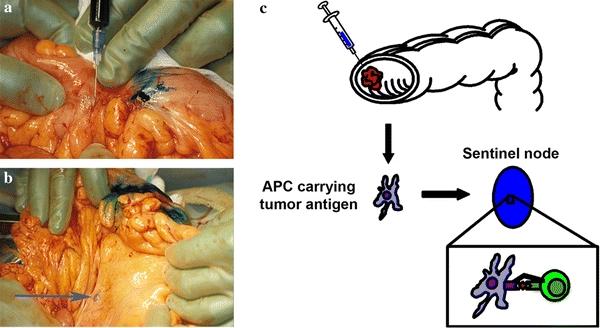
Despite optimal surgical treatment and modern adjuvant therapies, 50% of patients diagnosed with colorectal cancer die within 5 years. Immunotherapy offers an appealing complement to traditional chemotherapy, with possible long-term protection against tumor recurrences through immunological memory. We have conducted a pilot study of a novel adoptive immunotherapy, using autologous, in vitro expanded lymphocytes isolated from the tumor-draining sentinel lymph node.
STUDY DESIGN
Sentinel nodes were recovered from 16 patients with disseminated or locally advanced, high-risk colorectal cancer. Single-cell suspensions of sentinel-node-acquired lymphocytes were clonally expanded in vitro in the presence of autologous tumor extract and returned as a transfusion. Patients were followed with clinical and radiological evaluations. Long-term survival was compared with traditionally treated controls.
RESULTS
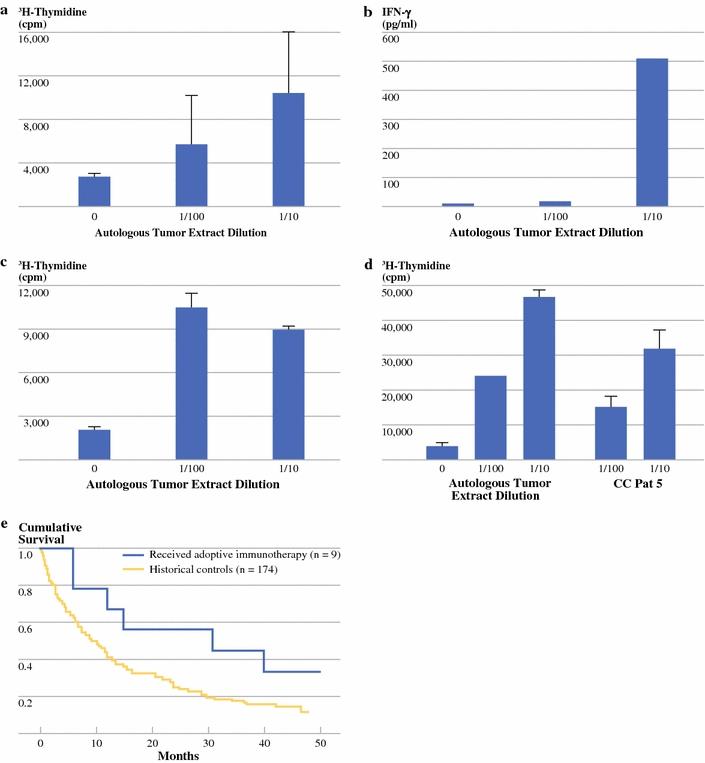
Sentinel-node-acquired CD4(+) Th1-lymphocytes could be clonally expanded in vitro and safely administered to all 16 patients without side-effects. In four out of nine stage IV patients, complete tumor regression occurred. Median survival time in the stage IV patients (n = 9) was 2.6 years, as compared with 0.8 years in conventionally treated controls. A dose-dependent effect with regards to reduced tumor burden and long-term survival was observed.
CONCLUSION
Sentinel-node-based adoptive immunotherapy is feasible; the method has shown no apparent side-effects and appears to convey therapeutic antitumor effects. Further studies are justified to determine its efficacy and precise role in the treatment of colorectal cancer.
背景
尽管进行了最佳的手术治疗和现代辅助疗法,50%的结直肠癌患者仍会在 5 年内死亡。免疫疗法为传统化疗提供了一种有吸引力的补充方法,通过免疫记忆,可能具有长期预防肿瘤复发的作用。我们进行了一项新型过继免疫疗法的试验研究,该疗法使用从肿瘤引流前哨淋巴结中分离的自体体外扩增的淋巴细胞。
研究设计
从 16 例患有播散性或局部晚期、高危结直肠癌的患者中回收前哨淋巴结。前哨淋巴结获得的淋巴细胞单细胞悬液在自体肿瘤提取物存在的情况下进行体外克隆扩增,并作为输血回输。对患者进行临床和影像学评估。将长期生存与传统治疗的对照组进行比较。
结果
可以在体外克隆扩增前哨淋巴结获得的 CD4+Th1 淋巴细胞,并安全地给予所有 16 例患者,无副作用。在 9 例 IV 期患者中的 4 例中,完全肿瘤消退。IV 期患者(n=9)的中位生存时间为 2.6 年,而传统治疗对照组为 0.8 年。观察到与肿瘤负荷减少和长期生存相关的剂量依赖性效应。
结论
基于前哨淋巴结的过继免疫疗法是可行的;该方法没有明显的副作用,并且似乎具有治疗抗肿瘤作用。需要进一步的研究来确定其在结直肠癌治疗中的疗效和确切作用。


 Zotero 插件