Laboratory for Neuronal Growth Mechanisms, RIKEN Brain Science Institute, Wako, Saitama 351-0198, Japan.
J Cell Biol. 2010 Feb 8;188(3):429-41. doi: 10.1083/jcb.200906043. Epub 2010 Feb 1.
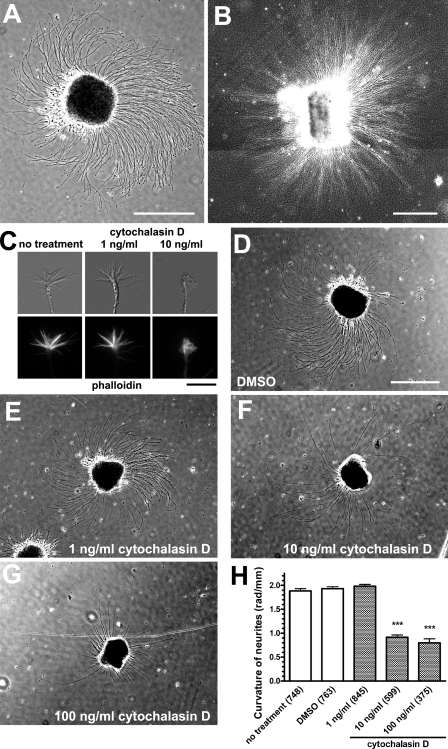
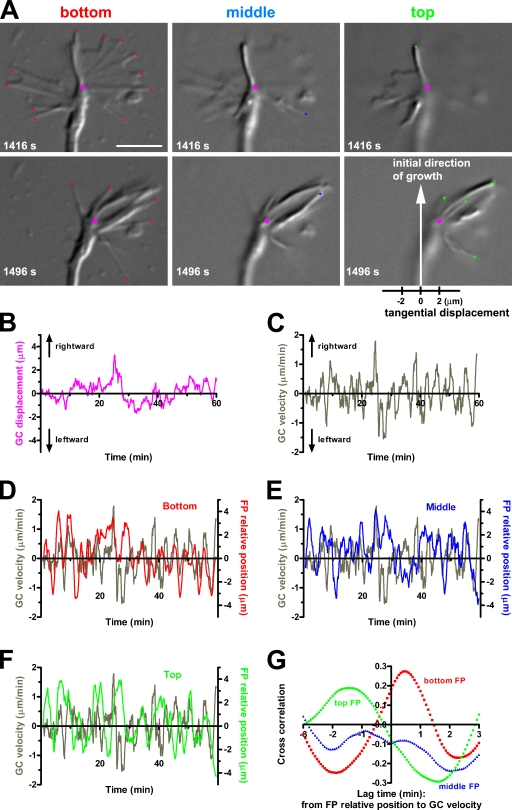
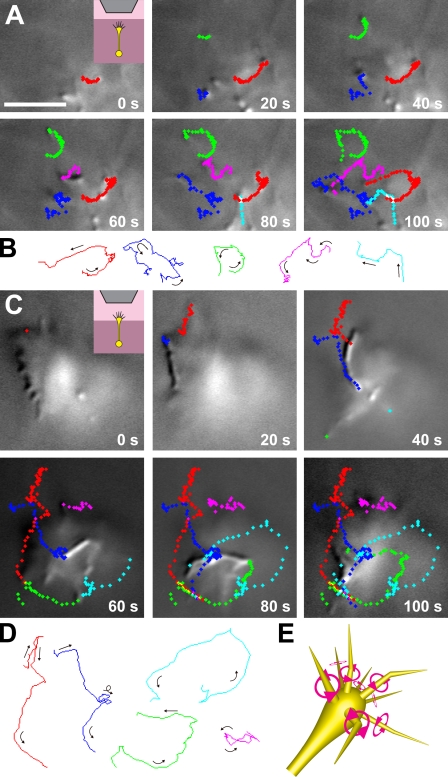
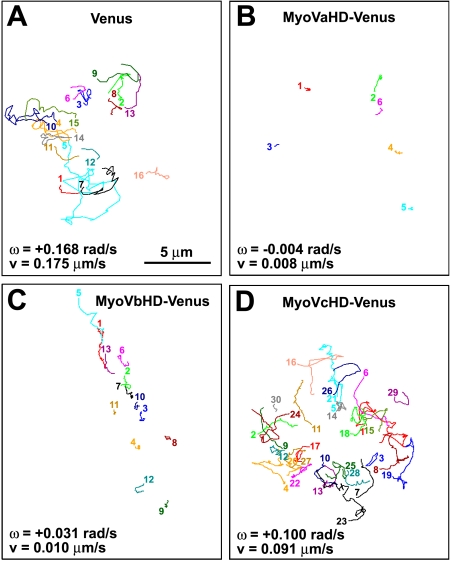
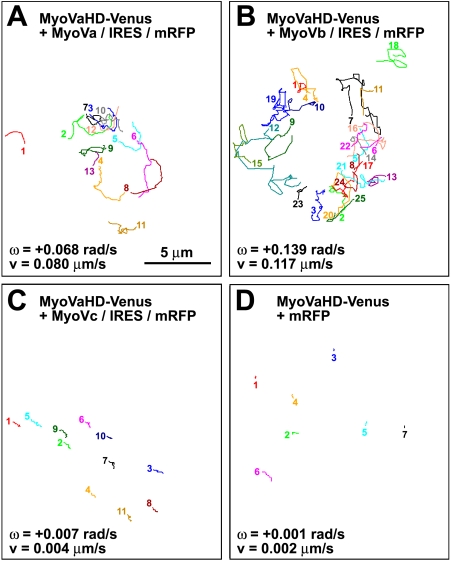
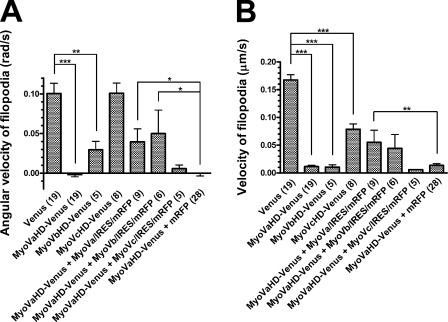
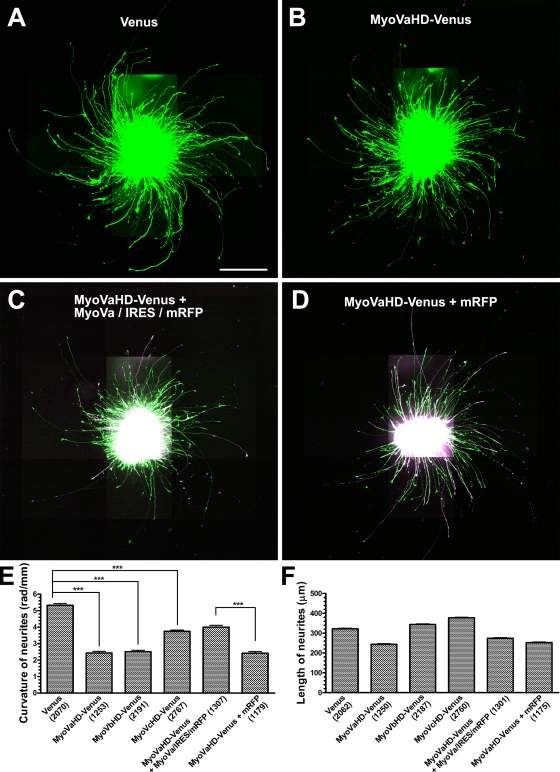
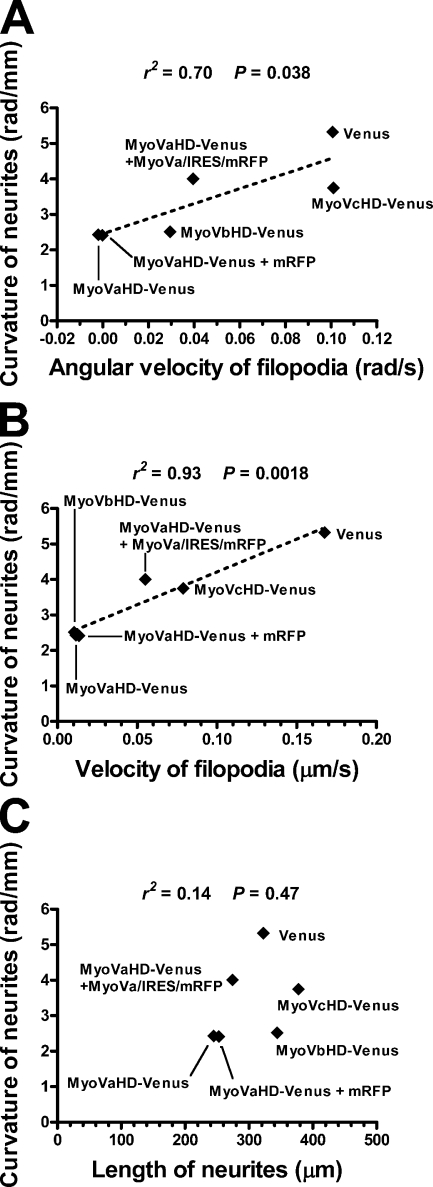
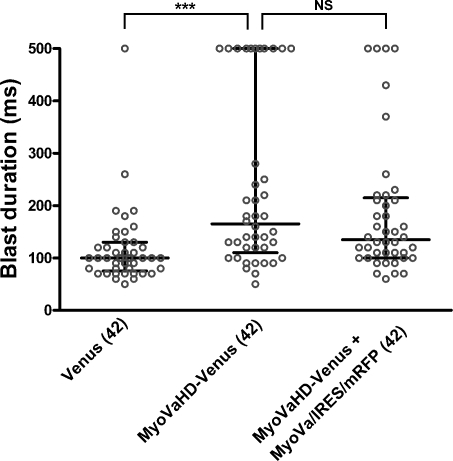
The direction of neurite elongation is controlled by various environmental cues. However, it has been reported that even in the absence of any extrinsic directional signals, neurites turn clockwise on two-dimensional substrates. In this study, we have discovered autonomous rotational motility of the growth cone, which provides a cellular basis for inherent neurite turning. We have developed a technique for monitoring three-dimensional motility of growth cone filopodia and demonstrate that an individual filopodium rotates on its own longitudinal axis in the right-screw direction from the viewpoint of the growth cone body. We also show that the filopodial rotation involves myosins Va and Vb and may be driven by their spiral interactions with filamentous actin. Furthermore, we provide evidence that the unidirectional rotation of filopodia causes deflected neurite elongation, most likely via asymmetric positioning of the filopodia onto the substrate. Although the growth cone itself has been regarded as functionally symmetric, our study reveals the asymmetric nature of growth cone motility.
轴突延伸的方向受各种环境线索的控制。然而,据报道,即使在没有任何外在导向信号的情况下,轴突在二维基质上也会顺时针旋转。在这项研究中,我们发现了生长锥的自主旋转运动,这为固有轴突转向提供了细胞基础。我们开发了一种监测生长锥丝状伪足三维运动的技术,并证明从生长锥体的角度来看,单个丝状伪足沿其自身的纵轴以右旋螺旋方向旋转。我们还表明,丝状伪足的旋转涉及肌球蛋白 Va 和 Vb,并且可能是由它们与丝状肌动蛋白的螺旋相互作用驱动的。此外,我们提供的证据表明,丝状伪足的单向旋转导致神经突延伸的偏斜,这很可能是通过丝状伪足在基质上的不对称定位实现的。尽管生长锥本身在功能上被认为是对称的,但我们的研究揭示了生长锥运动的不对称性质。