National Renewable Energy Laboratory, MS 1713, 1617 Cole Boulevard, Golden, CO 80401, USA.
Environ Manage. 2010 Apr;45(4):651-61. doi: 10.1007/s00267-010-9434-1. Epub 2010 Feb 3.
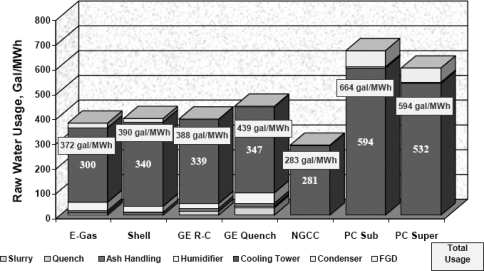
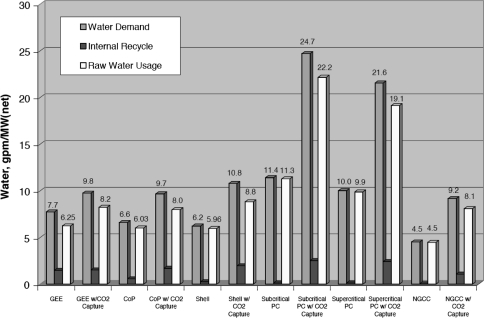
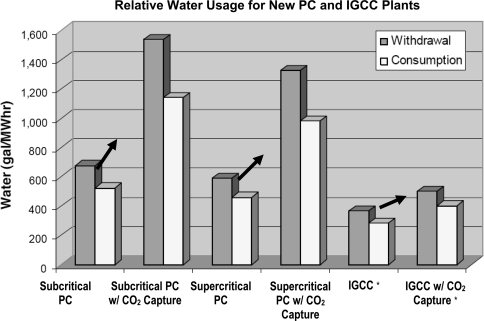
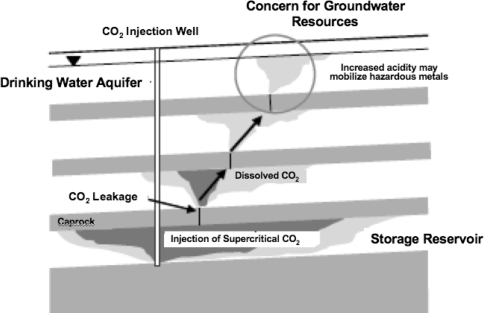
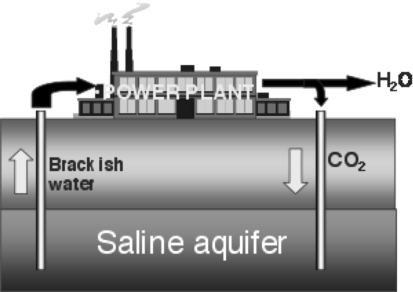
Carbon capture and sequestration (CCS) has been proposed as a means to dramatically reduce greenhouse gas emissions with the continued use of fossil fuels. For geologic sequestration, the carbon dioxide is captured from large point sources (e.g., power plants or other industrial sources), transported to the injection site and injected into deep geological formations for storage. This will produce new water challenges, such as the amount of water used in energy resource development and utilization and the "capture penalty" for water use. At depth, brine displacement within formations, storage reservoir pressure increases resulting from injection, and leakage are potential concerns. Potential impacts range from increasing water demand for capture to contamination of groundwater through leakage or brine displacement. Understanding these potential impacts and the conditions under which they arise informs the design and implementation of appropriate monitoring and controls, important both for assurance of environmental safety and for accounting purposes. Potential benefits also exist, such as co-production and treatment of water to both offset reservoir pressure increase and to provide local water for beneficial use.
碳捕获与封存(CCS)被提议作为一种手段,以大幅度减少温室气体排放,同时继续使用化石燃料。对于地质封存,二氧化碳从大型点源(例如,发电厂或其他工业源)中捕获,输送到注入地点,并注入深部地质构造中进行储存。这将产生新的水挑战,例如能源资源开发和利用中使用的水量以及水使用的“捕获惩罚”。在深部,地层内盐水的驱替、由于注入导致的储存库压力增加以及泄漏都是潜在的关注点。潜在影响范围从增加捕获所需的水需求到通过泄漏或盐水驱替污染地下水。了解这些潜在影响及其产生的条件为设计和实施适当的监测和控制提供了信息,这对于确保环境安全和核算目的都很重要。还存在潜在的好处,例如水的联产和处理,以抵消储层压力的增加,并为有益用途提供当地水。