University of São Paulo, School of Medicine, Physical Therapy, Speech and Occupational Therapy Department, São Paulo, Brazil.
BMC Musculoskelet Disord. 2010 Feb 3;11:24. doi: 10.1186/1471-2474-11-24.
It is known that when barefoot, gait biomechanics of diabetic neuropathic patients differ from non-diabetic individuals. However, it is still unknown whether these biomechanical changes are also present during shod gait which is clinically advised for these patients. This study investigated the effect of the participants own shoes on gait biomechanics in diabetic neuropathic individuals compared to barefoot gait patterns and healthy controls.
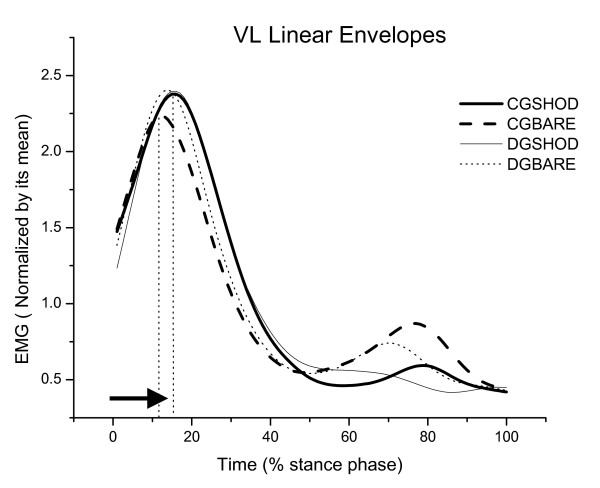
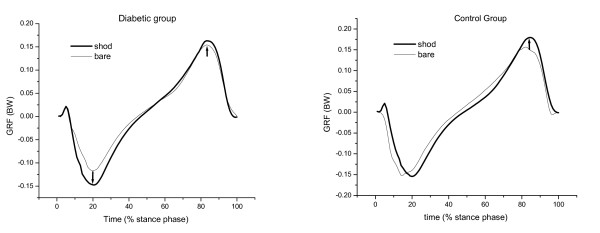
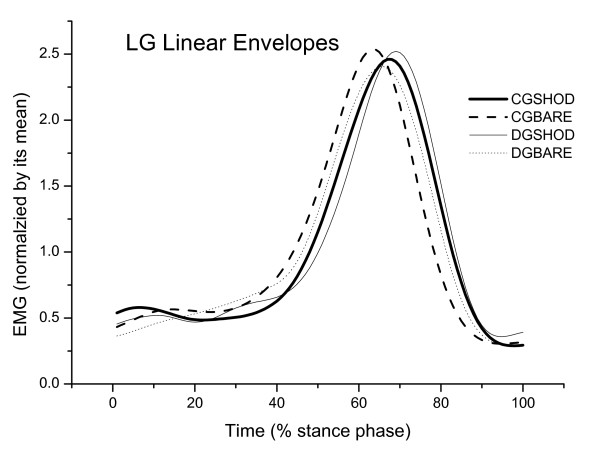
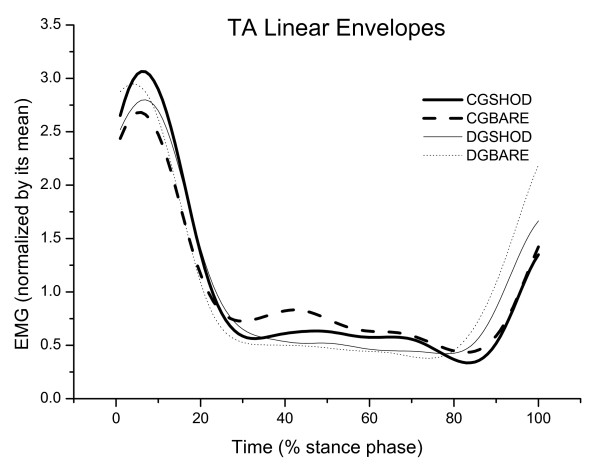
Ground reaction forces and lower limb EMG activities were analyzed in 21 non-diabetic adults (50.9 +/- 7.3 yr, 24.3 +/- 2.6 kg/m2) and 24 diabetic neuropathic participants (55.2 +/- 7.9 yr, 27.0 +/- 4.4 kg/m2). EMG patterns of vastus lateralis, lateral gastrocnemius and tibialis anterior, along with the vertical and antero-posterior ground reaction forces were studied during shod and barefoot gait.
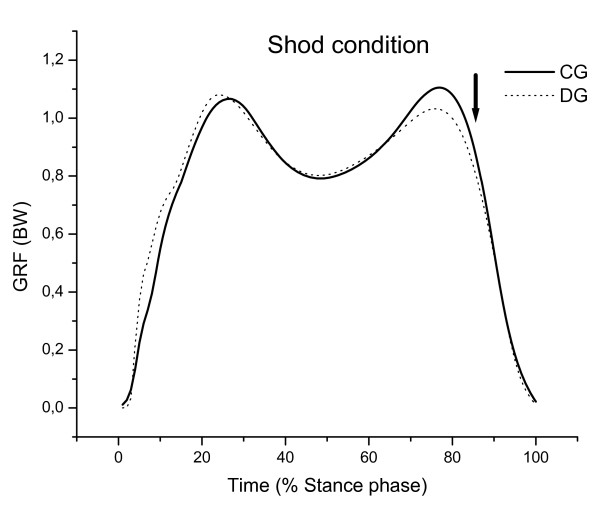
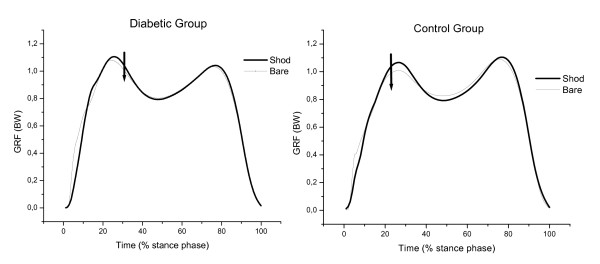
Regardless of the disease, walking with shoes promoted an increase in the first peak vertical force and the peak horizontal propulsive force. Diabetic individuals had a delay in the lateral gastrocnemius EMG activity with no delay in the vastus lateralis. They also demonstrated a higher peak horizontal braking force walking with shoes compared to barefoot. Diabetic participants also had a smaller second peak vertical force in shod gait and a delay in the vastus lateralis EMG activity in barefoot gait compared to controls.
The change in plantar sensory information that occurs when wearing shoes revealed a different motor strategy in diabetic individuals. Walking with shoes did not attenuate vertical forces in either group. Though changes in motor strategy were apparent, the biomechanical did not support the argument that the use of shoes contributes to altered motor responses during gait.
已知糖尿病周围神经病变患者赤脚行走时的步态生物力学与非糖尿病患者不同。然而,目前尚不清楚这些生物力学变化是否也存在于临床建议这些患者穿着鞋子行走时。本研究旨在比较糖尿病周围神经病变患者穿鞋与赤脚行走时的步态生物力学,探讨患者自身鞋子对步态生物力学的影响。
分析了 21 名非糖尿病成年人(50.9±7.3 岁,24.3±2.6kg/m2)和 24 名糖尿病周围神经病变患者(55.2±7.9 岁,27.0±4.4kg/m2)的地面反力和下肢肌电图活动。研究了穿着鞋子和赤脚行走时外侧股四头肌、外侧腓肠肌和胫骨前肌的肌电图模式以及垂直和前后向地面反力。
无论是否患有疾病,穿着鞋子行走都会增加第一峰值垂直力和峰值水平推进力。糖尿病患者的外侧腓肠肌肌电图活动延迟,但外侧股四头肌无延迟。与赤脚相比,他们在穿鞋行走时还表现出更高的峰值水平制动力。与对照组相比,糖尿病患者在穿鞋行走时第二峰值垂直力较小,在赤脚行走时外侧股四头肌肌电图活动延迟。
穿鞋时足底感觉信息的变化揭示了糖尿病患者不同的运动策略。在两组中,穿鞋都不能减轻垂直力。尽管运动策略发生了变化,但生物力学并不能支持使用鞋子会导致步态中运动反应改变的说法。