Department of Medicine, University of Massachusetts Medical School, Worcester, MA, USA.
Transplantation. 2010 Mar 15;89(5):527-36. doi: 10.1097/TP.0b013e3181c90242.
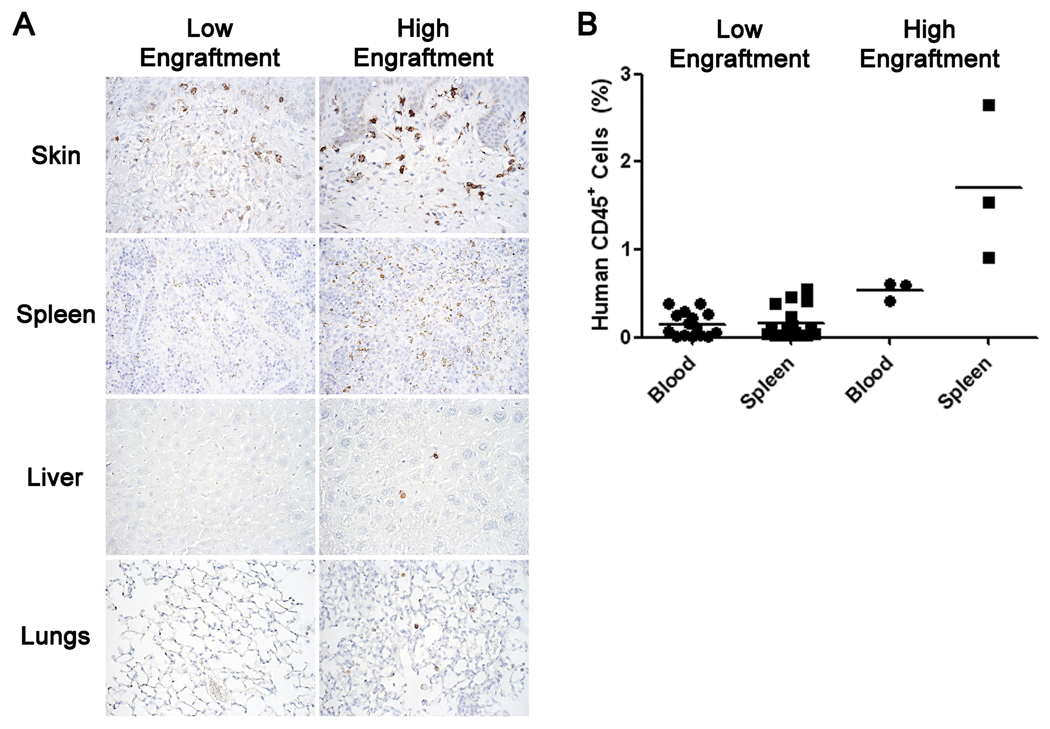
Transplantation of human skin on immunodeficient mice that support engraftment with functional human immune systems would be an invaluable tool for investigating mechanisms involved in wound healing and transplantation. Nonobese diabetic (NOD)-scid interleukin-2 gamma chain receptor (NSG) readily engraft with human immune systems, but human skin graft integrity is poor. In contrast, human skin graft integrity is excellent on CB17-scid bg (SCID.bg) mice, but they engraft poorly with human immune systems.
Human skin grafts transplanted onto immunodeficient NSG, SCID.bg, and other immunodeficient strains were evaluated for graft integrity, preservation of graft endothelium, and their ability to be rejected after engraftment of allogeneic peripheral blood mononuclear cells.
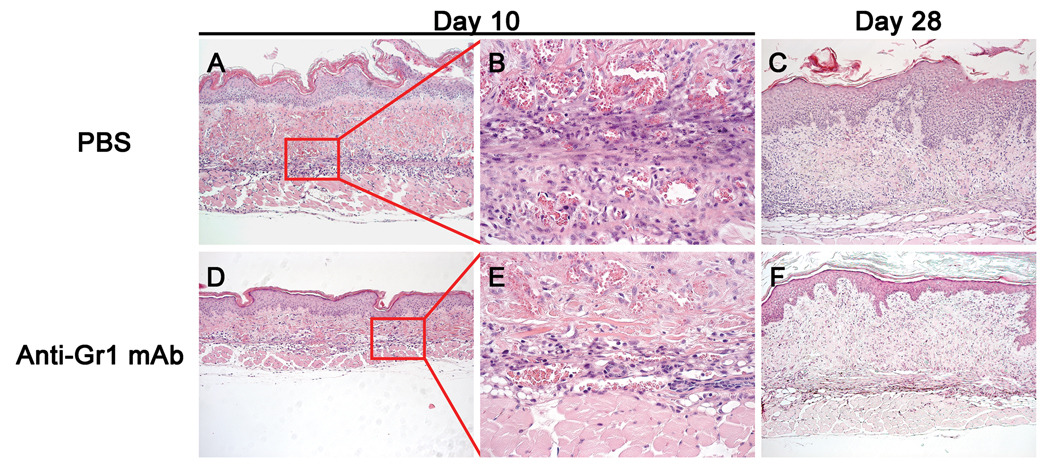
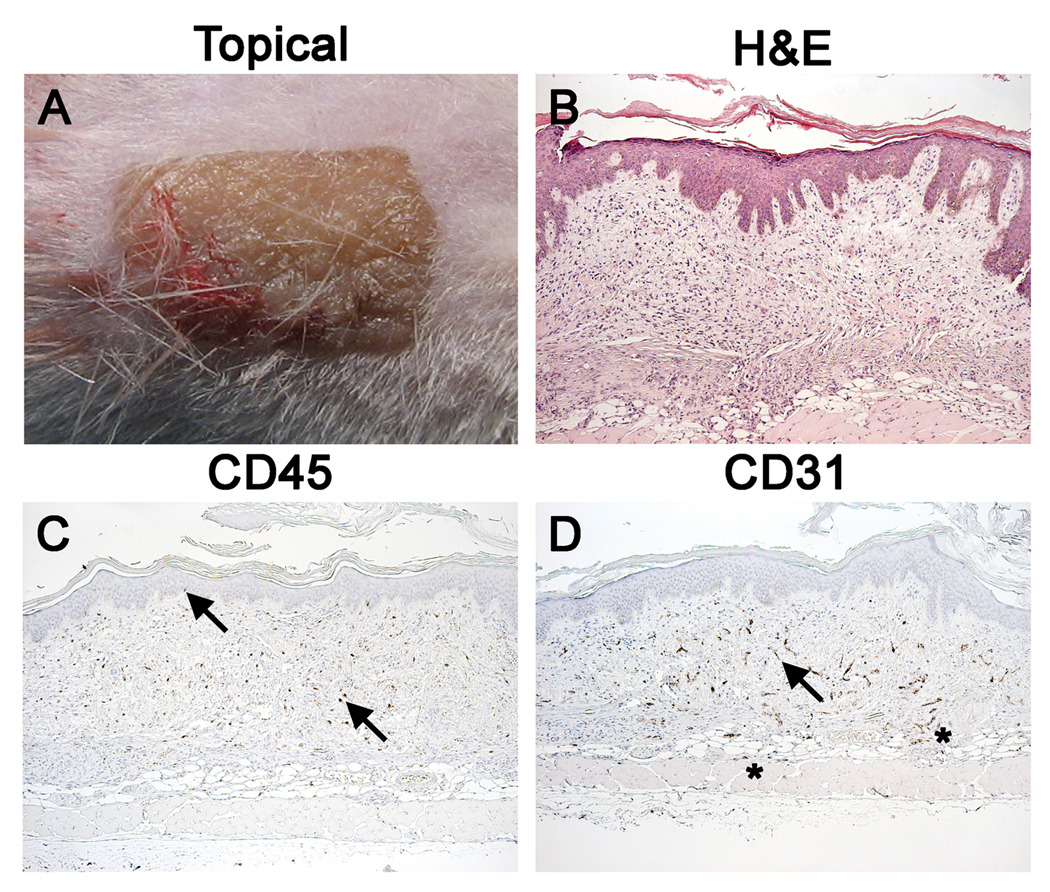
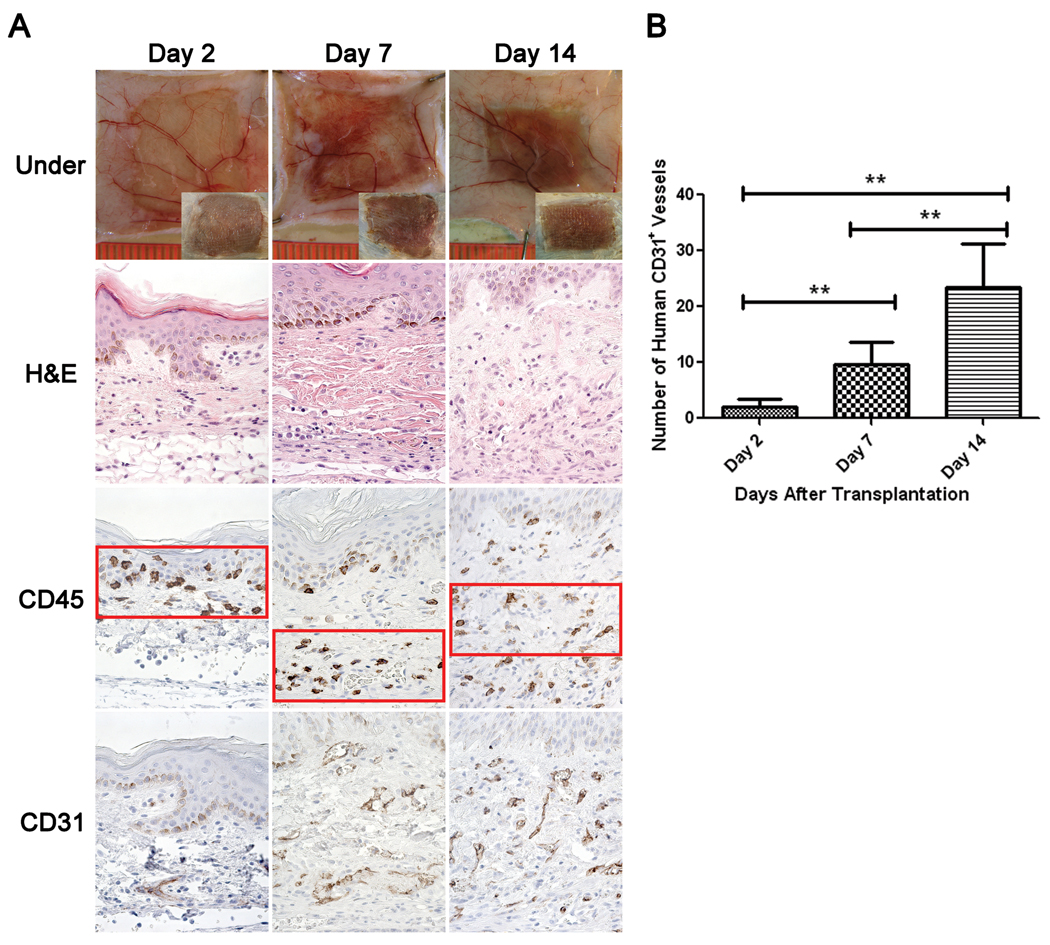
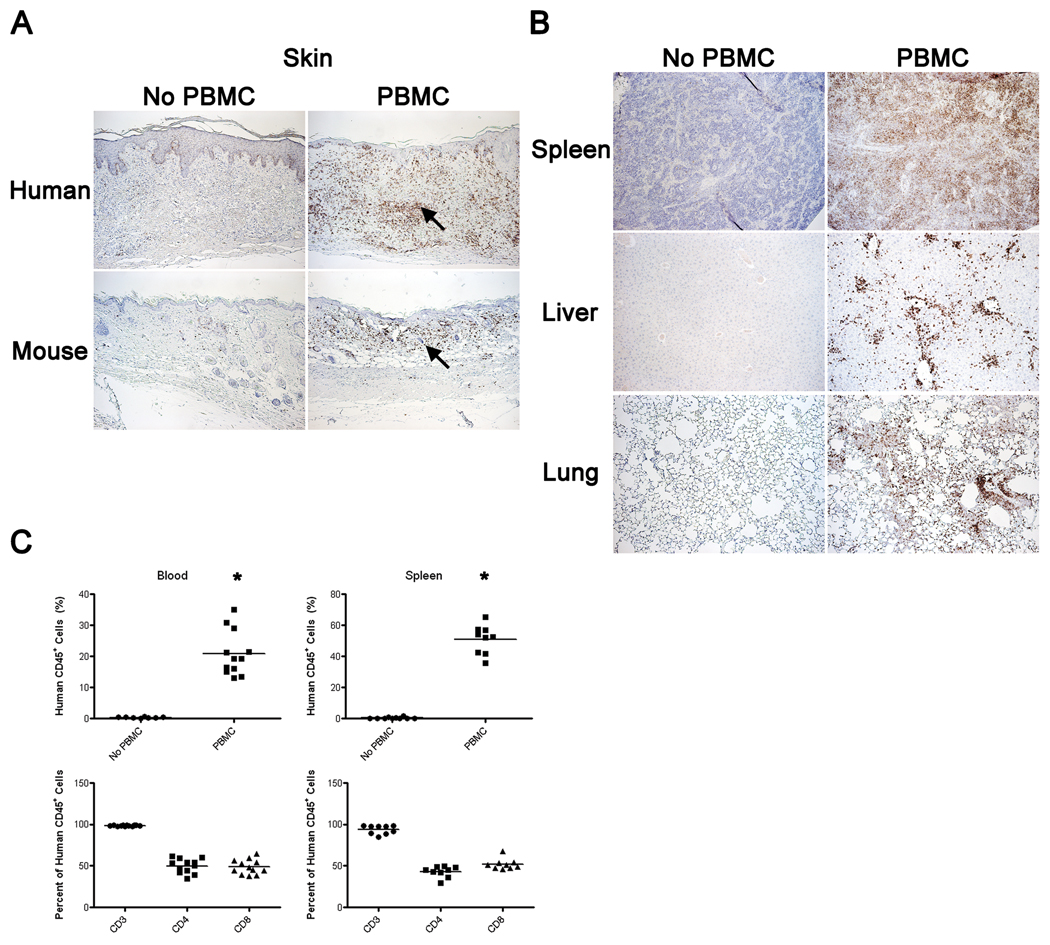
Human skin transplanted onto NSG mice develops an inflammatory infiltrate, consisting predominately of host Gr1(+) cells, that is detrimental to the survival of human endothelium in the graft. Treatment of graft recipients with anti-Gr1 antibody reduces this cellular infiltrate, preserves graft endothelium, and promotes wound healing, tissue development, and graft remodeling. Excellent graft integrity of the transplanted skin includes multilayered stratified human epidermis, well-developed human vasculature, human fibroblasts, and passenger leukocytes. Injection of unfractionated, CD4 or CD8 allogeneic human peripheral blood mononuclear cell induces a rapid destruction of the transplanted skin graft.
NSG mice treated with anti-Gr1 antibody provide a model optimized for both human skin graft integrity and engraftment of a functional human immune system. This model provides the opportunity to investigate mechanisms orchestrating inflammation, wound healing, revascularization, tissue remodeling, and allograft rejection and can provide guidance for improving outcomes after clinical transplantation.
在支持功能性人免疫系统植入的免疫缺陷小鼠上移植人皮肤将是研究参与伤口愈合和移植的机制的宝贵工具。非肥胖型糖尿病(NOD)-scid 白细胞介素 2 受体(NSG)与人免疫系统轻易植入,但人皮肤移植物完整性差。相比之下,人皮肤移植物在 CB17-scid bg(SCID.bg)小鼠上的完整性非常好,但它们与人免疫系统植入效果差。
将人皮肤移植物移植到免疫缺陷的 NSG、SCID.bg 和其他免疫缺陷品系的小鼠上,评估移植物的完整性、移植物内皮的保存以及在植入同种异体外周血单核细胞后被排斥的能力。
移植到 NSG 小鼠上的人皮肤会发展出炎症浸润,主要由宿主 Gr1(+)细胞组成,这对移植物中的人内皮细胞的存活有害。用抗 Gr1 抗体治疗移植物受者可减少这种细胞浸润,保存移植物内皮,并促进伤口愈合、组织发育和移植物重塑。移植皮肤的良好完整性包括多层分层的人表皮、发育良好的人血管、人成纤维细胞和过客白细胞。未分级、CD4 或 CD8 同种异体人外周血单核细胞的注射会迅速破坏移植的皮肤移植物。
用抗 Gr1 抗体处理的 NSG 小鼠提供了一种既优化人皮肤移植物完整性又优化功能性人免疫系统植入的模型。该模型为研究协调炎症、伤口愈合、再血管化、组织重塑和同种异体移植排斥的机制提供了机会,并可为改善临床移植后的结果提供指导。