Department of Biology and Molecular Genetics, University of Maryland, College Park, Maryland, United States of America.
PLoS One. 2010 Feb 4;5(2):e9045. doi: 10.1371/journal.pone.0009045.
The genome of the halophilic archaeon Halobacterium salinarum NRC-1 encodes for homologs of MutS and MutL, which are key proteins of a DNA mismatch repair pathway conserved in Bacteria and Eukarya. Mismatch repair is essential for retaining the fidelity of genetic information and defects in this pathway result in the deleterious accumulation of mutations and in hereditary diseases in humans.
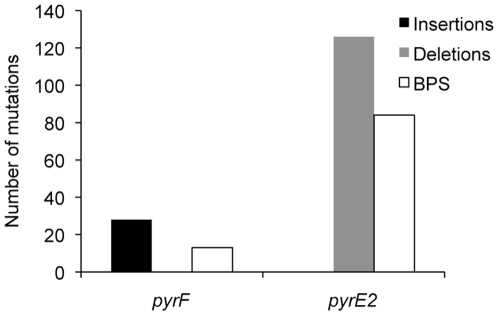
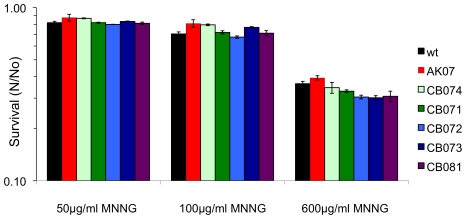
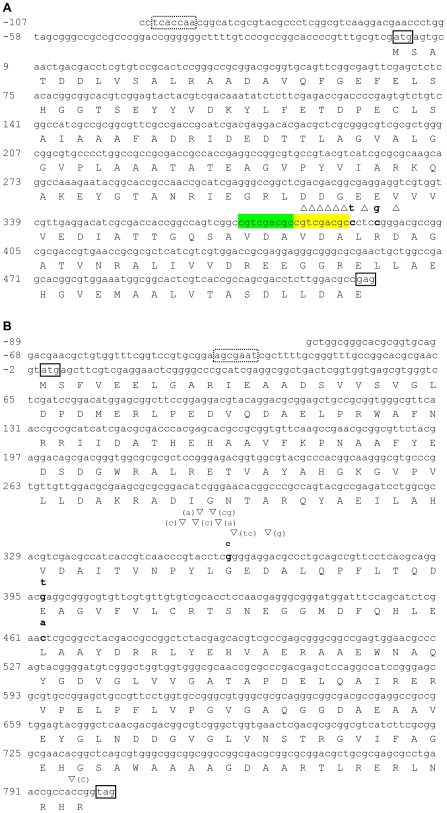
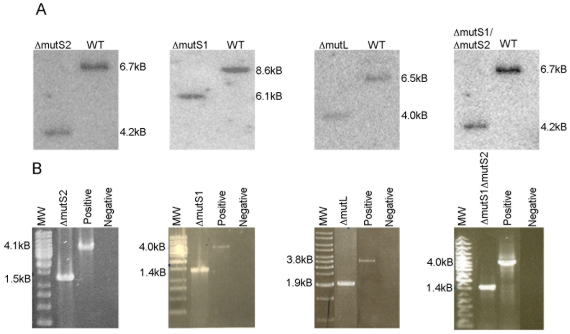
METHODOLOGY/PRINCIPAL FINDINGS: We calculated the spontaneous genomic mutation rate of H. salinarum NRC-1 using fluctuation tests targeting genes of the uracil monophosphate biosynthesis pathway. We found that H. salinarum NRC-1 has a low incidence of mutation suggesting the presence of active mechanisms to control spontaneous mutations during replication. The spectrum of mutational changes found in H. salinarum NRC-1, and in other archaea, appears to be unique to this domain of life and might be a consequence of their adaption to extreme environmental conditions. In-frame targeted gene deletions of H. salinarum NRC-1 mismatch repair genes and phenotypic characterization of the mutants demonstrated that the mutS and mutL genes are not required for maintenance of the observed mutation rate.
CONCLUSIONS/SIGNIFICANCE: We established that H. salinarum NRC-1 mutS and mutL genes are redundant to an alternative system that limits spontaneous mutation in this organism. This finding leads to the puzzling question of what mechanism is responsible for maintenance of the low genomic mutation rates observed in the Archaea, which for the most part do not have MutS and MutL homologs.
嗜盐古菌盐沼盐杆菌 NRC-1 的基因组编码 MutS 和 MutL 同源物,它们是细菌和真核生物中保守的 DNA 错配修复途径的关键蛋白。错配修复对于保持遗传信息的保真度至关重要,该途径的缺陷会导致有害的突变积累,并导致人类遗传性疾病。
方法/主要发现:我们使用针对尿嘧啶单磷酸生物合成途径基因的波动试验计算了盐沼盐杆菌 NRC-1 的自发基因组突变率。我们发现盐沼盐杆菌 NRC-1 的突变发生率较低,这表明在复制过程中存在主动控制自发突变的机制。在盐沼盐杆菌 NRC-1 中发现的突变谱,以及在其他古菌中发现的突变谱,似乎是这种生命领域所特有的,可能是它们适应极端环境条件的结果。盐沼盐杆菌 NRC-1 错配修复基因的框内靶向基因缺失和突变体的表型特征表明,mutS 和 mutL 基因对于维持观察到的突变率不是必需的。
结论/意义:我们确定盐沼盐杆菌 NRC-1 的 mutS 和 mutL 基因对于限制该生物体中自发突变的替代系统是冗余的。这一发现引出了一个令人困惑的问题,即是什么机制负责维持在大多数情况下没有 MutS 和 MutL 同源物的古菌中观察到的低基因组突变率。