Division of Immunology, Children's Hospital, Harvard Medical School, Boston, Massachusetts 02115, USA.
Ann N Y Acad Sci. 2010 Jan;1183:13-24. doi: 10.1111/j.1749-6632.2009.05128.x.
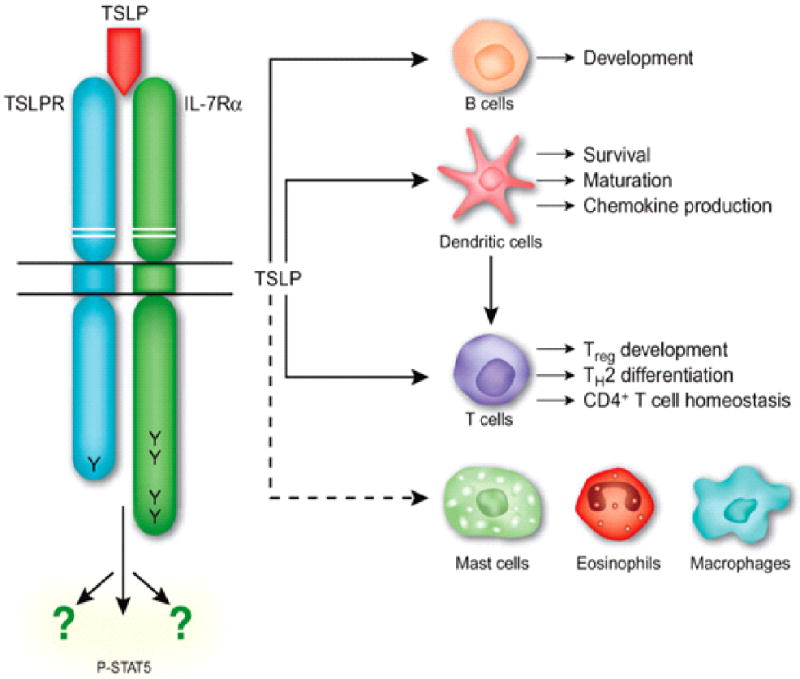
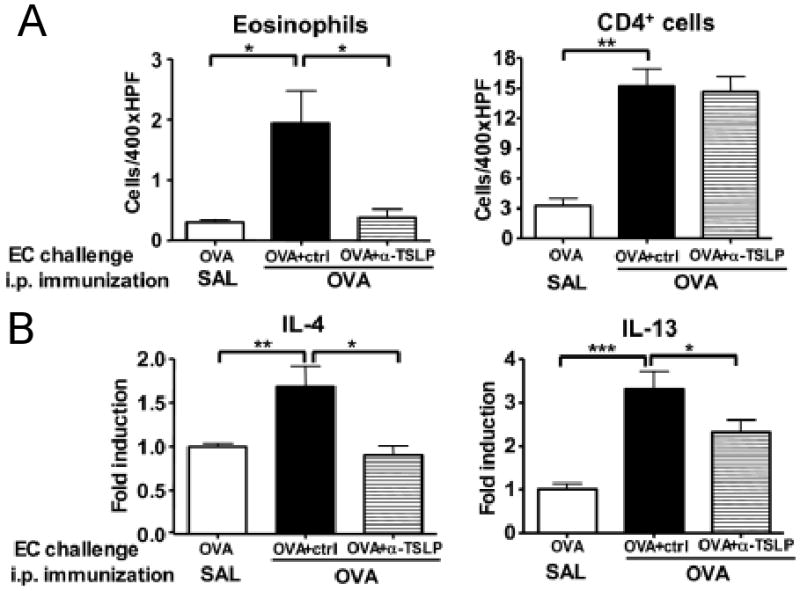
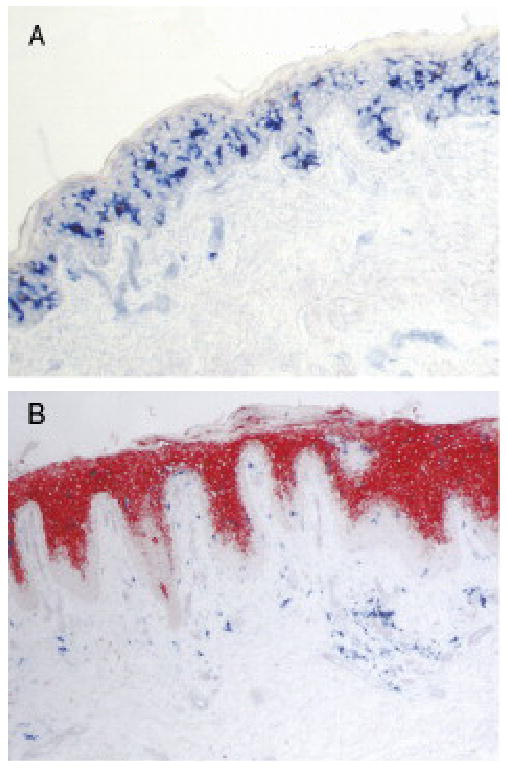
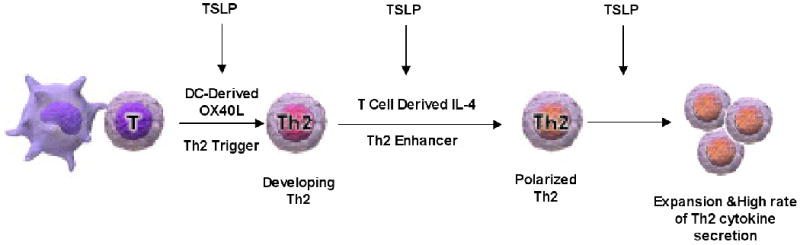
Thymic stromal lymphopoietin (TSLP) is an epithelial cell-derived cytokine expressed in skin, gut, lungs, and thymus. TSLP signals via a TSLP receptor (TSLPR), a heterodimer of the IL-7 receptor alpha chain and the TSLPR chain. The TSLPR chain is closely related to the common receptor gamma chain that is expressed on a wide range of cell types in the adaptive and innate immune system. TSLP exerts a profound influence on the polarization of dendritic cells to drive T helper (Th) 2 cytokine production. TSLP also directly promotes T-cell proliferation in response to T-cell receptor activation and Th2 cytokine production and supports B-cell expansion and differentiation. TSLP further amplifies Th2 cytokine production by mast cells and natural killer T cells. These properties confer on TSLP a critical role in driving Th2-mediated inflammation. This role is supported by the finding that TSLP expression is upregulated in keratinocytes of atopic dermatitis skin lesions and in bronchial epithelial cells in asthma.
胸腺基质淋巴细胞生成素(TSLP)是一种上皮细胞衍生的细胞因子,在皮肤、肠道、肺部和胸腺中表达。TSLP 通过 TSLP 受体(TSLPR)信号转导,TSLPR 是白细胞介素-7 受体α链和 TSLPR 链的异二聚体。TSLPR 链与广泛表达于适应性和固有免疫系统中多种细胞类型的共同γ链密切相关。TSLP 对树突状细胞的极化有深远影响,可驱动辅助性 T 细胞(Th)2 细胞因子的产生。TSLP 还可直接促进 T 细胞增殖,以响应 T 细胞受体的激活和 Th2 细胞因子的产生,并支持 B 细胞的扩增和分化。TSLP 通过肥大细胞和自然杀伤 T 细胞进一步放大 Th2 细胞因子的产生。这些特性赋予 TSLP 在驱动 Th2 介导的炎症中发挥关键作用。这一作用得到了以下发现的支持:特应性皮炎皮肤损伤的角质形成细胞和哮喘患者的支气管上皮细胞中 TSLP 的表达上调。