LBGM-GEICO, Laboratoire de Biochimie et de Génétique Moléculaire - Groupe d'Etude sur l'Inflammation Chronique et l'Obésité, Université de l'île de la Réunion, 15 avenue René Cassin 97715 Saint Denis Messag Cedex, France.
Service de biochimie, Centre Hospitalier Félix Guyon, Saint-Denis, Ile de la Réunion, France.
J Inflamm (Lond). 2010 Jan 8;7:1. doi: 10.1186/1476-9255-7-1.
The development of obesity has been linked to an inflammatory process, and the role of adipose tissue in the secretion of pro-inflammatory molecules such as IL-6 or TNFalpha has now been largely confirmed. Although TNFalpha secretion by adipose cells is probably induced, most notably by TLR ligands, the activation and secretion pathways of this cytokine are not yet entirely understood. Moreover, given that macrophagic infiltration is a characteristic of obesity, it is difficult to clearly establish the level of involvement of the different cellular types present within the adipose tissue during inflammation.
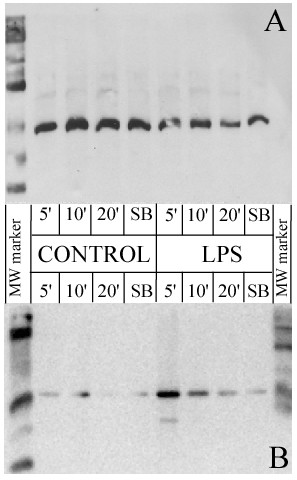
Primary cultures of human adipocytes and human peripheral blood mononuclear cells were used. Cells were treated with a pathogen-associated molecular pattern: LPS, with and without several kinase inhibitors. Western blot for p38 MAP Kinase was performed on cell lysates. TNFalpha mRNA was detected in cells by RT-PCR and TNFalpha protein was detected in supernatants by ELISA assays.
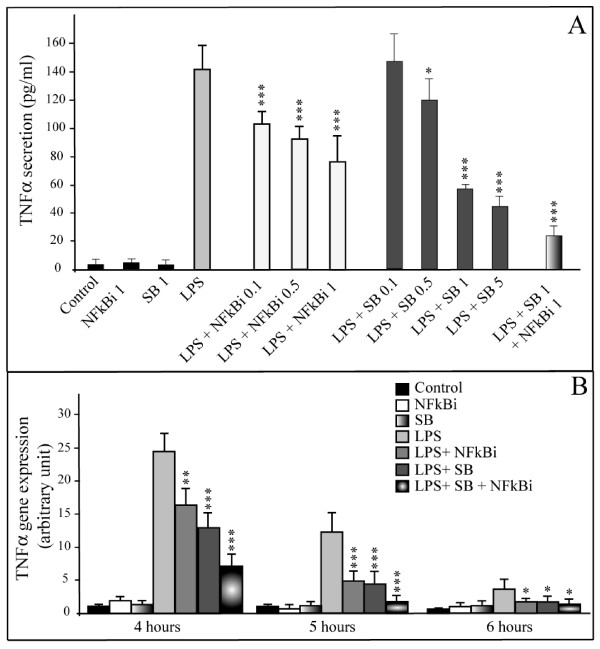
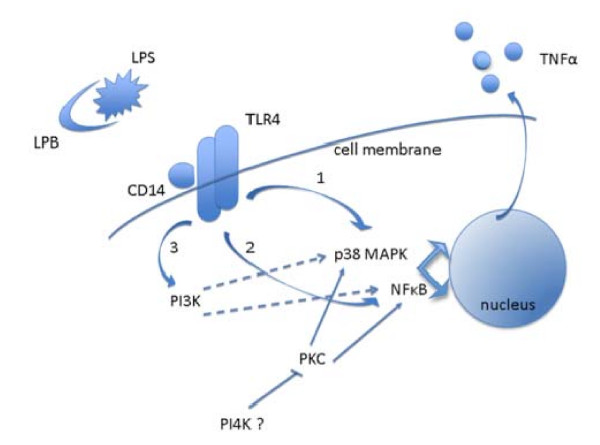
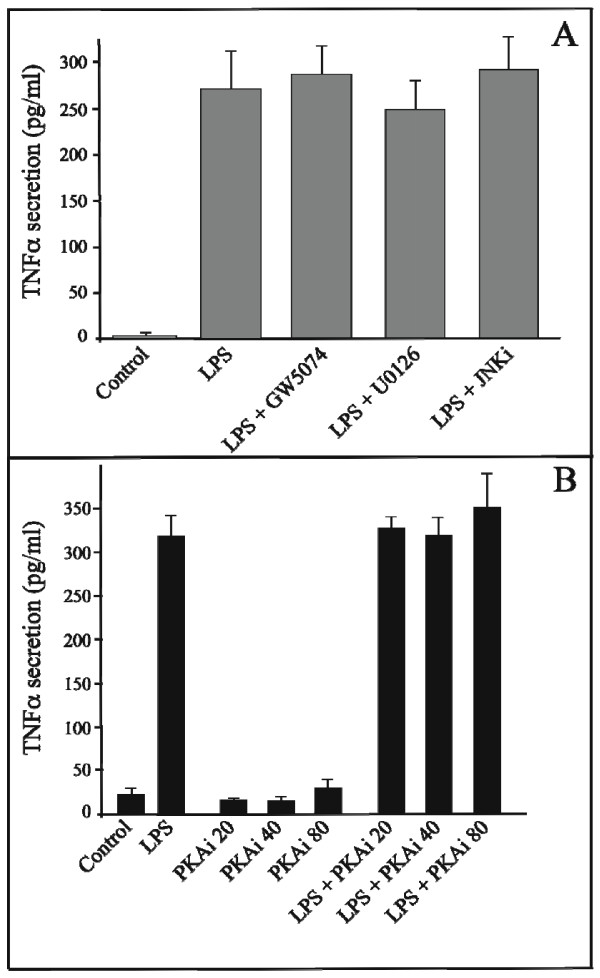
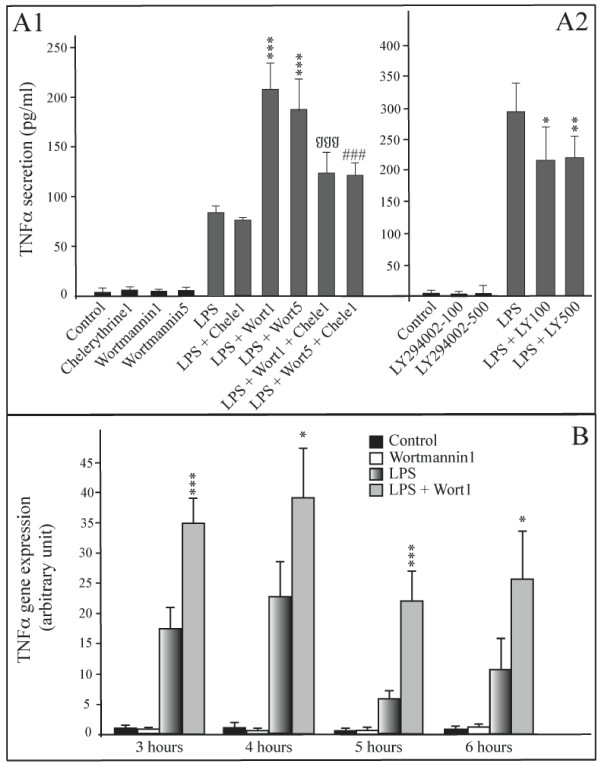
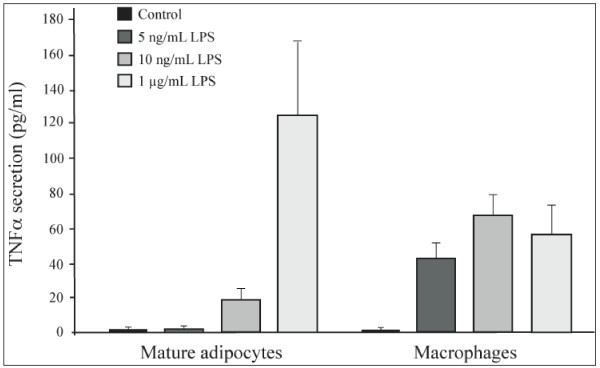
WE SHOW FOR THE FIRST TIME THAT THE PRODUCTION OF TNFALPHA IN MATURE HUMAN ADIPOCYTES IS MAINLY DEPENDENT UPON TWO PATHWAYS: NFkappaB and p38 MAP Kinase. Moreover, we demonstrate that the PI3Kinase pathway is clearly involved in the first step of the LPS-pathway. Lastly, we show that adipocytes are able to secrete a large amount of TNFalpha compared to macrophages.
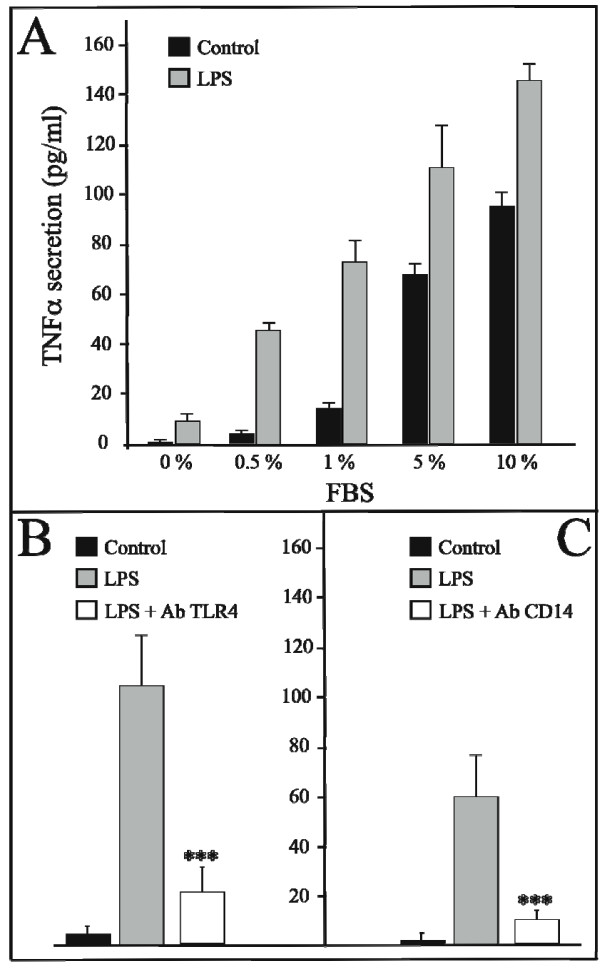
This study clearly demonstrates that the LPS induced activation pathway is an integral part of the inflammatory process linked to obesity, and that adipocytes are responsible for most of the secreted TNFalpha in inflamed adipose tissue, through TLR4 activation.
肥胖的发展与炎症过程有关,脂肪组织分泌促炎分子(如 IL-6 或 TNFalpha)的作用现在已经得到了广泛证实。虽然脂肪细胞分泌 TNFalpha 可能是被诱导的,尤其是被 TLR 配体诱导的,但这种细胞因子的激活和分泌途径尚未完全阐明。此外,鉴于巨噬细胞浸润是肥胖的一个特征,因此很难明确确定在炎症过程中脂肪组织内存在的不同细胞类型的参与程度。
使用原代培养的人脂肪细胞和人外周血单核细胞。用病原体相关分子模式(LPS)处理细胞,包括有无几种激酶抑制剂。用 Western blot 检测细胞裂解物中的 p38 MAP 激酶。用 RT-PCR 检测细胞中的 TNFalpha mRNA,用 ELISA 检测上清液中的 TNFalpha 蛋白。
我们首次表明,成熟人脂肪细胞中 TNFalpha 的产生主要依赖于两条途径:NFkappaB 和 p38 MAP 激酶。此外,我们证明 PI3 激酶途径明显参与 LPS 途径的第一步。最后,我们表明与巨噬细胞相比,脂肪细胞能够分泌大量的 TNFalpha。
本研究清楚地表明,LPS 诱导的激活途径是与肥胖相关的炎症过程的一个组成部分,脂肪细胞通过 TLR4 激活负责炎症脂肪组织中大部分分泌的 TNFalpha。