Department of Clinical and Experimental Medicine, University of Padova, Via Giustiniani 2, 35128 Padova, Italy.
Arthritis Res Ther. 2010;12(1):R23. doi: 10.1186/ar2930. Epub 2010 Feb 11.
To investigate whether monosodium urate (MSU) crystals induce the production of CCL2 (monocyte chemoattractant protein-1; MCP-1) in human fibroblast-like synoviocytes (FLS) and whether this mechanism would be affected by high-density lipoproteins (HDL).
Human FLS isolated from synovial tissue explants were stimulated with MSU crystals (0.01 to 0.5 mg/ml) or interleukin (IL)-1beta (10 pg/ml) in the presence or absence of HDL (50 and 100 microg/ml). The production and expression of CCL2 was evaluated with ELISA, confocal microscopy, immunofluorescence microscopy, chemotaxis assay, and real-time quantitative PCR.
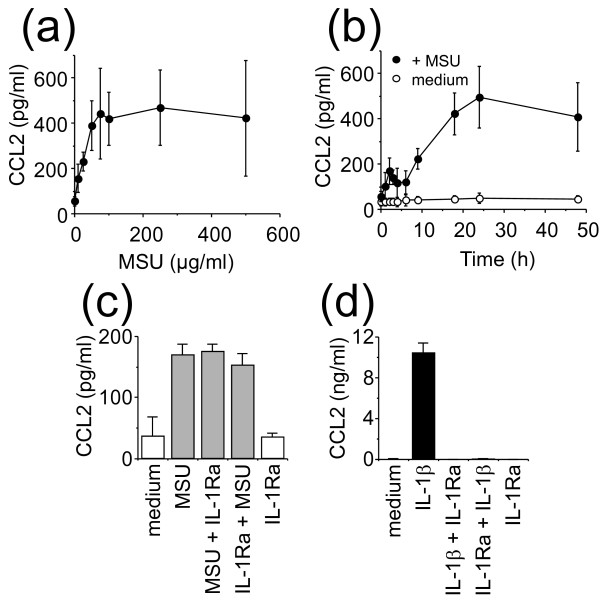
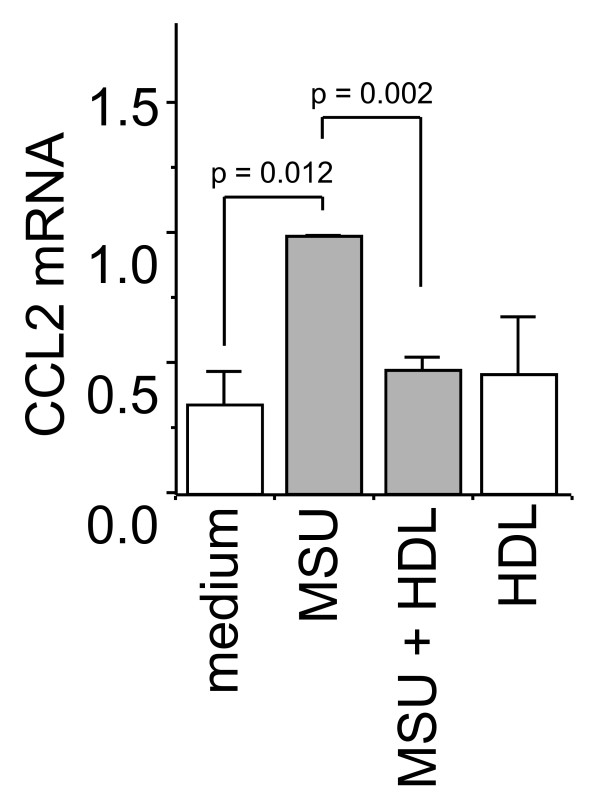
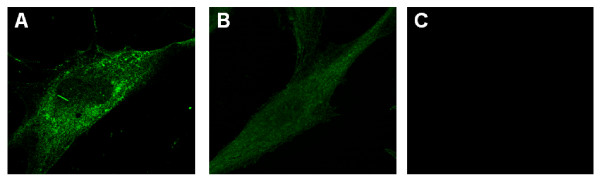
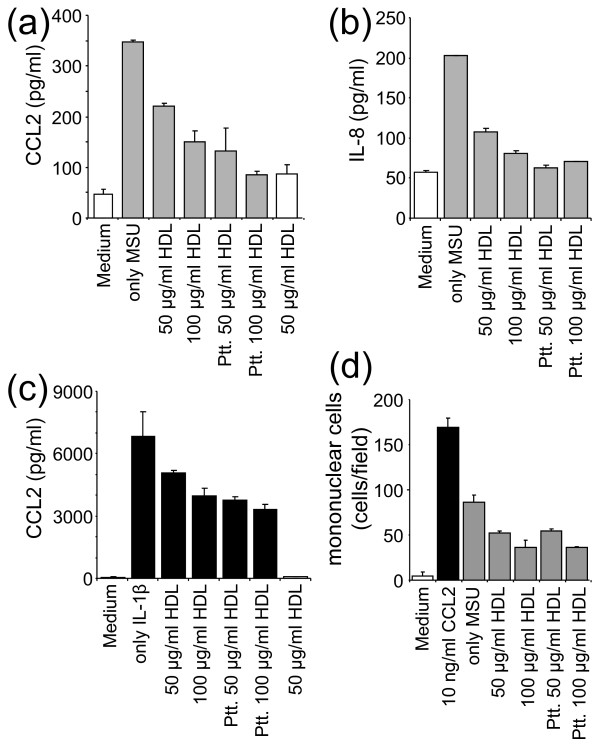
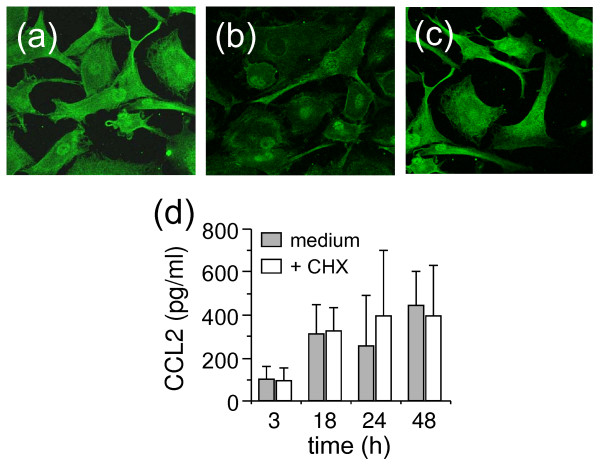
Exposure of FLS to MSU crystals induced CCL2 accumulation in culture medium in a dose- and time-dependent manner, reaching a plateau at 50 to 75 microg/ml MSU crystals and 20 to 24 hours. Although low, the induced CCL2 levels were sufficient to trigger mononuclear cell migration. In resting FLS, CCL2 was localized in small cytoplasmic vesicles whose number diminished with MSU crystal stimulation. Concomitantly, MSU crystals triggered the induction of CCL2 mRNA expression. All these processes were inhibited by HDL, which cause a 50% decrease in CCL2 mRNA levels and a dose-dependent inhibition of the release of CCL2. Similar results were obtained when FLS were pretreated with HDL and washed before activation by MSU crystals or IL-1beta, suggesting a direct effect of HDL on the FLS activation state.
The present results demonstrate that MSU crystals induce FLS to release CCL2 that is stored in vesicles in resting conditions. This mechanism is inhibited by HDL, which may limit the inflammatory process by diminishing CCL2 production and, in turn, monocytes/macrophages recruitment in joints. This study confirms the antiinflammatory functions of HDL, which might play a part in the limitation of acute gout attack.
为了研究尿酸单钠(MSU)晶体是否会诱导人成纤维样滑膜细胞(FLS)产生趋化因子配体 2(单核细胞趋化蛋白-1;MCP-1),以及该机制是否会受到高密度脂蛋白(HDL)的影响。
从滑膜组织外植体中分离出人 FLS,用 MSU 晶体(0.01 至 0.5 mg/ml)或白细胞介素(IL)-1β(10 pg/ml)刺激,同时存在或不存在 HDL(50 和 100 μg/ml)。通过 ELISA、共聚焦显微镜、免疫荧光显微镜、趋化实验和实时定量 PCR 评估 CCL2 的产生和表达。
FLS 暴露于 MSU 晶体可诱导培养基中 CCL2 的积累,呈剂量和时间依赖性,在 50 至 75 μg/ml MSU 晶体和 20 至 24 小时达到平台期。尽管水平较低,但诱导的 CCL2 水平足以触发单核细胞迁移。在静止的 FLS 中,CCL2 位于小细胞质囊泡中,随着 MSU 晶体刺激,囊泡数量减少。同时,MSU 晶体触发 CCL2 mRNA 表达的诱导。所有这些过程都被 HDL 抑制,HDL 导致 CCL2 mRNA 水平降低 50%,并呈剂量依赖性抑制 CCL2 的释放。当 FLS 在用 MSU 晶体或 IL-1β 激活之前用 HDL 预处理并洗涤时,也得到了类似的结果,这表明 HDL 对 FLS 激活状态有直接影响。
本研究结果表明,MSU 晶体诱导 FLS 在静息状态下释放储存在囊泡中的 CCL2。该机制被 HDL 抑制,HDL 通过减少 CCL2 的产生,并相应地减少单核细胞/巨噬细胞在关节中的募集,从而限制炎症过程。这项研究证实了 HDL 的抗炎功能,这可能在限制急性痛风发作中发挥作用。