Department of Biochemistry, Molecular Biology and Biophysics, The University of Minnesota, Minneapolis, Minnesota, USA.
Diabetes. 2010 May;59(5):1132-42. doi: 10.2337/db09-1105. Epub 2010 Feb 11.
Peripheral insulin resistance is linked to an increase in reactive oxygen species (ROS), leading in part to the production of reactive lipid aldehydes that modify the side chains of protein amino acids in a reaction termed protein carbonylation. The primary enzymatic method for lipid aldehyde detoxification is via glutathione S-transferase A4 (GSTA4) dependent glutathionylation. The objective of this study was to evaluate the expression of GSTA4 and the role(s) of protein carbonylation in adipocyte function.
GSTA4-silenced 3T3-L1 adipocytes and GSTA4-null mice were evaluated for metabolic processes, mitochondrial function, and reactive oxygen species production. GSTA4 expression in human obesity was evaluated using microarray analysis.
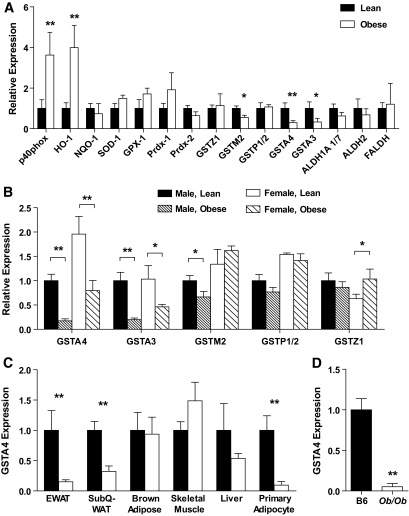
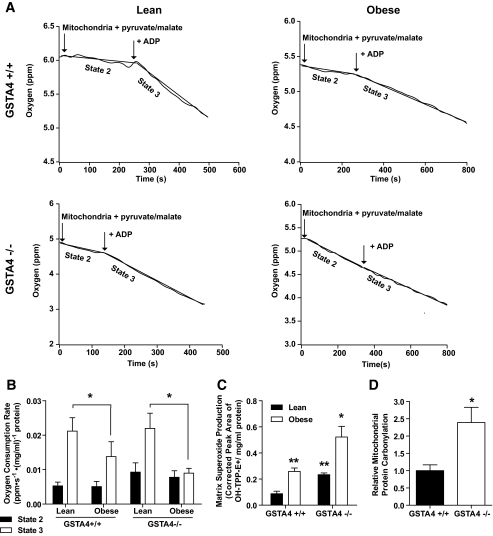
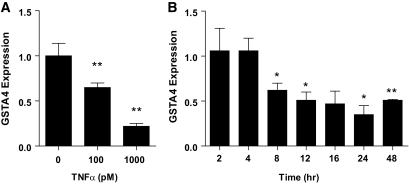
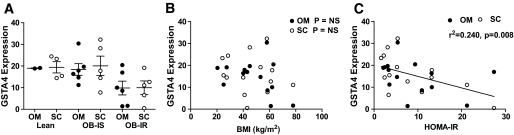
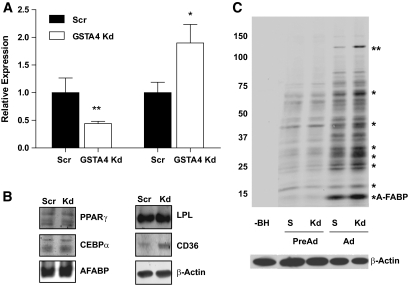
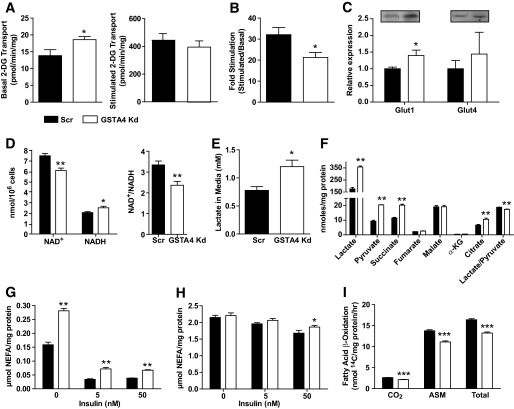
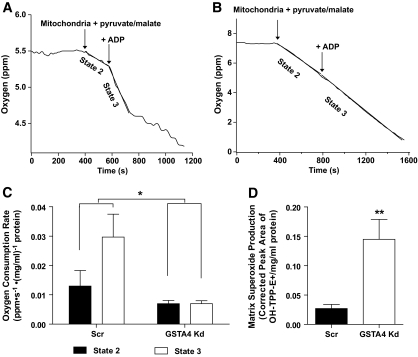
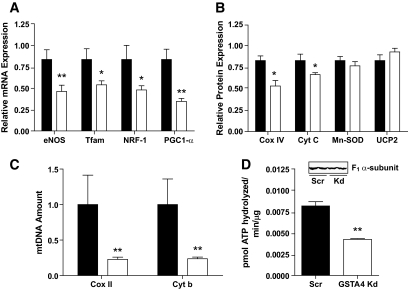
GSTA4 expression is selectively downregulated in adipose tissue of obese insulin-resistant C57BL/6J mice and in human obesity-linked insulin resistance. Tumor necrosis factor-alpha treatment of 3T3-L1 adipocytes decreased GSTA4 expression, and silencing GSTA4 mRNA in cultured adipocytes resulted in increased protein carbonylation, increased mitochondrial ROS, dysfunctional state 3 respiration, and altered glucose transport and lipolysis. Mitochondrial function in adipocytes of lean or obese GSTA4-null mice was significantly compromised compared with wild-type controls and was accompanied by an increase in superoxide anion.
These results indicate that downregulation of GSTA4 in adipose tissue leads to increased protein carbonylation, ROS production, and mitochondrial dysfunction and may contribute to the development of insulin resistance and type 2 diabetes.
外周胰岛素抵抗与活性氧(ROS)的增加有关,导致部分活性脂质醛的产生,这些醛通过一种称为蛋白质羰基化的反应修饰蛋白质氨基酸的侧链。脂质醛解毒的主要酶法是通过谷胱甘肽 S-转移酶 A4(GSTA4)依赖的谷胱甘肽化。本研究的目的是评估 GSTA4 的表达以及蛋白质羰基化在脂肪细胞功能中的作用。
评估 GSTA4 沉默的 3T3-L1 脂肪细胞和 GSTA4 缺失小鼠的代谢过程、线粒体功能和活性氧的产生。使用微阵列分析评估人肥胖症中的 GSTA4 表达。
肥胖胰岛素抵抗 C57BL/6J 小鼠和人肥胖相关胰岛素抵抗的脂肪组织中 GSTA4 表达选择性下调。肿瘤坏死因子-α处理 3T3-L1 脂肪细胞会降低 GSTA4 的表达,而在培养的脂肪细胞中沉默 GSTA4 mRNA 会导致蛋白质羰基化增加、线粒体 ROS 增加、功能状态 3 呼吸受损以及葡萄糖转运和脂肪分解改变。与野生型对照相比,瘦或肥胖 GSTA4 缺失小鼠的脂肪细胞线粒体功能明显受损,同时伴有超氧阴离子的增加。
这些结果表明,脂肪组织中 GSTA4 的下调导致蛋白质羰基化、ROS 产生和线粒体功能障碍增加,可能导致胰岛素抵抗和 2 型糖尿病的发展。