Jacewicz Ewa, Fox Robert A, O'Neill Caitlin, Salmons Joseph
Department of Speech and Hearing Science, The Ohio State University.
Lang Var Change. 2009 Jul 1;21(2):233-256. doi: 10.1017/S0954394509990093.
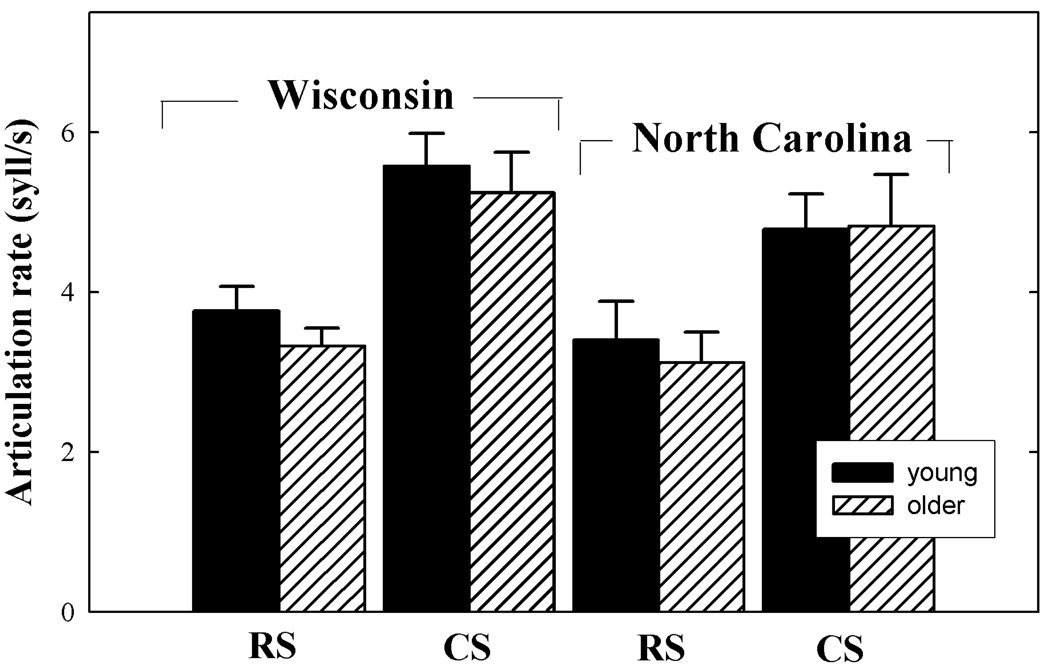
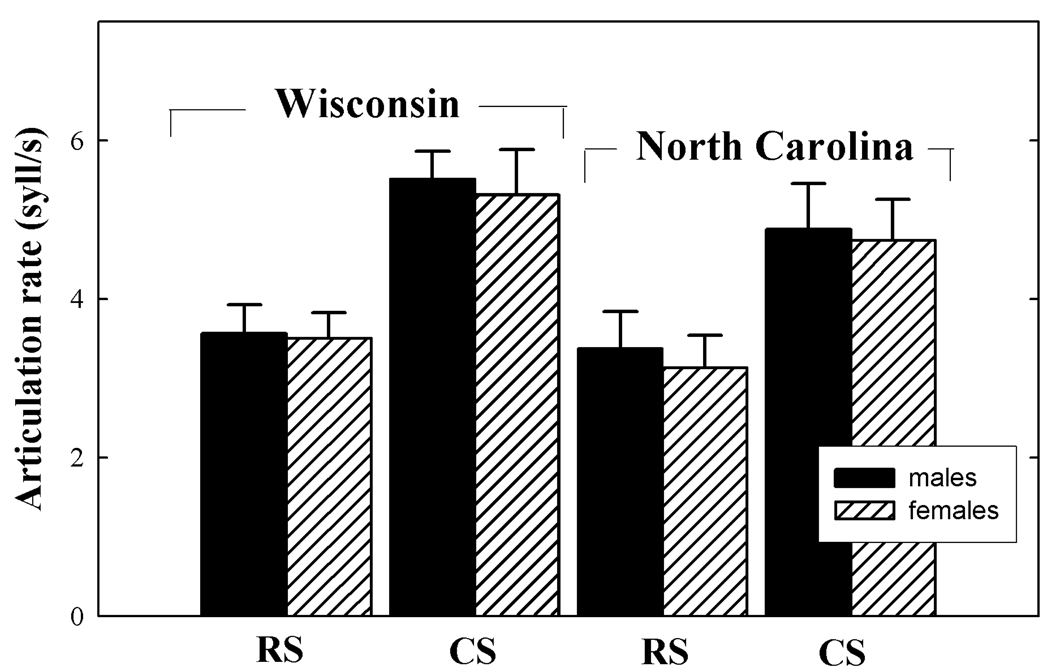
The understanding of sociolinguistic variation is growing rapidly, but basic gaps still remain. Whether some languages or dialects are spoken faster or slower than others constitutes such a gap. Speech tempo is interconnected with social, physical and psychological markings of speech. This study examines regional variation in articulation rate and its manifestations across speaker age, gender and speaking situations (reading vs. free conversation). The results of an experimental investigation show that articulation rate differs significantly between two regional varieties of American English examined here. A group of Northern speakers (from Wisconsin) spoke significantly faster than a group of Southern speakers (from North Carolina). With regard to age and gender, young adults read faster than older adults in both regions; in free speech, only Northern young adults spoke faster than older adults. Effects of gender were smaller and less consistent; men generally spoke slightly faster than women. As the body of work on the sociophonetics of American English continues to grow in scope and depth, we argue that it is important to include fundamental phonetic information as part of our catalog of regional differences and patterns of change in American English.
对社会语言变异的理解正在迅速发展,但基本差距仍然存在。某些语言或方言的语速比其他语言或方言快还是慢就构成了这样一个差距。语速与言语的社会、生理和心理特征相互关联。本研究考察了发音速度的区域差异及其在说话者年龄、性别和说话情境(朗读与自由对话)中的表现。一项实验研究的结果表明,在此研究的两种美国英语区域变体之间,发音速度存在显著差异。一组北方人(来自威斯康星州)的语速明显快于一组南方人(来自北卡罗来纳州)。在年龄和性别方面,两个地区的年轻人朗读速度都比老年人快;在自由交谈中,只有北方的年轻人语速比老年人快。性别的影响较小且不太一致;男性的语速通常比女性略快。随着美国英语社会语音学研究工作在范围和深度上不断发展,我们认为将基本语音信息纳入我们对美国英语区域差异和变化模式的分类中很重要。