Neurosciences Centre of Excellence in Drug Discovery, GlaxoSmithKline R&D, Verona, Italy.
PLoS One. 2010 Feb 11;5(2):e9166. doi: 10.1371/journal.pone.0009166.
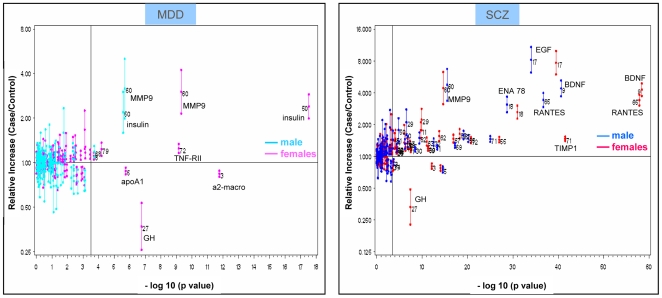
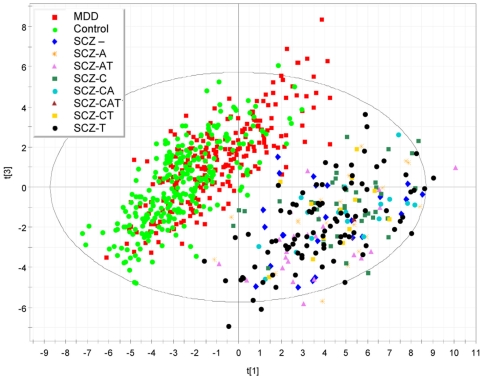
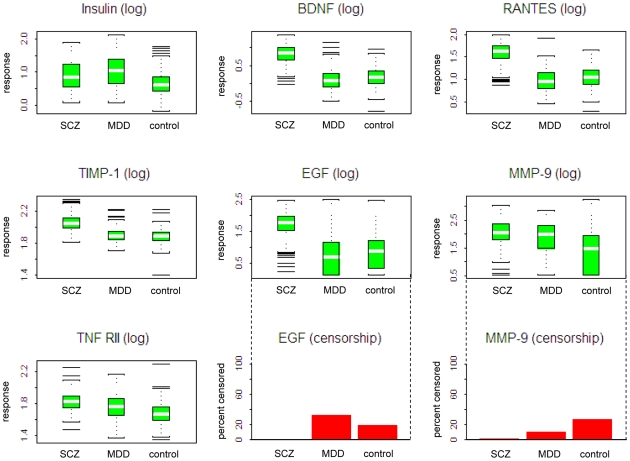
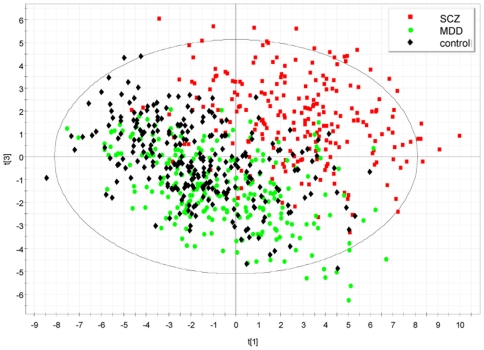
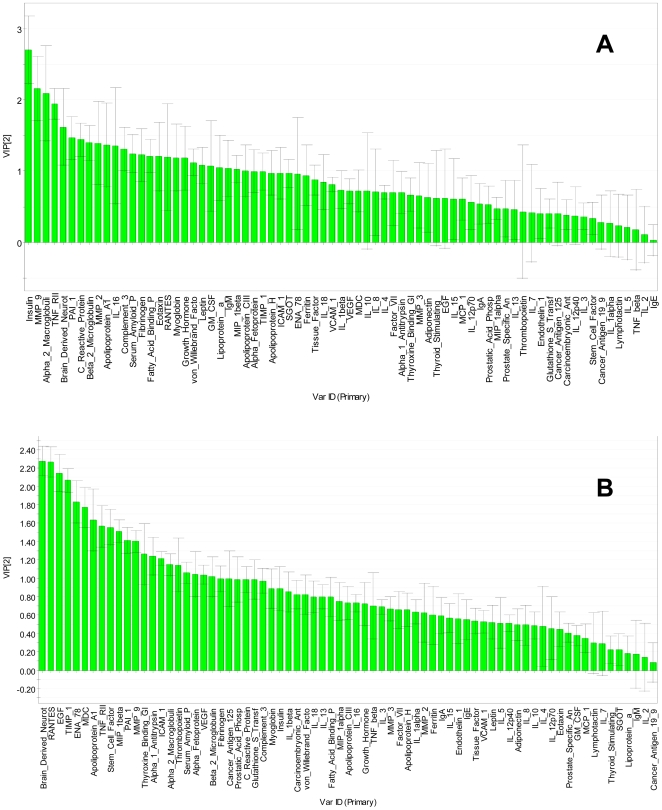
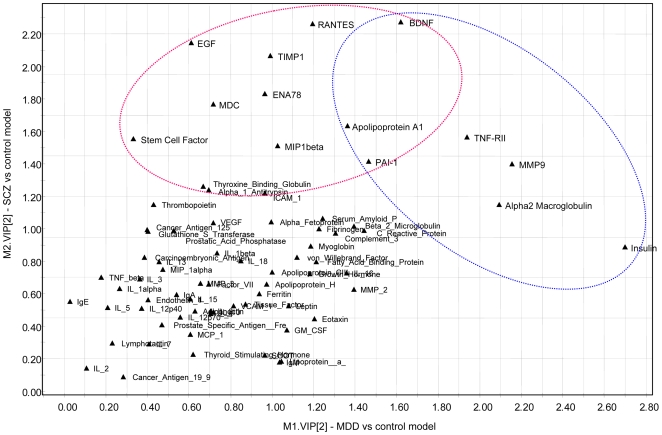
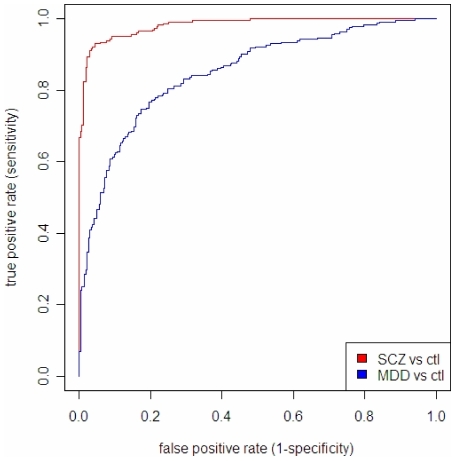
Despite significant research efforts aimed at understanding the neurobiological underpinnings of psychiatric disorders, the diagnosis and the evaluation of treatment of these disorders are still based solely on relatively subjective assessment of symptoms. Therefore, biological markers which could improve the current classification of psychiatry disorders, and in perspective stratify patients on a biological basis into more homogeneous clinically distinct subgroups, are highly needed. In order to identify novel candidate biological markers for major depression and schizophrenia, we have applied a focused proteomic approach using plasma samples from a large case-control collection. Patients were diagnosed according to DSM criteria using structured interviews and a number of additional clinical variables and demographic information were assessed. Plasma samples from 245 depressed patients, 229 schizophrenic patients and 254 controls were submitted to multi analyte profiling allowing the evaluation of up to 79 proteins, including a series of cytokines, chemokines and neurotrophins previously suggested to be involved in the pathophysiology of depression and schizophrenia. Univariate data analysis showed more significant p-values than would be expected by chance and highlighted several proteins belonging to pathways or mechanisms previously suspected to be involved in the pathophysiology of major depression or schizophrenia, such as insulin and MMP-9 for depression, and BDNF, EGF and a number of chemokines for schizophrenia. Multivariate analysis was carried out to improve the differentiation of cases from controls and identify the most informative panel of markers. The results illustrate the potential of plasma biomarker profiling for psychiatric disorders, when conducted in large collections. The study highlighted a set of analytes as candidate biomarker signatures for depression and schizophrenia, warranting further investigation in independent collections.
尽管在理解精神疾病的神经生物学基础方面做出了重大研究努力,但这些疾病的诊断和治疗评估仍然仅基于对症状的相对主观评估。因此,非常需要能够改善当前精神病学疾病分类的生物标志物,并能够将患者基于生物学基础划分为更同质的临床明显亚组。为了确定用于重度抑郁症和精神分裂症的新候选生物标志物,我们应用了一种聚焦的蛋白质组学方法,使用来自大型病例对照集的血浆样本。根据 DSM 标准使用结构化访谈对患者进行诊断,并评估了许多其他临床变量和人口统计学信息。对来自 245 名抑郁患者、229 名精神分裂症患者和 254 名对照者的血浆样本进行了多分析物分析,允许评估多达 79 种蛋白质,包括一系列细胞因子、趋化因子和神经营养因子,这些因子以前被认为与抑郁症和精神分裂症的病理生理学有关。单变量数据分析显示了比偶然情况更显著的 p 值,并突出了一些属于先前怀疑与重度抑郁症或精神分裂症病理生理学有关的途径或机制的蛋白质,例如胰岛素和 MMP-9 与抑郁症有关,BDNF、EGF 和许多趋化因子与精神分裂症有关。进行了多变量分析以提高病例与对照者的区分能力并确定最具信息量的标记物组。研究结果说明了在大型集合中进行血浆生物标志物分析对精神疾病的潜在价值。该研究突出了一组分析物作为抑郁症和精神分裂症的候选生物标志物特征,值得在独立集合中进一步研究。