i-Med-UL, Faculdade de Farmácia, Universidade de Lisboa, Lisbon, Portugal.
Brain Res. 2010 Apr 22;1326:152-61. doi: 10.1016/j.brainres.2010.02.016. Epub 2010 Feb 17.
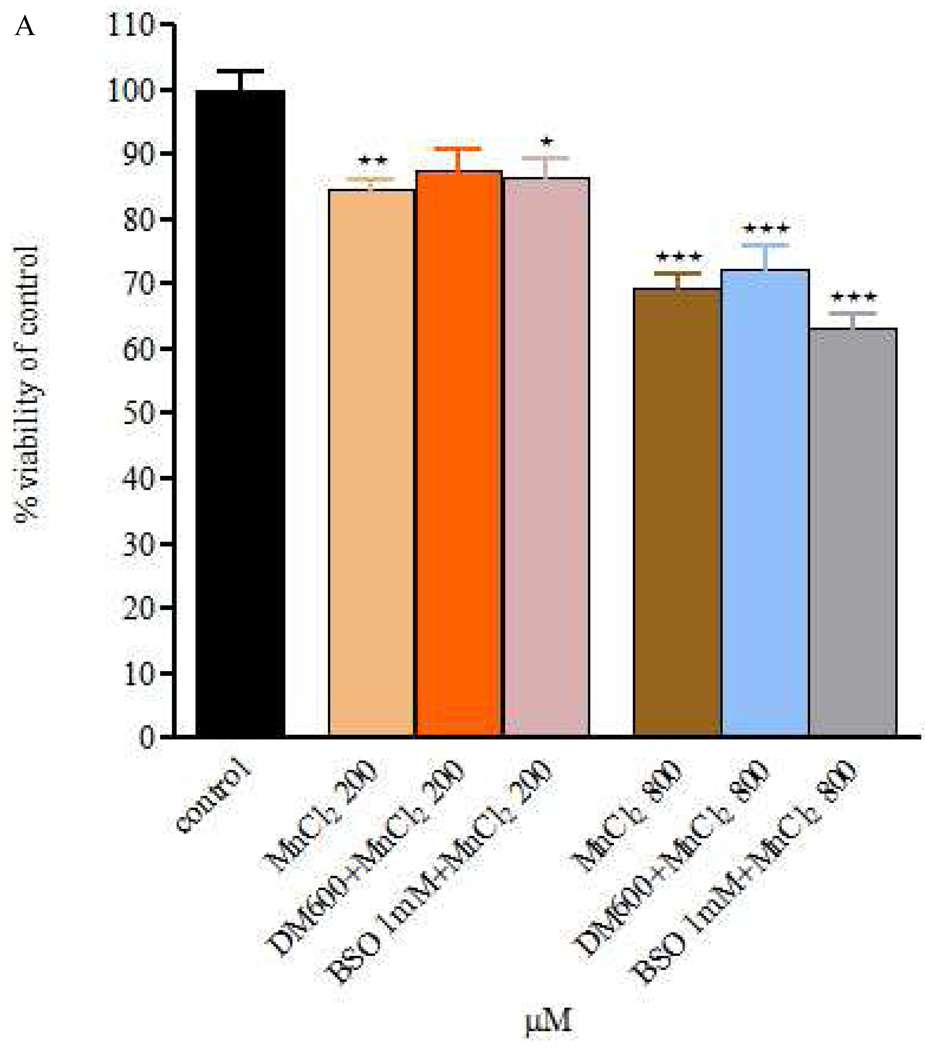
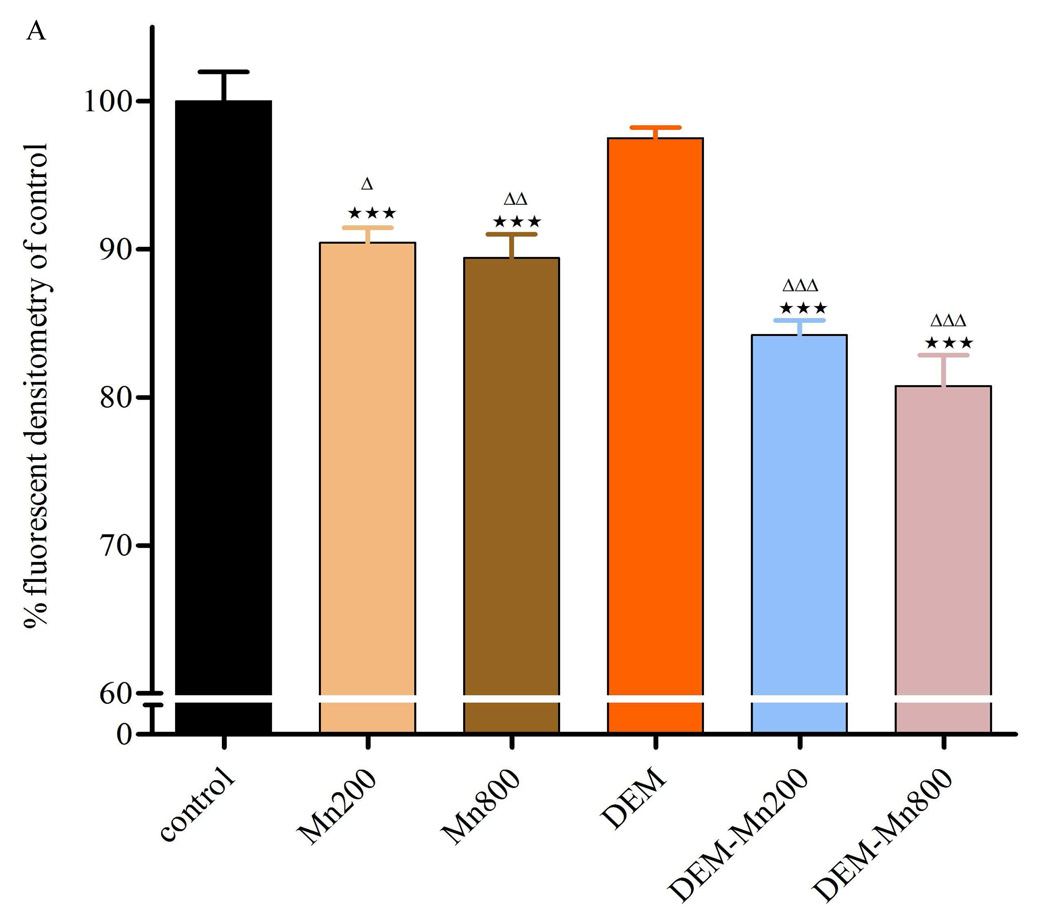
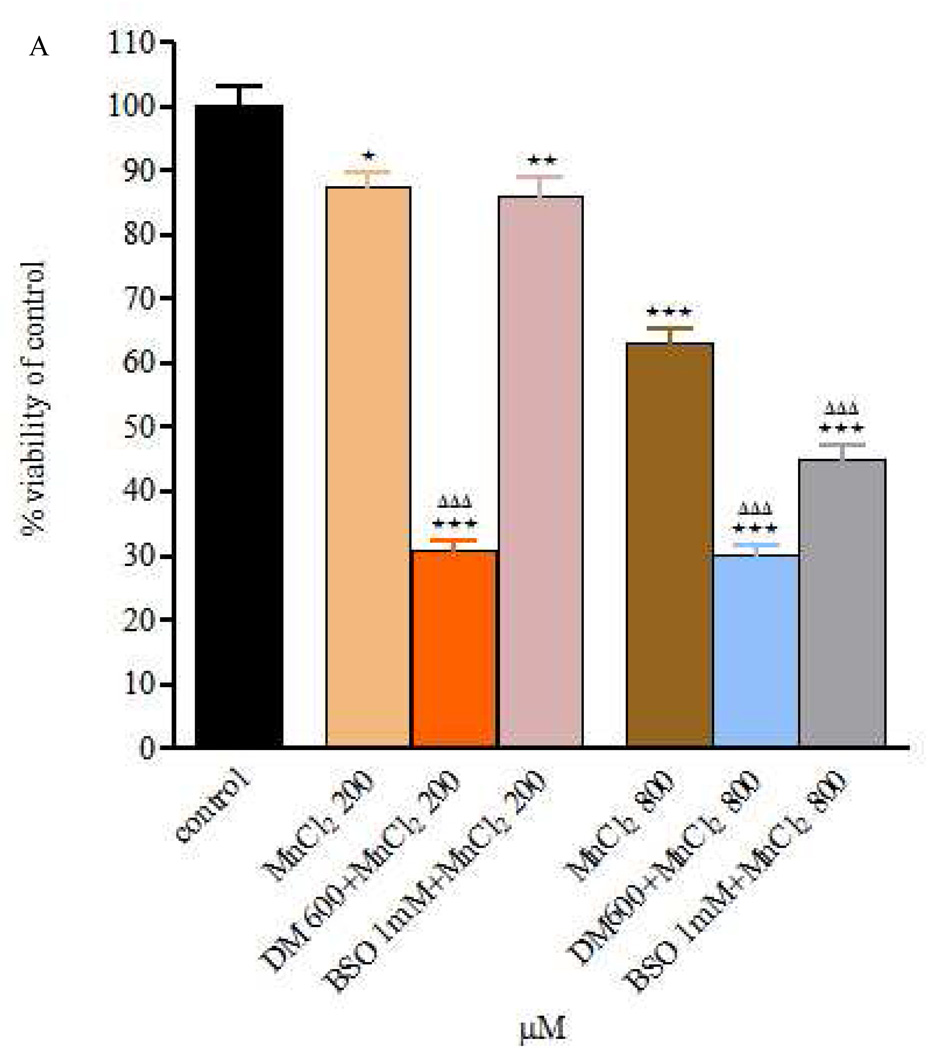
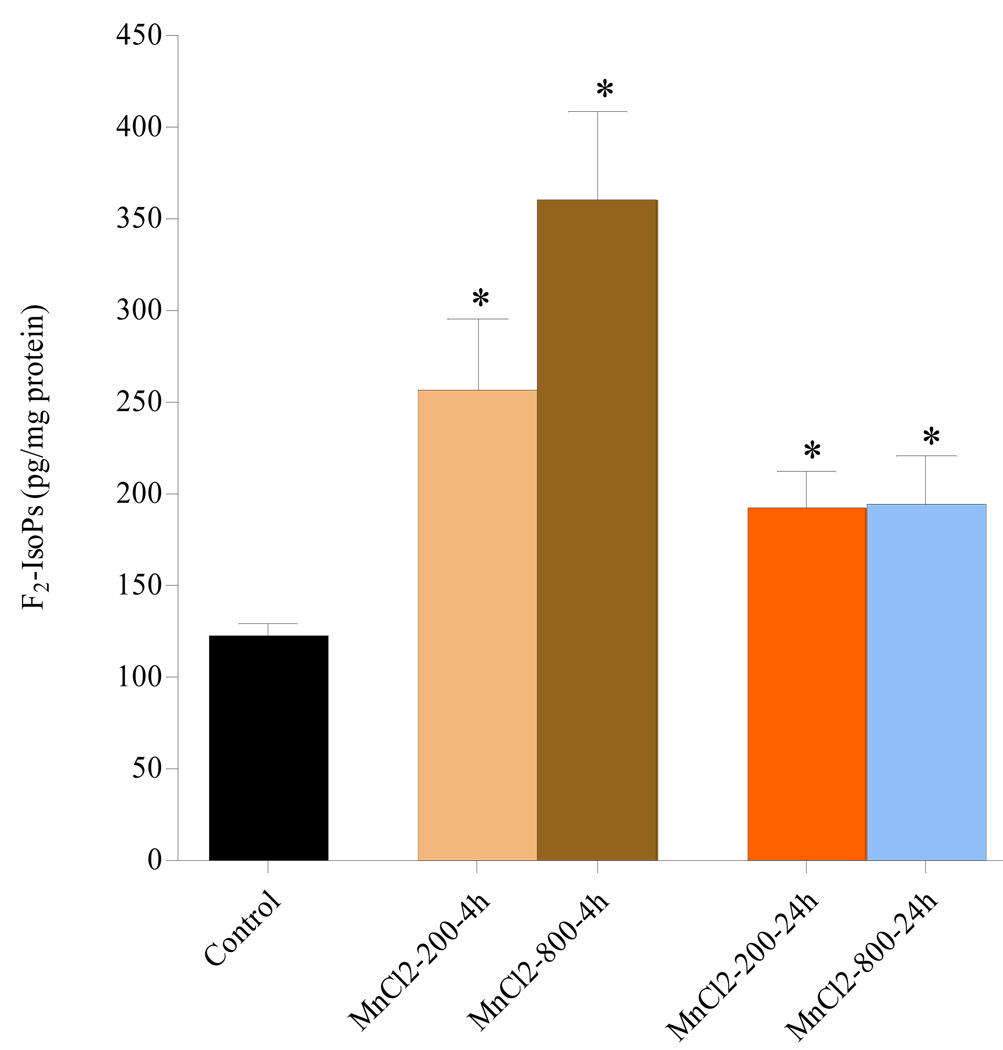
Manganese (Mn) is an essential trace metal; however, exposure to high Mn levels can result in neurodegenerative changes resembling Parkinson's disease (PD). Information on Mn's effects on endothelial cells of the blood-brain barrier (BBB) is lacking. Accordingly, we tested the hypothesis that BBB endothelial cells are a primary target for Mn-induced neurotoxicity. The studies were conducted in an in vitro BBB model of immortalized rat brain endothelial (RBE4) cells. ROS production was determined by F(2)-isoprostane (F(2)-IsoPs) measurement. The relationship between Mn toxicity and redox status was investigated upon intracellular glutathione (GSH) depletion with diethylmaleate (DEM) or L-buthionine sulfoximine (BSO). Mn exposure (200 or 800 microM MnCl(2) or MnSO(4)) for 4 or 24h led to significant decrease in cell viability vs. controls. DEM or BSO pre-treatment led to further enhancement in cytotoxicity vs. exposure to Mn alone, with more pronounced cell death after 24-h DEM pre-treatment. F(2)-IsoPs levels in cells exposed to MnCl(2) (200 or 800 microM) were significantly increased after 4h and remained elevated 24h after exposure compared with controls. Consistent with the effects on cell viability and F(2)-IsoPs, treatment with MnCl(2) (200 or 800 microM) was also associated with a significant decrease in membrane potential. This effect was more pronounced in cells exposed to DEM plus MnCl(2) vs. cells exposed to Mn alone. We conclude that Mn induces direct injury to mitochondria in RBE4 cells. The ensuing impairment in energy metabolism and redox status may modify the restrictive properties of the BBB compromising its function.
锰(Mn)是一种必需的微量元素;然而,暴露于高水平的锰会导致类似于帕金森病(PD)的神经退行性变化。关于锰对血脑屏障(BBB)内皮细胞的影响的信息是缺乏的。因此,我们检验了假设,即 BBB 内皮细胞是 Mn 诱导的神经毒性的主要靶标。这些研究是在体外 BBB 模型中进行的,使用永生大鼠脑内皮(RBE4)细胞。通过 F(2)-异前列腺素(F(2)-IsoPs)测量来确定 ROS 的产生。通过二乙基马来酸(DEM)或 L-丁硫氨酸亚砜(BSO)耗尽细胞内谷胱甘肽(GSH)来研究 Mn 毒性与氧化还原状态之间的关系。暴露于 Mn(200 或 800μM MnCl(2)或 MnSO(4))4 或 24h 导致细胞活力与对照相比显著降低。与单独暴露于 Mn 相比,DEM 或 BSO 预处理导致细胞毒性进一步增强,与 24h DEM 预处理后细胞死亡更为明显。暴露于 MnCl(2)(200 或 800μM)的细胞中 F(2)-IsoPs 水平在 4h 后显著增加,并在暴露后 24h 仍保持升高,与对照组相比。与细胞活力和 F(2)-IsoPs 的影响一致,用 MnCl(2)(200 或 800μM)处理也与膜电位显著降低相关。与单独暴露于 Mn 相比,暴露于 DEM 加 MnCl(2)的细胞中这种作用更为明显。我们得出结论,Mn 诱导 RBE4 细胞中线粒体的直接损伤。随之而来的能量代谢和氧化还原状态的损伤可能会改变 BBB 的限制特性,从而损害其功能。