CNRS-UMR5227, Université de Bordeaux, Bordeaux, France.
PLoS One. 2010 Feb 19;5(2):e9296. doi: 10.1371/journal.pone.0009296.
There has been a dramatic escalation in sugar intake in the last few decades, most strikingly observed in the adolescent population. Sugar overconsumption has been associated with several adverse health consequences, including obesity and diabetes. Very little is known, however, about the impact of sugar overconsumption on mental health in general, and on reward-related behavioral disorders in particular. This study examined in rats the effects of unlimited access to sucrose during adolescence on the motivation for natural and pharmacological rewards in adulthood.
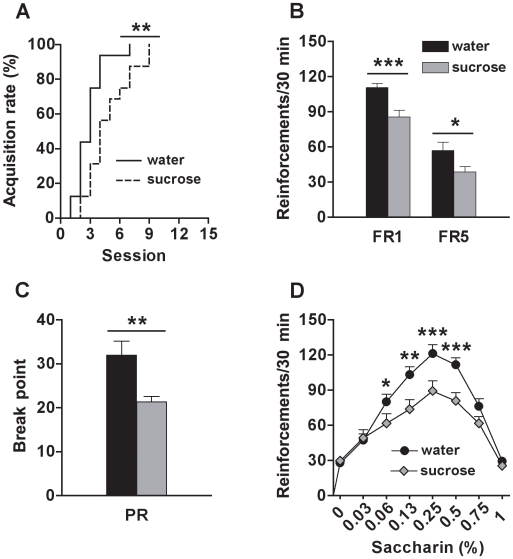
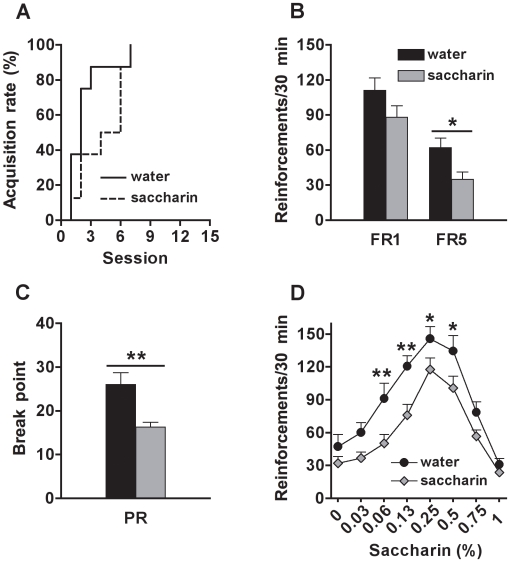
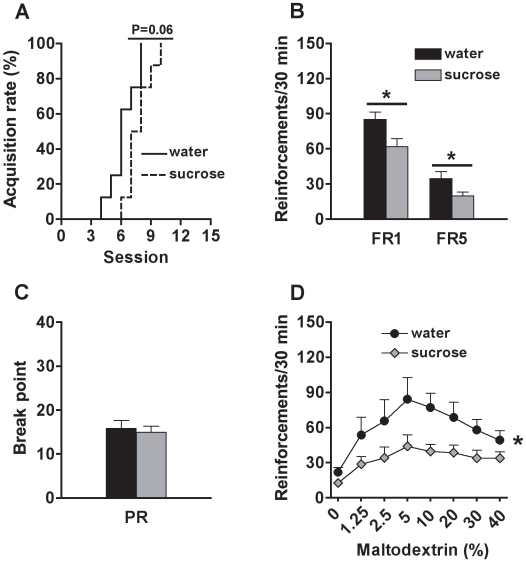
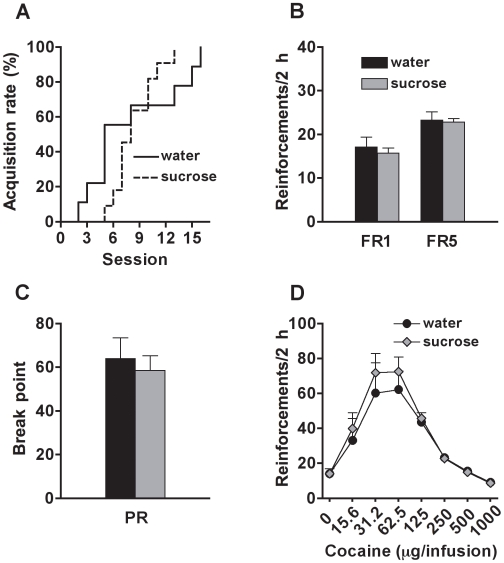
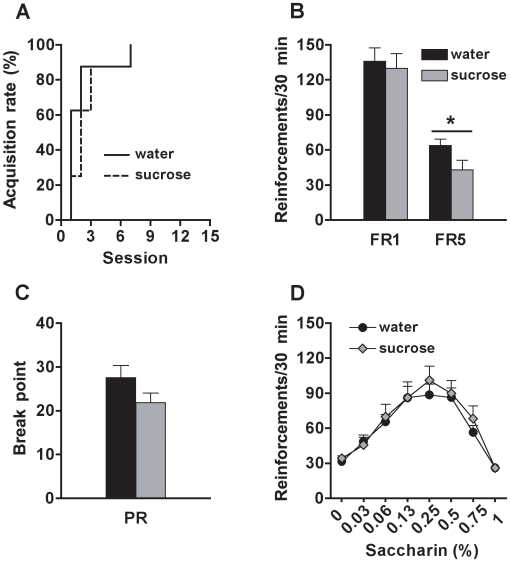
METHODOLOGY/PRINCIPAL FINDINGS: Adolescent rats had free access to 5% sucrose or water from postnatal day 30 to 46. The control group had access to water only. In adulthood, rats were tested for self-administration of saccharin (sweet), maltodextrin (non-sweet), and cocaine (a potent drug of abuse) using fixed- and progressive-ratio schedules, and a concentration-response curve for each substance. Adult rats, exposed or not exposed to sucrose, were tested for saccharin self-administration later in life to verify the specificity of adolescence for the sugar effects. Sugar overconsumption during adolescence, but not during adulthood, reduced the subsequent motivation for saccharin and maltodextrin, but not cocaine. This selective decrease in motivation is more likely due to changes in brain reward processing than changes in gustatory perception.
CONCLUSIONS/SIGNIFICANCE: Sugar overconsumption induces a developmental stage-specific chronic depression in reward processing that may contribute to an increase in the vulnerability to reward-related psychiatric disorders.
在过去几十年中,糖的摄入量急剧上升,在青少年人群中尤为明显。糖摄入过量与多种健康不良后果有关,包括肥胖和糖尿病。然而,人们对糖摄入过量对一般心理健康的影响,特别是对与奖励相关的行为障碍的影响知之甚少。本研究在大鼠中检查了青春期内无限制摄入蔗糖对成年期自然和药物奖励动机的影响。
方法/主要发现:青春期大鼠从出生后第 30 天到 46 天可自由摄入 5%的蔗糖或水。对照组只能摄入水。成年后,大鼠通过固定和递增比例时间表以及每种物质的浓度反应曲线,测试蔗糖、麦芽糖(非甜)和可卡因(一种强效滥用药物)的自我给药情况。暴露或不暴露于蔗糖的成年大鼠在以后的生活中接受蔗糖自我给药测试,以验证青春期对糖效应的特异性。青春期过度摄入糖会降低随后对蔗糖和麦芽糖的动机,但不会降低对可卡因的动机。这种动机的选择性下降更可能是由于大脑奖励处理的变化,而不是味觉感知的变化。
结论/意义:糖摄入过量会导致奖励处理中出现特定于发育阶段的慢性抑郁,这可能导致与奖励相关的精神障碍易感性增加。