Augier E, Flanigan M, Dulman R S, Pincus A, Schank J R, Rice K C, Kejun C, Heilig M, Tapocik J D
Laboratory of Clinical and Translational Studies, National Institute on Alcohol Abuse and Alcoholism, National Institutes of Health, Bethesda, MD, 20892, USA,
Psychopharmacology (Berl). 2014 Dec;231(23):4561-8. doi: 10.1007/s00213-014-3605-3. Epub 2014 May 25.
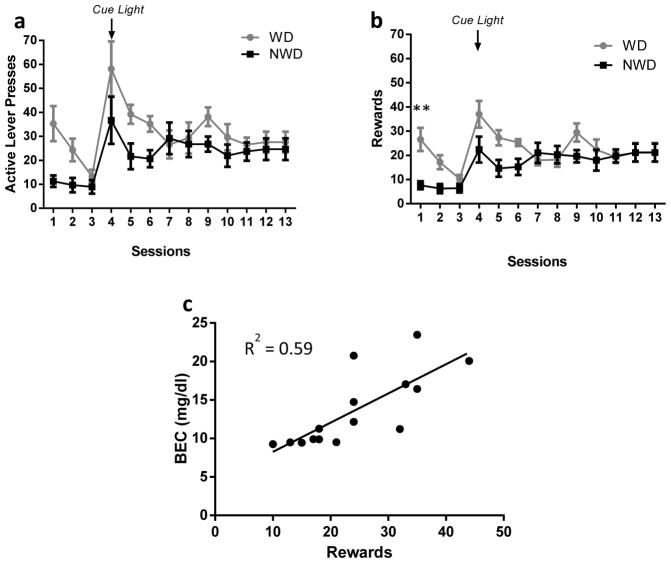
Operant self-administration (SA) is an important model of motivation to consume ethanol (EtOH), but low rates of voluntary consumption in rats are thought to necessitate water deprivation and saccharin/sucrose fading for acquisition of responding.
Here, we sought to devise an effective model of SA that does not use water deprivation or saccharin/sucrose fading.
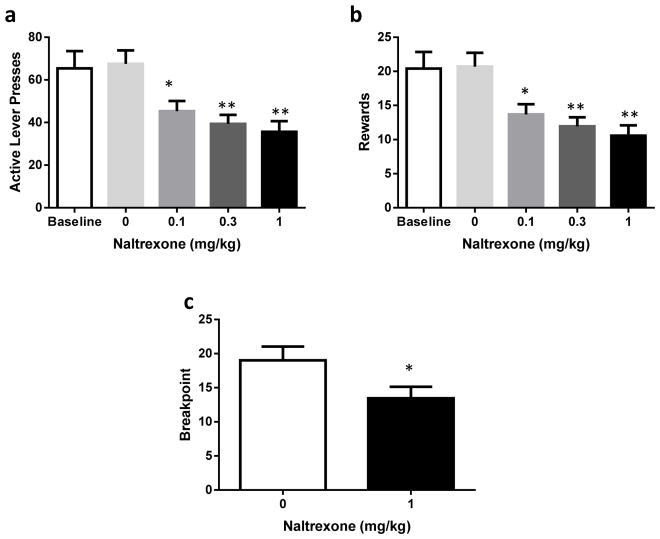
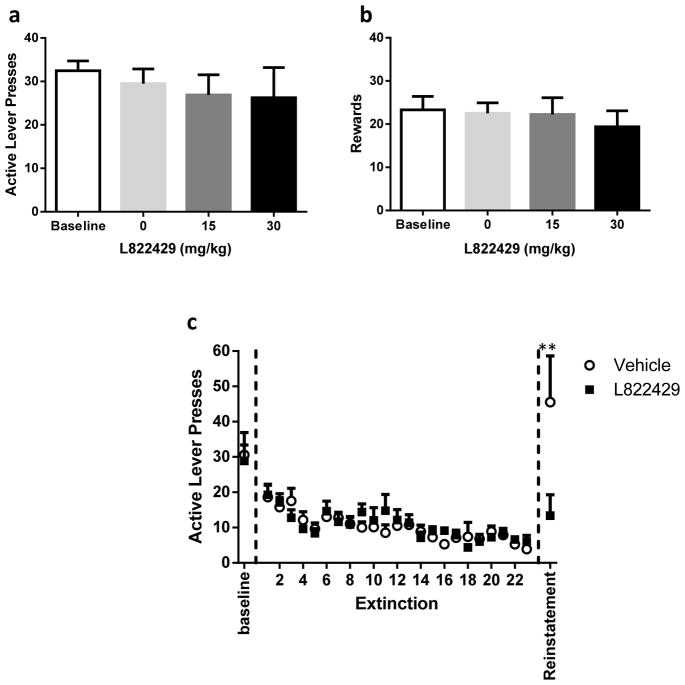
First, we tested if Wistar rats would acquire and maintain SA behavior of 20 % EtOH under two conditions, water deprivation (WD) and non-water deprivation (NWD). Second, we tested the efficacy of our SA procedure by confirming a prior study which found that the NK1 antagonist L822429 specifically blocked stress-induced reinstatement of EtOH seeking but not SA. Finally, we assessed the effect of naltrexone, an FDA-approved medication for alcohol dependence that has been shown to suppress EtOH SA in rodents.
Lever presses (LPs) and rewards were consistent with previous reports that utilized WD and saccharin/sucrose fading. Similar to previous findings, we found that L822429 blocked stress-induced reinstatement but not baseline SA of 20 % EtOH. Moreover, naltrexone dose-dependently decreased alcohol intake and motivation to consume alcohol for rats that are self-administering 20 % EtOH.
Our findings provide a method for voluntary oral EtOH SA in rats that is convenient for experimenters and eliminates the potential confound of sweeteners in EtOH-operant SA studies. Unlike models that use intermittent access to 20 % EtOH, this method does not induce escalation, and based on pharmacological experiments, it appears to be driven by the positive reinforcing effects of EtOH.
操作性自我给药(SA)是乙醇(EtOH)消费动机的重要模型,但大鼠自愿消费率较低,据认为需要进行水剥夺以及糖精/蔗糖淡化处理才能获得反应。
在此,我们试图设计一种不使用水剥夺或糖精/蔗糖淡化的有效SA模型。
首先,我们测试了Wistar大鼠在水剥夺(WD)和非水剥夺(NWD)两种条件下是否会习得并维持20%乙醇的SA行为。其次,我们通过证实一项先前的研究来测试我们的SA程序的有效性,该研究发现NK1拮抗剂L822429能特异性阻断应激诱导的乙醇觅求行为的恢复,但不能阻断SA。最后,我们评估了纳曲酮的作用,纳曲酮是一种经美国食品药品监督管理局(FDA)批准用于治疗酒精依赖的药物,已被证明能抑制啮齿动物的乙醇SA。
杠杆按压(LPs)和奖励与先前利用WD和糖精/蔗糖淡化的报告一致。与先前的发现相似,我们发现L822429能阻断应激诱导的恢复,但不能阻断20%乙醇的基线SA。此外,纳曲酮能剂量依赖性地减少自行服用20%乙醇的大鼠的酒精摄入量和饮酒动机。
我们的研究结果为大鼠自愿口服乙醇SA提供了一种方法,这对实验者来说很方便,并且消除了乙醇操作性SA研究中甜味剂的潜在混杂因素。与使用间歇性获取20%乙醇的模型不同,这种方法不会导致摄入量增加,并且根据药理学实验,它似乎是由乙醇的正性强化作用驱动的。