Oregon State University, Department of Microbiology, Corvallis, OR 97331, USA.
Immunotherapy. 2009 Jul;1(4):539-47. doi: 10.2217/imt.09.24.
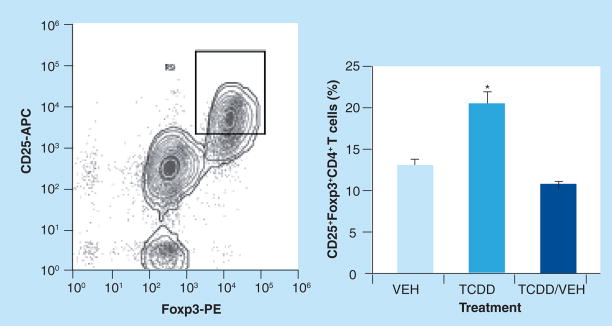
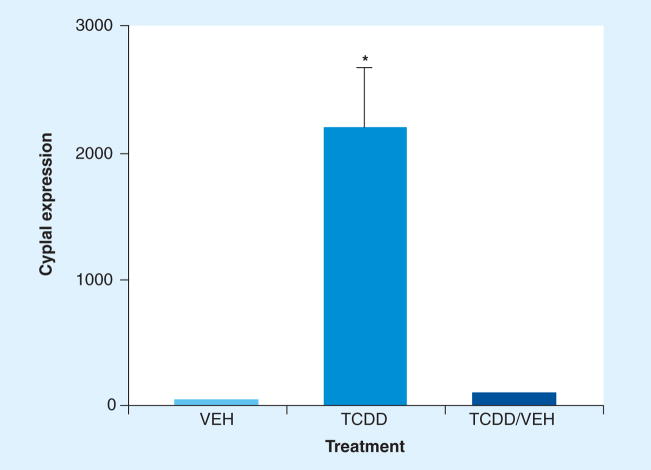
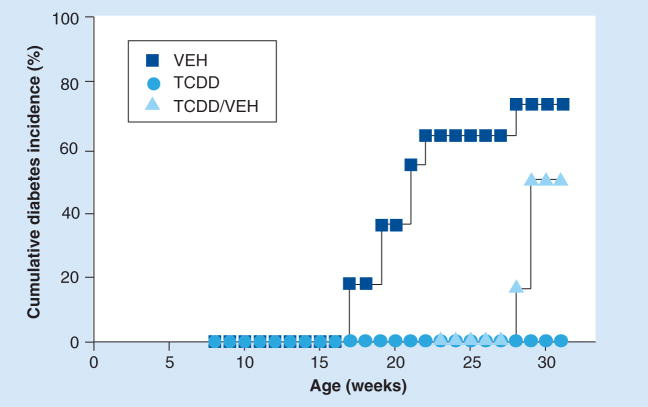
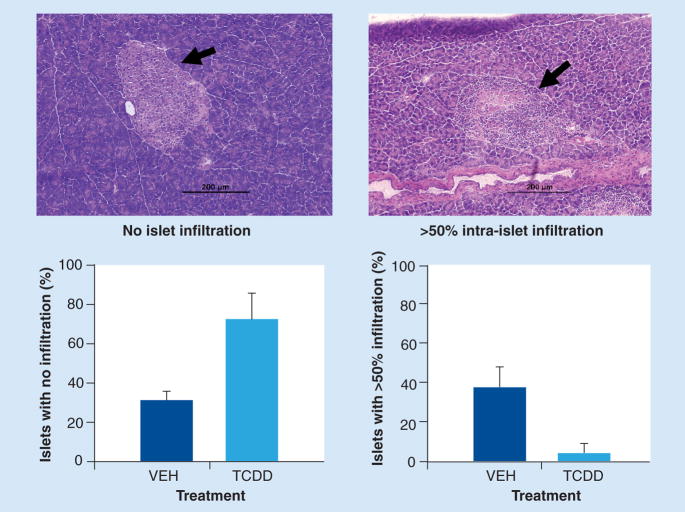
The ligand-activated transcription factor, aryl hydrocarbon receptor (AHR), is a novel inducer of adaptive Tregs. 2,3,7,8-Tetrachlorodibenzo-p-dioxin (TCDD), the most potent AHR ligand, induces adaptive CD4+CD25+ Tregs during an acute graft-versus-host (GvH) response and prevents the generation of allospecific cytotoxic T lymphocytes. TCDD also suppresses the induction of experimental autoimmune encephalitis in association with an expanded population of Foxp3+ Tregs. In this study, we show that chronic treatment of NOD mice with TCDD potently suppresses the development of autoimmune Type 1 diabetes in parallel with greatly reduced pancreatic islet insulitis and an expanded population of CD4+CD25+Foxp3+ cells in the pancreatic lymph nodes. When treatment with TCDD was terminated after 15 weeks (23 weeks of age), mice developed diabetes over the next 8 weeks in association with lower numbers of Tregs and decreased activation of AHR. Analysis of the expression levels of several genes associated with inflammation, T-cell activation and/or Treg function in pancreatic lymph node cells failed to reveal any differences associated with TCDD treatment. Taken together, the data suggest that AHR activation by TCDD-like ligands may represent a novel avenue for treatment of immune-mediated diseases.
配体激活的转录因子,芳香烃受体(AHR),是适应性调节性 T 细胞的新型诱导物。2,3,7,8-四氯二苯并对二恶英(TCDD),最有效的 AHR 配体,在急性移植物抗宿主(GvH)反应中诱导适应性 CD4+CD25+Tregs,并防止同种特异性细胞毒性 T 淋巴细胞的产生。TCDD 还抑制实验性自身免疫性脑脊髓炎的发生,同时 Foxp3+Tregs 群体扩大。在这项研究中,我们表明,用 TCDD 慢性治疗 NOD 小鼠可强力抑制自身免疫 1 型糖尿病的发展,同时胰腺胰岛炎明显减轻,胰腺淋巴结中 CD4+CD25+Foxp3+细胞群体扩大。当 TCDD 治疗在 15 周(23 周龄)后终止时,小鼠在接下来的 8 周内发生糖尿病,与 Tregs 数量减少和 AHR 激活降低有关。对胰腺淋巴结细胞中与炎症、T 细胞激活和/或 Treg 功能相关的几个基因的表达水平进行分析,未发现与 TCDD 治疗相关的差异。综上所述,数据表明 TCDD 样配体激活 AHR 可能代表治疗免疫介导疾病的新途径。