Punj Sumit, Kopparapu Prasad, Jang Hyo Sang, Phillips Jessica L, Pennington Jamie, Rohlman Diana, O'Donnell Edmond, Iversen Patrick L, Kolluri Siva Kumar, Kerkvliet Nancy I
Department of Environmental & Molecular Toxicology, Oregon State University, Corvallis, Oregon, United States of America.
Department of Environmental & Molecular Toxicology, Oregon State University, Corvallis, Oregon, United States of America ; Environmental Health Sciences Center, Oregon State University, Corvallis, Oregon, United States of America.
PLoS One. 2014 Feb 19;9(2):e88726. doi: 10.1371/journal.pone.0088726. eCollection 2014.
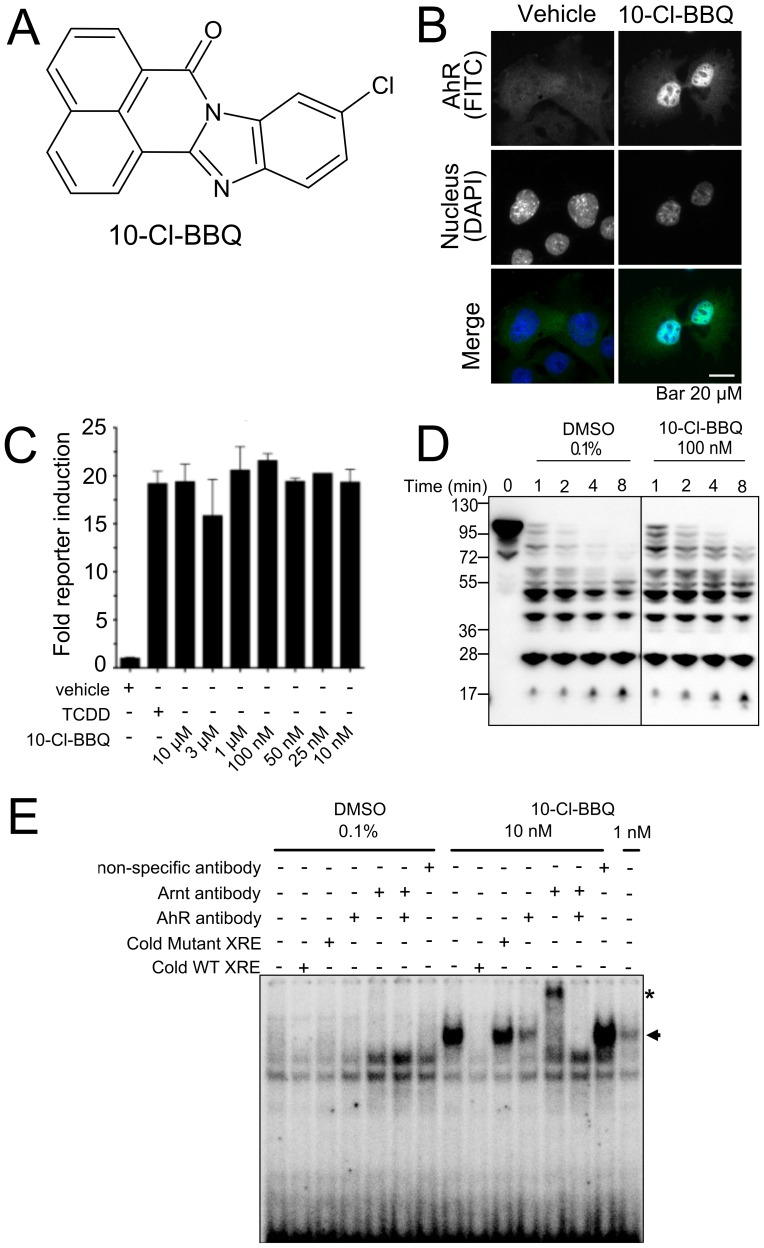
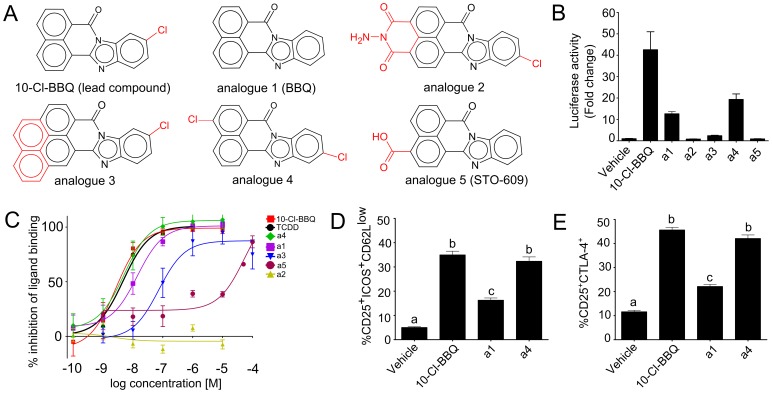
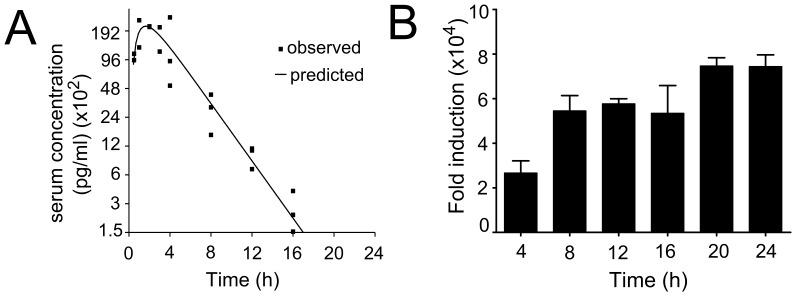
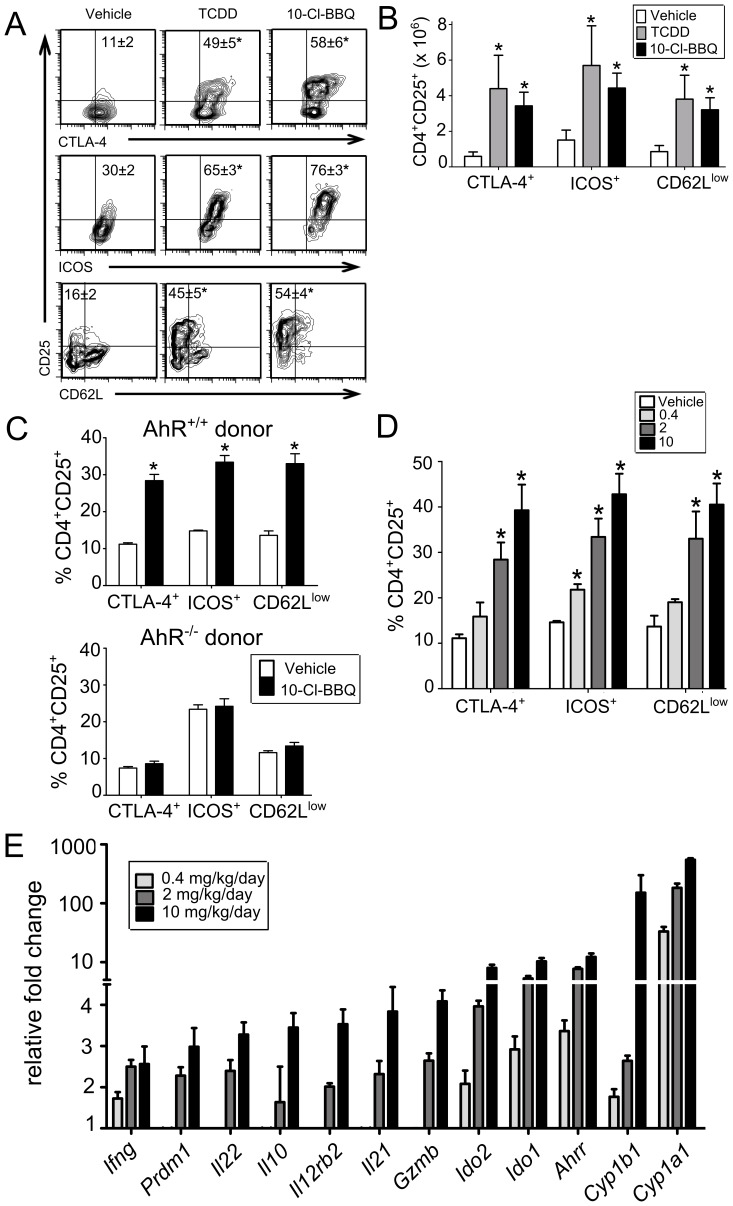
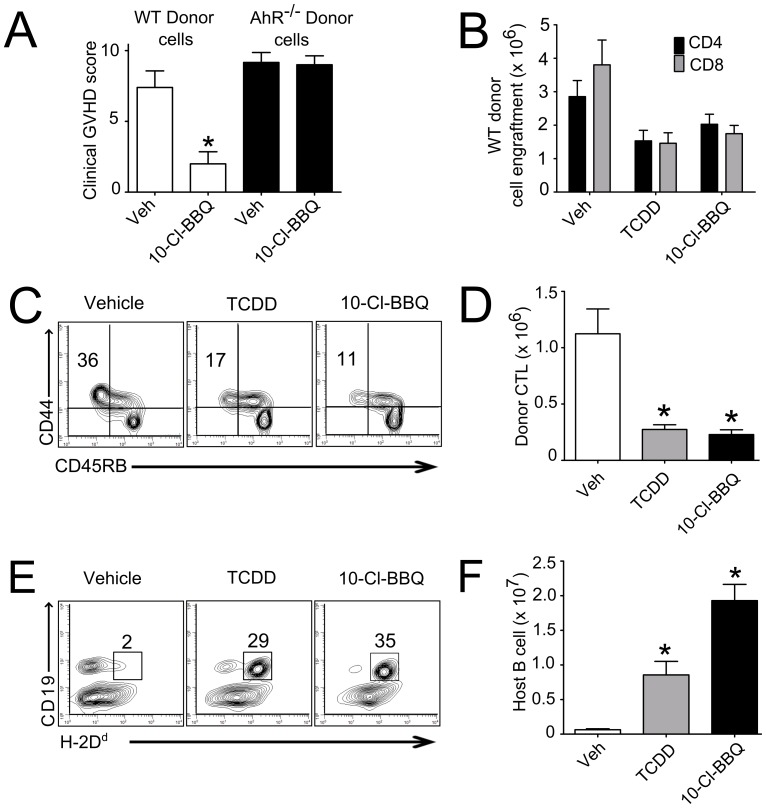
The aryl hydrocarbon receptor (AhR) is a ligand-activated transcription factor that plays multiple roles in regulation of immune and inflammatory responses. The ability of certain AhR ligands to induce regulatory T cells (Tregs) has generated interest in developing AhR ligands for therapeutic treatment of immune-mediated diseases. To this end, we designed a screen for novel Treg-inducing compounds based on our understanding of the mechanisms of Treg induction by the well-characterized immunosuppressive AhR ligand, 2,3,7,8-tetrachlorodibenzo-p-dioxin (TCDD). We screened a ChemBridge small molecule library and identified 10-chloro-7H-benzimidazo[2,1-a]benzo[de]Iso-quinolin-7-one (10-Cl-BBQ) as a potent AhR ligand that was rapidly metabolized and not cytotoxic to proliferating T cells. Like TCDD,10-Cl-BBQ altered donor CD4(+) T cell differentiation during the early stages of a graft versus host (GVH) response resulting in expression of high levels of CD25, CTLA-4 and ICOS, as well as several genes associated with Treg function. The Treg phenotype required AhR expression in the donor CD4(+) T cells. Foxp3 was not expressed in the AhR-induced Tregs implicating AhR as an independent transcription factor for Treg induction. Structure-activity studies showed that unsubstituted BBQ as well as 4, 11-dichloro-BBQ were capable of inducing AhR-Tregs. Other substitutions reduced activation of AhR. Daily treatment with 10-Cl-BBQ during the GVH response prevented development of GVH disease in an AhR-dependent manner with no overt toxicity. Together, our data provide strong support for development of select BBQs that activate the AhR to induce Tregs for treatment of immune-mediated diseases.
芳基烃受体(AhR)是一种配体激活的转录因子,在免疫和炎症反应的调节中发挥多种作用。某些AhR配体诱导调节性T细胞(Tregs)的能力引发了人们对开发用于免疫介导疾病治疗的AhR配体的兴趣。为此,我们基于对特征明确的免疫抑制性AhR配体2,3,7,8-四氯二苯并对二恶英(TCDD)诱导Tregs机制的理解,设计了一种筛选新型Treg诱导化合物的方法。我们筛选了ChemBridge小分子文库,并鉴定出10-氯-7H-苯并咪唑[2,1-a]苯并[de]异喹啉-7-酮(10-Cl-BBQ)是一种有效的AhR配体,它能快速代谢且对增殖的T细胞无细胞毒性。与TCDD一样,10-Cl-BBQ在移植物抗宿主(GVH)反应的早期阶段改变了供体CD4(+) T细胞的分化,导致高水平的CD25、CTLA-4和ICOS以及与Treg功能相关的几个基因的表达。Treg表型需要供体CD4(+) T细胞中AhR的表达。在AhR诱导的Tregs中未表达Foxp3,这表明AhR是Treg诱导的独立转录因子。构效关系研究表明,未取代的BBQ以及4,11-二氯-BBQ能够诱导AhR-Tregs。其他取代则降低了AhR的激活。在GVH反应期间每天用10-Cl-BBQ治疗以AhR依赖的方式预防了GVH疾病的发展,且无明显毒性。总之,我们的数据为开发选择性BBQ提供了有力支持,这些BBQ可激活AhR以诱导Tregs用于治疗免疫介导疾病。