Department of Internal Medicine, University of Iowa Carver College of Medicine, 200 Hawkins Drive, Iowa City, Iowa, 52242, USA.
Crit Care. 2010;14(1):R24. doi: 10.1186/cc8887. Epub 2010 Feb 22.
Microvascular dysregulation characterized by hyporesponsive vessels and heterogeneous bloodflow is implicated in the pathogenesis of organ failure in sepsis. The renin-angiotensin system (RAS) affects the microvasculature, yet the relationships between RAS and organ injury in clinical sepsis remain unclear. We tested our hypothesis that systemic RAS mediators are associated with dysregulation of the microvasculature and with organ failure in clinical severe sepsis.
We studied 30 subjects with severe sepsis, and 10 healthy control subjects. Plasma was analyzed for plasma renin activity (PRA) and angiotensin II concentration (Ang II). Using near-infrared spectroscopy, we measured the rate of increase in the oxygen saturation of thenar microvascular hemoglobin after five minutes of induced forearm ischemia. In so doing, we assessed bulk microvascular hemoglobin influx to the tissue during reactive hyperemia. We studied all subjects 24 hours after the development of organ failure. We studied a subset of 12 subjects at an additional timepoint, eight hours after recognition of organ failure (early sepsis).
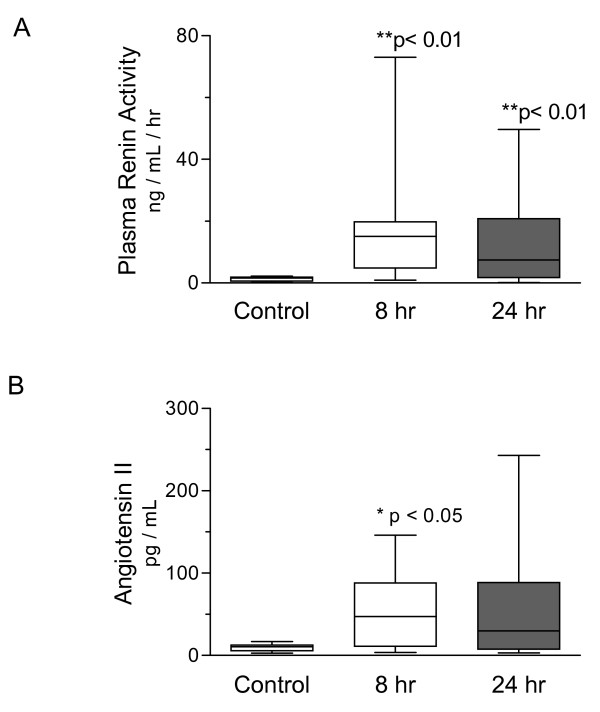
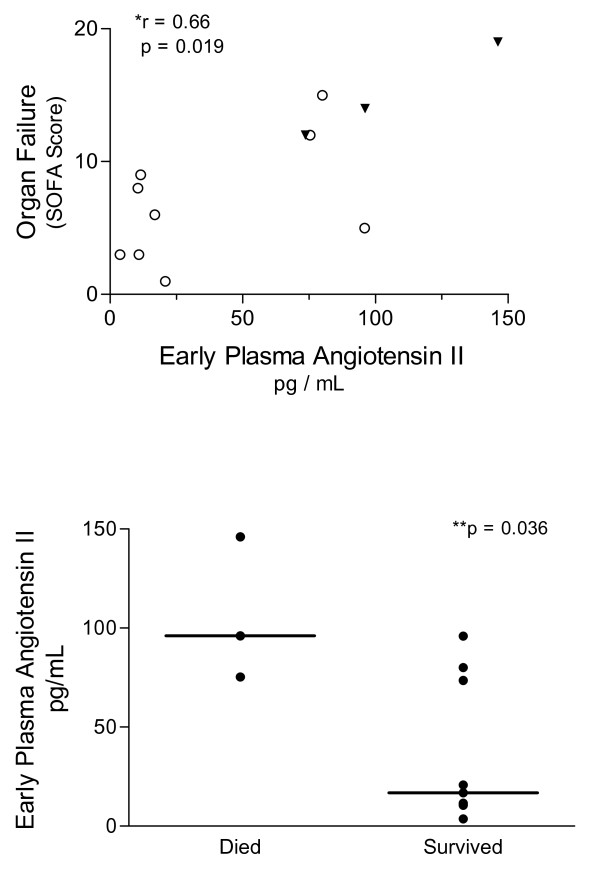
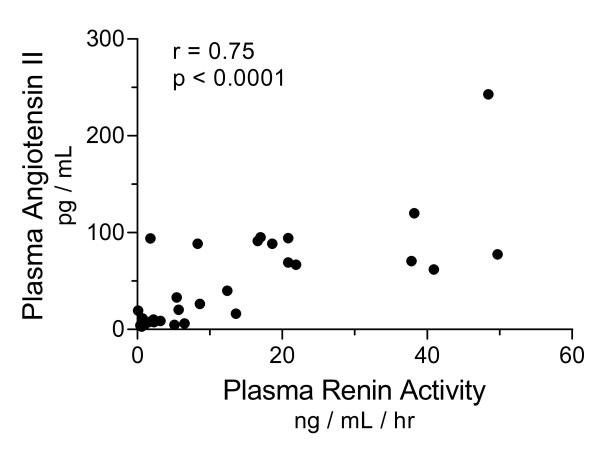
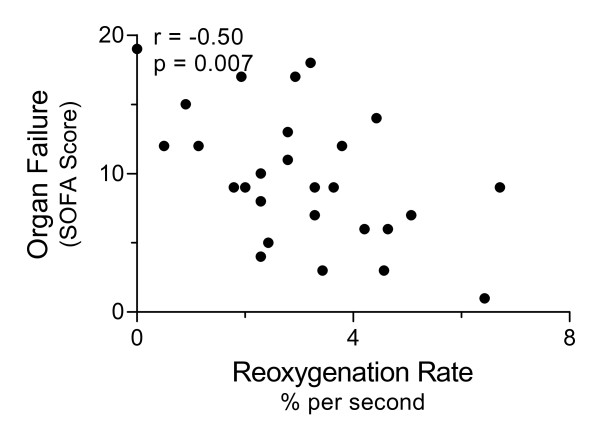
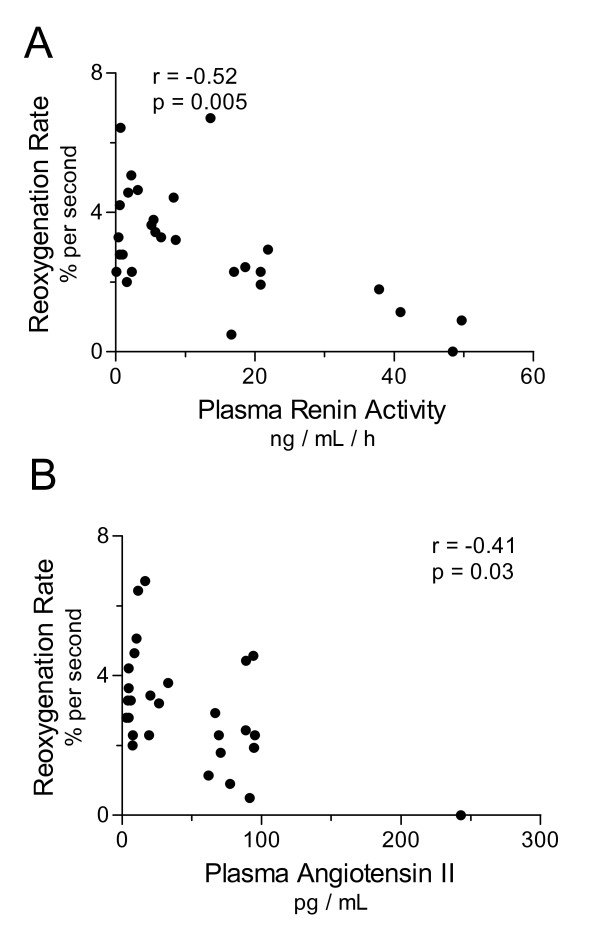
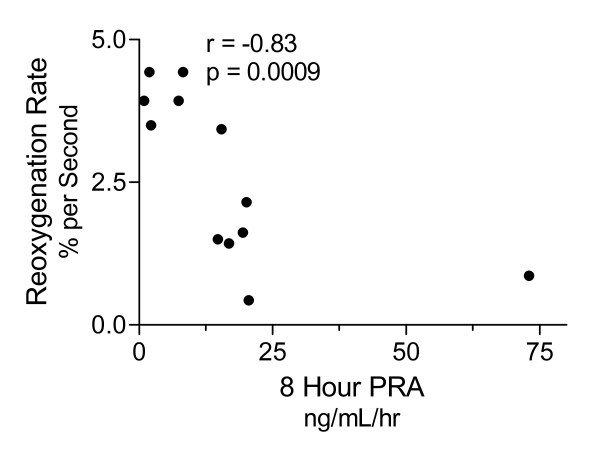
After 24 hours of resuscitation to clinically-defined endpoints of preload and arterial pressure, Ang II and PRA were elevated in septic subjects and the degree of elevation correlated negatively with the rate of microvascular reoxygenation during reactive hyperemia. Early RAS mediators correlated with microvascular dysfunction. Early Ang II also correlated with the extent of organ failure realized during the first day of sepsis.
RAS is activated in clinical severe sepsis. Systemic RAS mediators correlate with measures of microvascular dysregulation and with organ failure.
以血管反应性降低和血流异质性为特征的微血管失调与脓毒症器官衰竭的发病机制有关。肾素-血管紧张素系统(RAS)影响微血管,但 RAS 与临床脓毒症器官损伤之间的关系尚不清楚。我们检验了我们的假设,即全身 RAS 介质与微血管失调以及临床严重脓毒症的器官衰竭有关。
我们研究了 30 名严重脓毒症患者和 10 名健康对照者。分析血浆中的血浆肾素活性(PRA)和血管紧张素 II 浓度(Ang II)。使用近红外光谱法,我们测量了在诱导前臂缺血 5 分钟后鱼际微血管血红蛋白氧饱和度增加的速率。通过这种方式,我们评估了反应性充血期间组织中整体微血管血红蛋白的流入量。我们在发生器官衰竭后 24 小时对所有受试者进行了研究。在另外的时间点(器官衰竭发生后 8 小时),我们对 12 名受试者中的一部分进行了研究。
在复苏至预负荷和动脉压的临床定义终点 24 小时后,脓毒症患者的 Ang II 和 PRA 升高,升高程度与反应性充血期间微血管再氧合的速率呈负相关。早期 RAS 介质与微血管功能障碍相关。早期 Ang II 也与脓毒症第一天发生的器官衰竭程度相关。
RAS 在临床严重脓毒症中被激活。全身 RAS 介质与微血管失调和器官衰竭的测量值相关。