Department of Psychology, Zhejiang Normal University, 688 of Yingbin Road, Jinhua City, Zhejiang Province, PR China.
Behav Brain Funct. 2010 Feb 24;6:15. doi: 10.1186/1744-9081-6-15.
The intending process plays an important part to the successful completion of many daily activities. However, few researchers have paid attention to this issue. This study was set to investigate the time course and the electrophysiological evidence of the intending process with a cue-respond task.
Event-related potentials (ERPs) were recorded while participants were performing different cued conditions (deceptive, truthful, and watch-only). The time course of intending process was analyzed through the different effect of the cue stimuli.
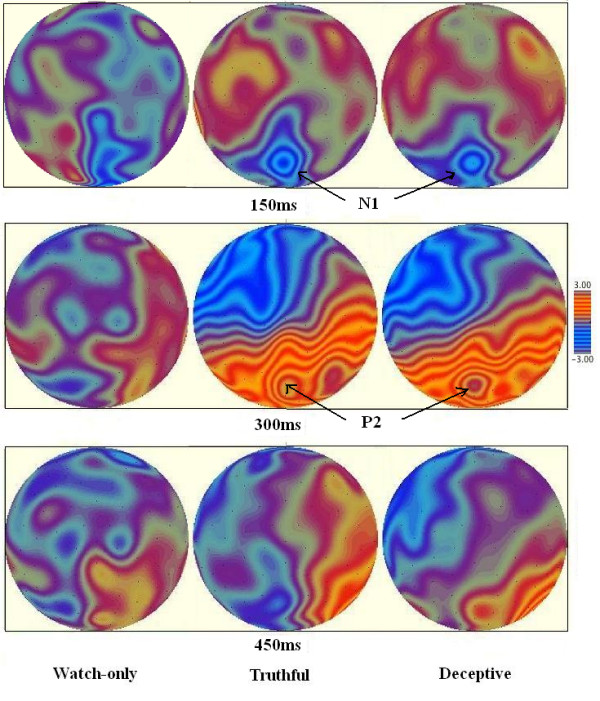
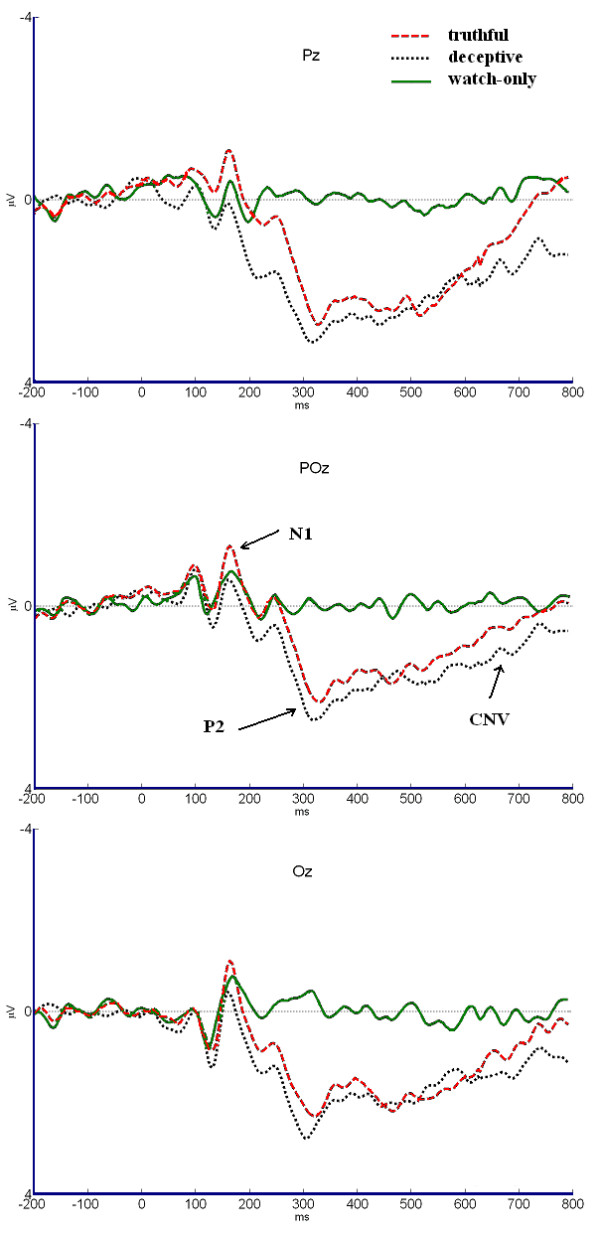
The P2 component, that appeared between 200 and 400 ms after the cue was onset, can be observed in the intended conditions (deceptive, truthful), but cannot be found in un-intended condition (watch-only). The mean amplitude in P2 between the truthful and deceptive conditions was consistent with previous studies. P2 was thought to be the reflection of the intention process.
The results suggested that the intention process happened 200 to 400 ms after the cue stimuli was onset, and the P2 in the posterior scalp during this period could be a specific component that related with the process of intention.
意图过程对许多日常活动的成功完成起着重要作用。然而,很少有研究人员关注这个问题。本研究旨在通过线索-反应任务来调查意图过程的时间进程和电生理证据。
在参与者执行不同的线索条件(欺骗性、真实性和仅观察)时记录事件相关电位(ERPs)。通过线索刺激的不同影响来分析意图过程的时间进程。
在意图条件(欺骗性、真实性)中可以观察到 P2 成分,它出现在线索出现后 200 到 400 毫秒之间,但在非意图条件(仅观察)中无法找到。在真实和欺骗条件之间的 P2 平均振幅与先前的研究一致。P2 被认为是意图过程的反映。
结果表明,意图过程发生在线索刺激出现后 200 到 400 毫秒之间,在此期间后头皮的 P2 可能是与意图过程相关的特定成分。