Division of Oncology and Biostatistics and Data Management Core, Children's Hospital of Philadelphia, Philadelphia, Pennsylvania 19104, USA.
Clin Cancer Res. 2010 Mar 1;16(5):1478-85. doi: 10.1158/1078-0432.CCR-09-1531. Epub 2010 Feb 23.
Neuroblastoma, a common pediatric tumor of the sympathetic nervous system, is characterized by clinical heterogeneity. The Trk family neurotrophin receptors play an important role in this behavior. Expression of TrkA is associated with favorable clinical features and outcome, whereas TrkB expression is associated with an unfavorable prognosis. We wanted to determine if the Trk-selective inhibitor lestaurtinib had therapeutic efficacy in a preclinical neuroblastoma model.
We performed intervention trials of lestaurtinib alone or in combination with other agents in TrkB-overexpressing neuroblastoma xenograft models.
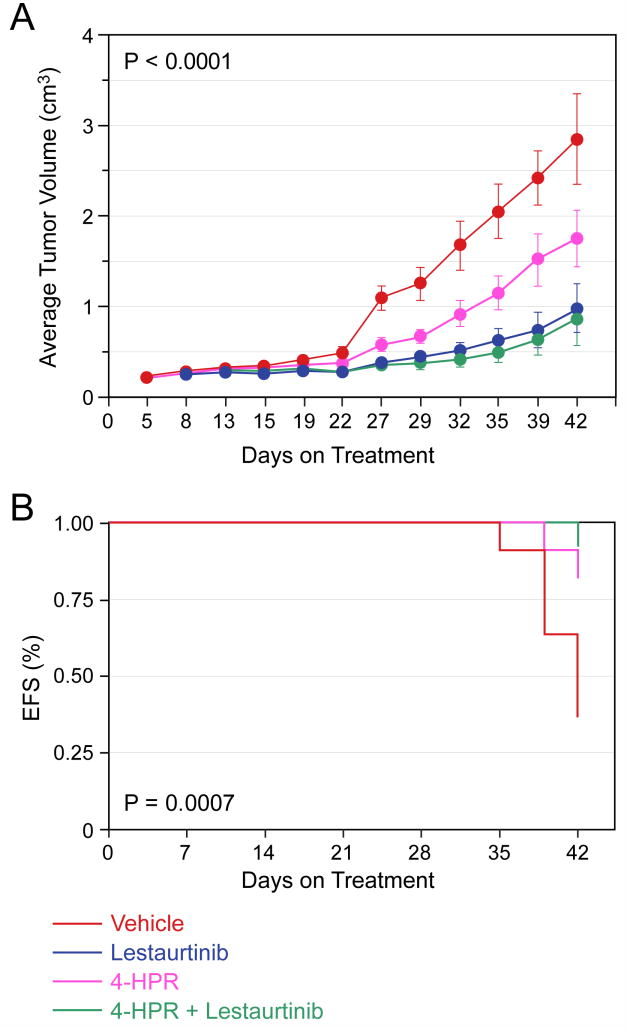
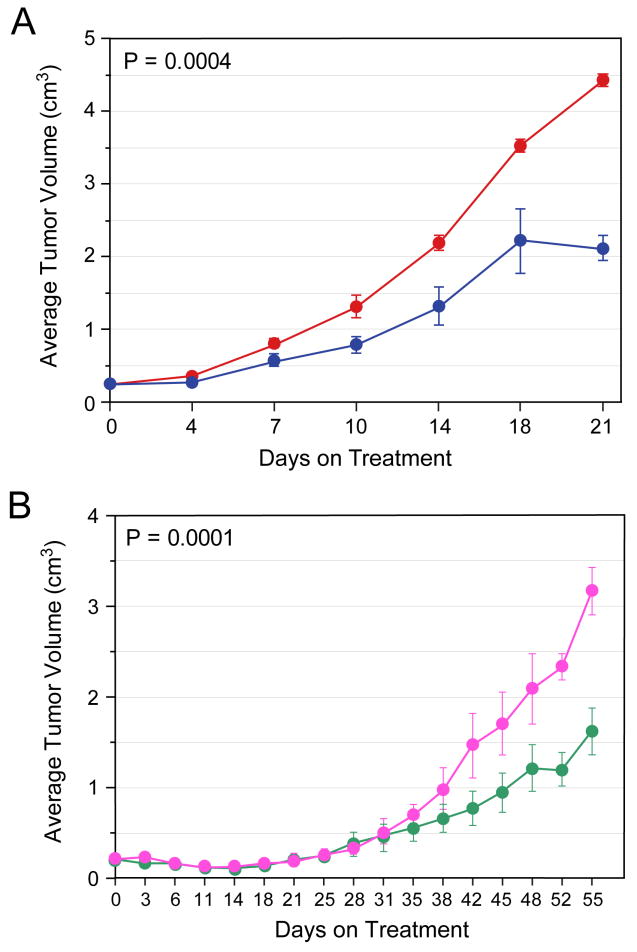
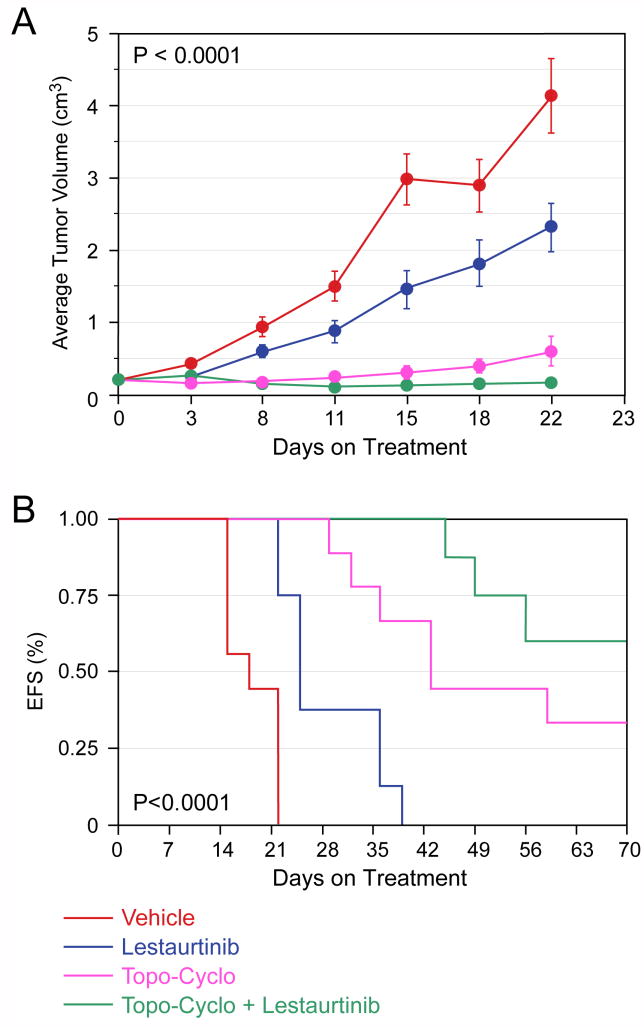
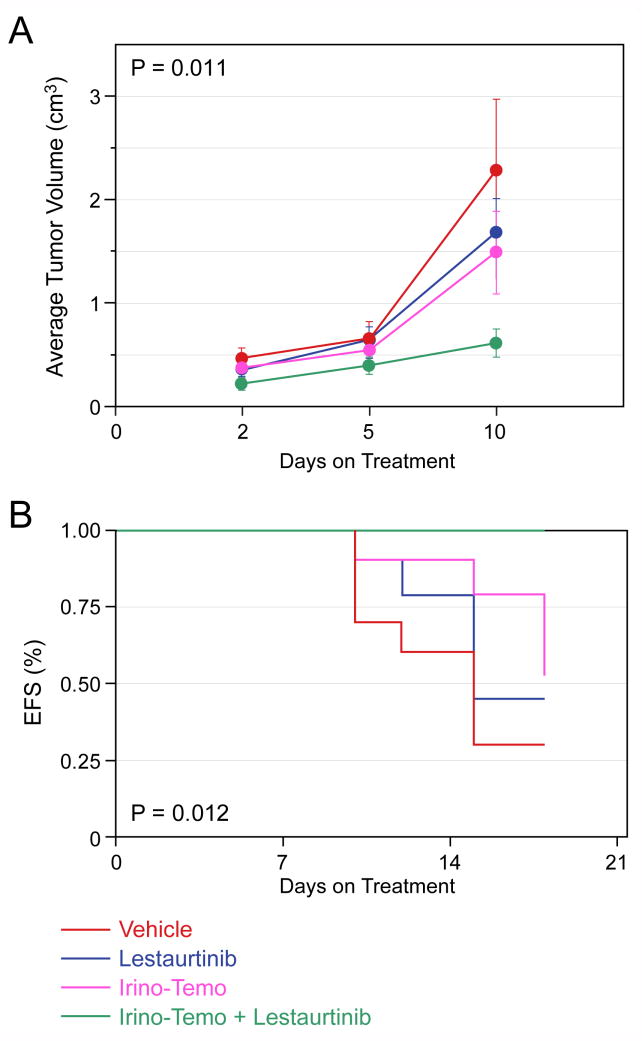
Lestaurtinib alone significantly inhibited tumor growth compared to vehicle-treated animals [P = 0.0004 for tumor size and P = 0.011 for event-free survival (EFS)]. Lestaurtinib also enhanced the antitumor efficacy of the combinations of topotecan plus cyclophosphamide (P < 0.0001 for size and P < 0.0001 for EFS) or irinotecan plus temozolomide (P = 0.011 for size and P = 0.012 for EFS). There was no additive benefit of combining either 13-cis-retinoic acid or fenretinide with lestaurtinib compared to lestaurtinib alone. There was dramatic growth inhibition combining lestaurtinib with bevacizumab (P < 0.0001), but this combination had substantial systemic toxicity.
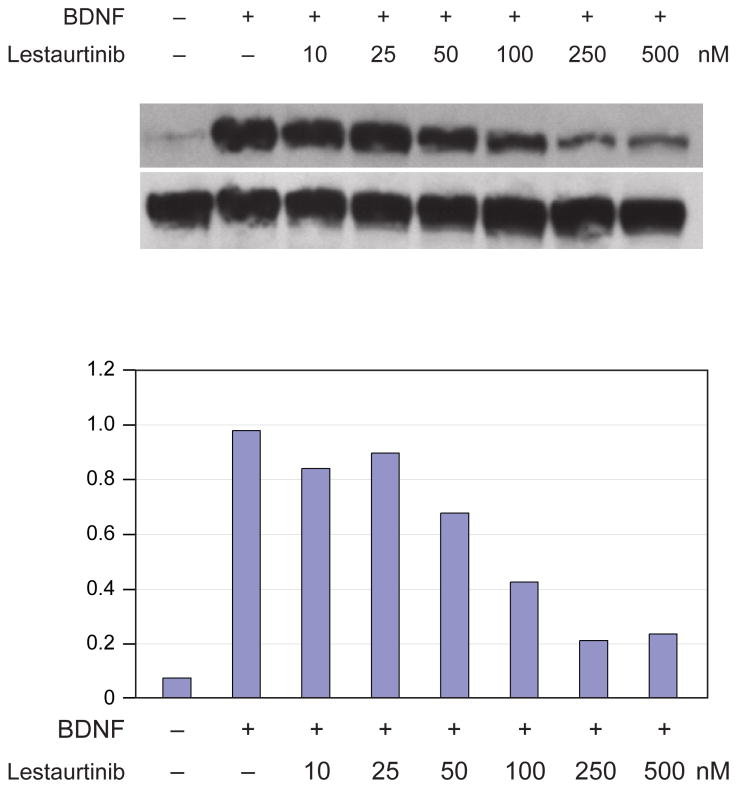
We show that lestaurtinib can inhibit the growth of neuroblastoma both in vitro and in vivo and can substantially enhance the efficacy of conventional chemotherapy, presumably by inhibition of the Trk/brain-derived neurotrophic factor autocrine survival pathway. It may also enhance the efficacy of selected biological agents, but further testing is required to rule out unanticipated toxicities. Our data support the incorporation of Trk inhibitors, such as lestaurtinib, in clinical trials of neuroblastoma or other tumors relying on Trk signaling pathways for survival.
神经母细胞瘤是一种常见的交感神经系统小儿肿瘤,具有临床异质性。Trk 家族神经营养因子受体在此行为中发挥重要作用。TrkA 的表达与良好的临床特征和预后相关,而 TrkB 的表达与不良预后相关。我们希望确定 Trk 选择性抑制剂 lestaurtinib 在神经母细胞瘤的临床前模型中是否具有治疗效果。
我们进行了 lestaurtinib 单独或与其他药物联合治疗 TrkB 过表达神经母细胞瘤异种移植模型的干预试验。
与接受载体治疗的动物相比,单独使用 lestaurtinib 可显著抑制肿瘤生长[肿瘤大小的 P=0.0004,无事件生存(EFS)的 P=0.011]。Lestaurtinib 还增强了拓扑替康联合环磷酰胺(大小的 P <0.0001,EFS 的 P <0.0001)或伊立替康联合替莫唑胺(大小的 P=0.011,EFS 的 P=0.012)组合的抗肿瘤疗效。与单独使用 lestaurtinib 相比,将 13-顺式维甲酸或 fenretinide 与 lestaurtinib 联合使用并没有增加疗效。与 bevacizumab 联合使用 lestaurtinib 可显著抑制肿瘤生长(P <0.0001),但这种组合具有显著的全身毒性。
我们表明,lestaurtinib 既能在体外又能在体内抑制神经母细胞瘤的生长,并能显著增强常规化疗的疗效,推测可能是通过抑制 Trk/脑源性神经营养因子自分泌生存途径。它还可能增强选定生物制剂的疗效,但需要进一步测试以排除意外的毒性。我们的数据支持在神经母细胞瘤或其他依赖 Trk 信号通路生存的肿瘤的临床试验中加入 Trk 抑制剂,如 lestaurtinib。