Yerkes National Primate Research Center, Atlanta, Georgia, United States of America.
PLoS One. 2010 Feb 22;5(2):e9347. doi: 10.1371/journal.pone.0009347.
Implantation of human multipotent stromal cells from bone marrow (hMSCs) into the dentate gyrus of the hippocampus of mice was previously shown to stimulate proliferation, migration and neural differentiation of endogenous neural stem cells. We hypothesized that hMSCs would be beneficial in a mouse model of Huntington disease (HD) due to these neurogenic effects.
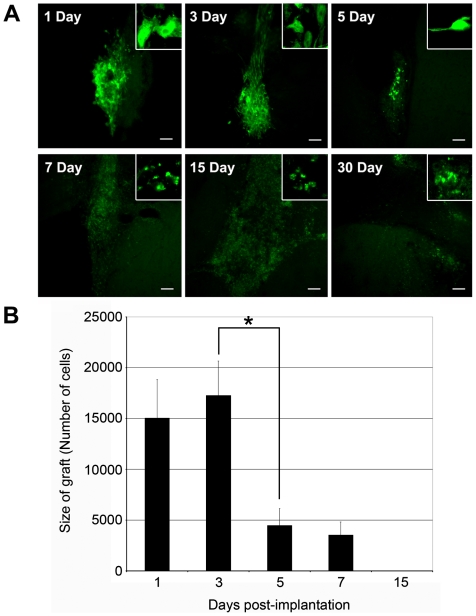
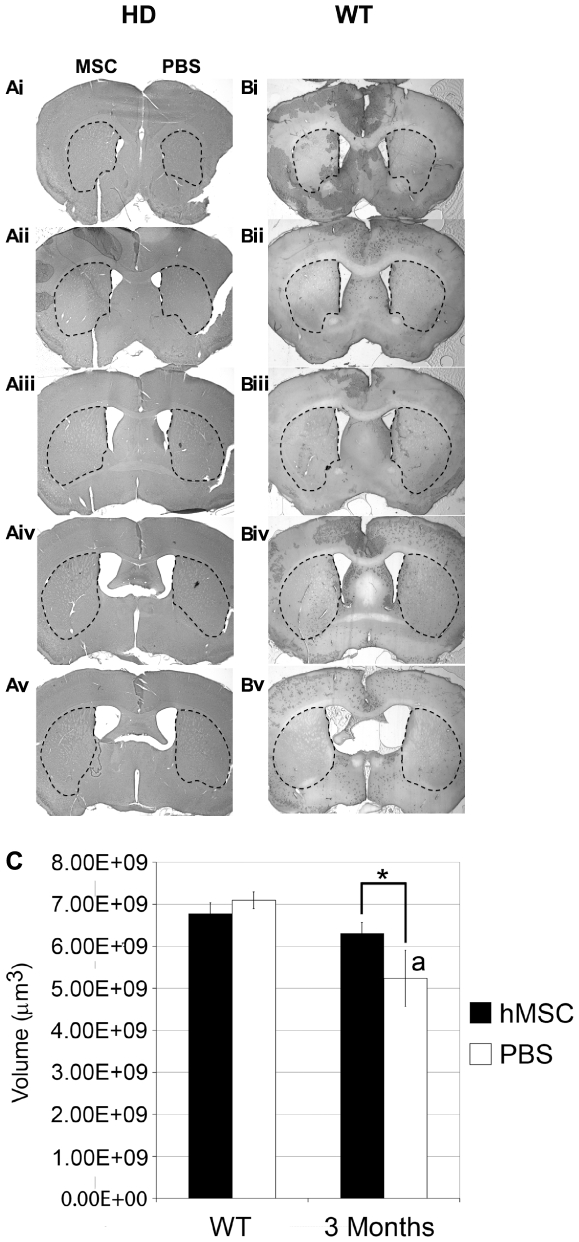
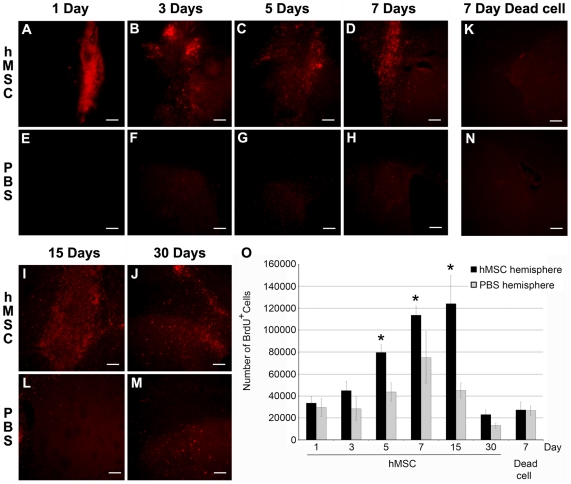
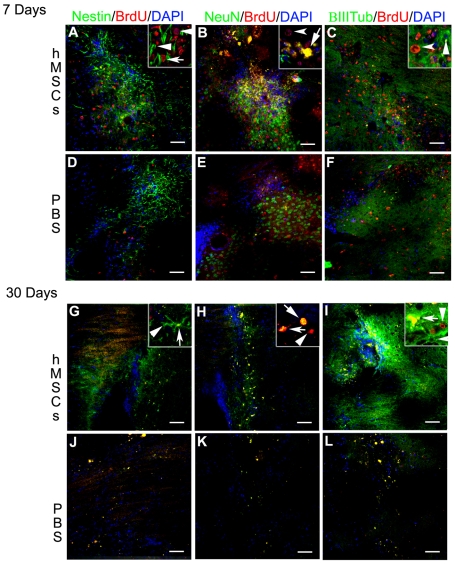
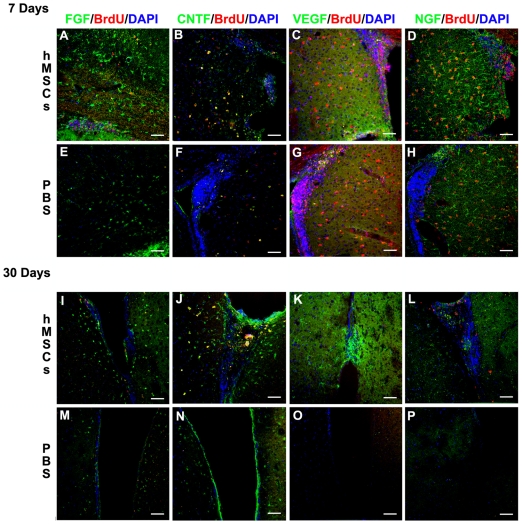
We implanted hMSCs into the striatum of transgenic mice (N171-82Q) that are a model for HD. The implanted hMSCs rapidly disappeared over 3 to 15 days. However, they increased proliferation and neural differentiation of endogenous neural stem cells for up to 30 days. They also increased neurotrophic signaling and decreased atrophy of the striatum in 3-month old HD mice implanted with hMSCs one month earlier.
The results therefore suggested that neural implantation of hMSCs may be of benefit in HD but a number of parameters of dose, treatment schedule, and route of administration need to be optimized.
先前的研究表明,将骨髓来源的人多能基质细胞(hMSCs)植入小鼠海马齿状回中,可刺激内源性神经干细胞的增殖、迁移和神经分化。我们假设由于这些神经生成作用,hMSCs 在亨廷顿病(HD)的小鼠模型中可能有益。
我们将 hMSCs 植入 HD 模型(N171-82Q)转基因小鼠的纹状体中。植入的 hMSCs 在 3 至 15 天内迅速消失。然而,它们在长达 30 天的时间内增加了内源性神经干细胞的增殖和神经分化。它们还增加了神经营养信号,并减少了植入 hMSCs 一个月前的 3 个月大的 HD 小鼠纹状体的萎缩。
因此,研究结果表明,hMSCs 的神经植入可能对 HD 有益,但需要优化剂量、治疗方案和给药途径等多个参数。