Department of Biology, University of Bergen, Thormøhlensgate 53a, N-5008 Bergen, Norway.
Front Zool. 2010 Jan 26;7(1):6. doi: 10.1186/1742-9994-7-6.
The phylogenetic status of the aplacophoran mollusk taxon Solenogastres (Neomeniomorpha) is controversially discussed. Some authors propose the clade to represent the most basal branch within Mollusca, while others claim aplacophoran mollusks (Solenogastres and Caudofoveata) to be derived. Larval characters are central in these discussions, specifically the larval test (calymma, apical cap), the ontogeny of the epidermal scleritome, and the proposed absence of larval protonephridia. To date, developmental data are available for five solenogaster species, but most reports are incomplete and need confirmation.
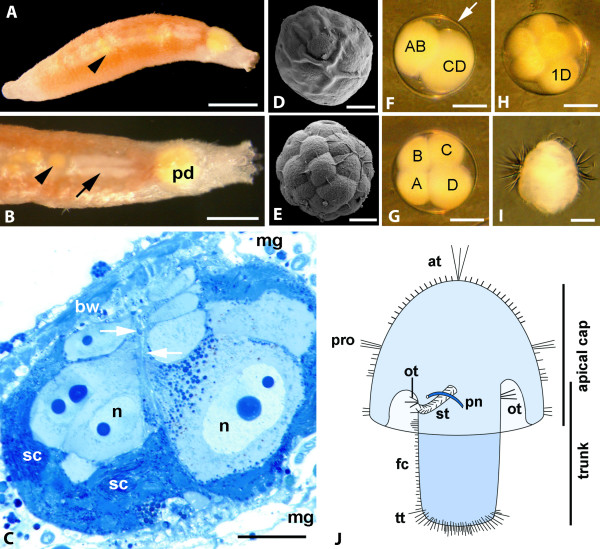
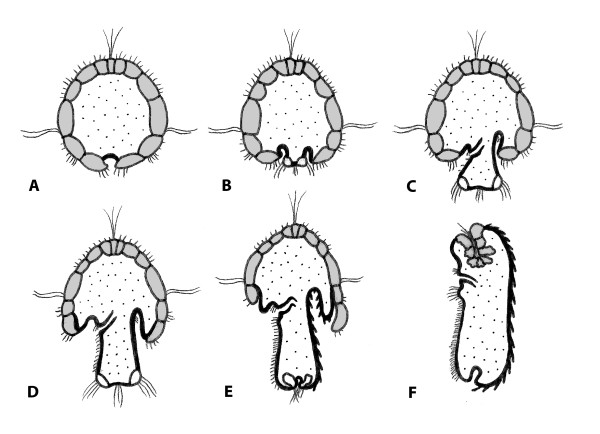
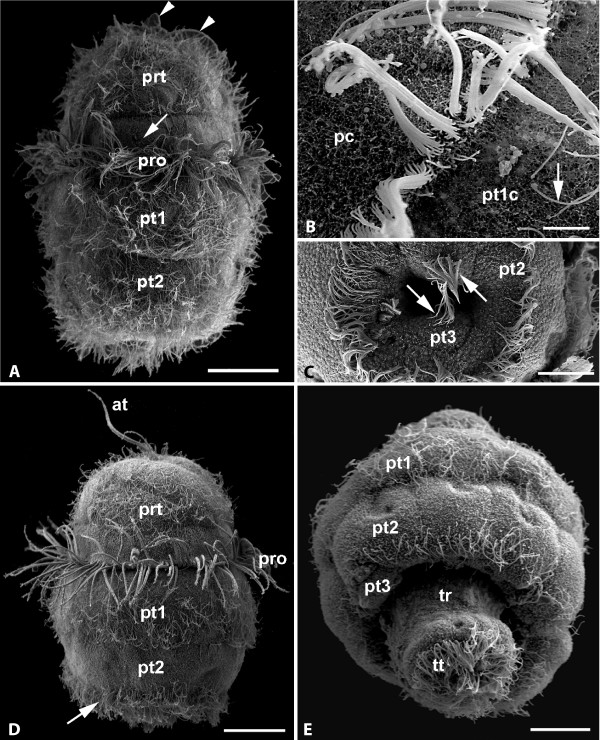
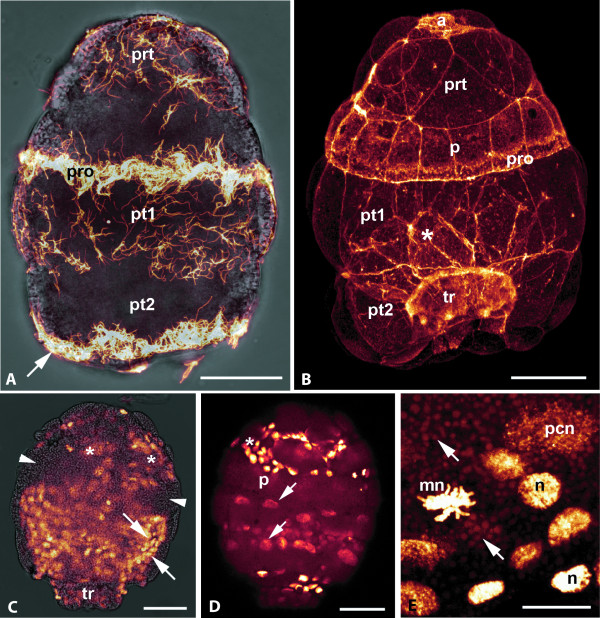
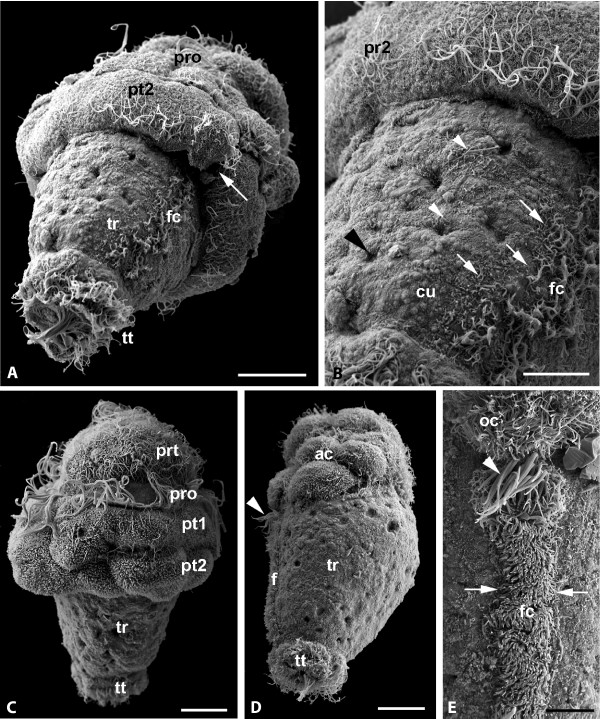
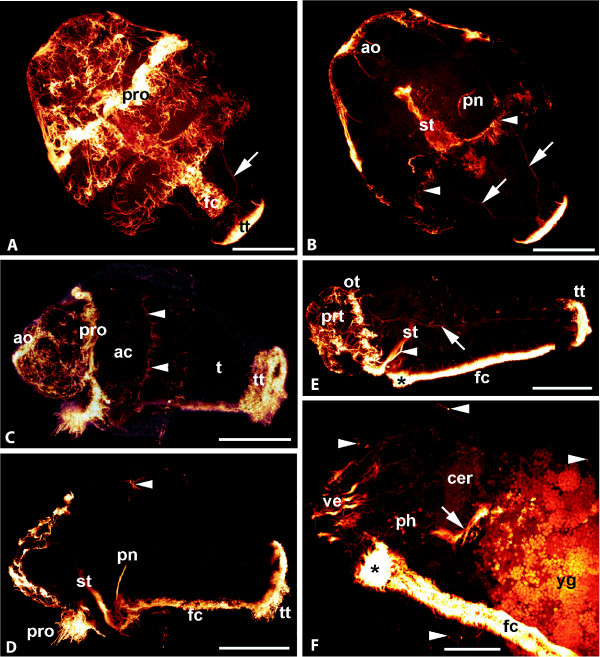
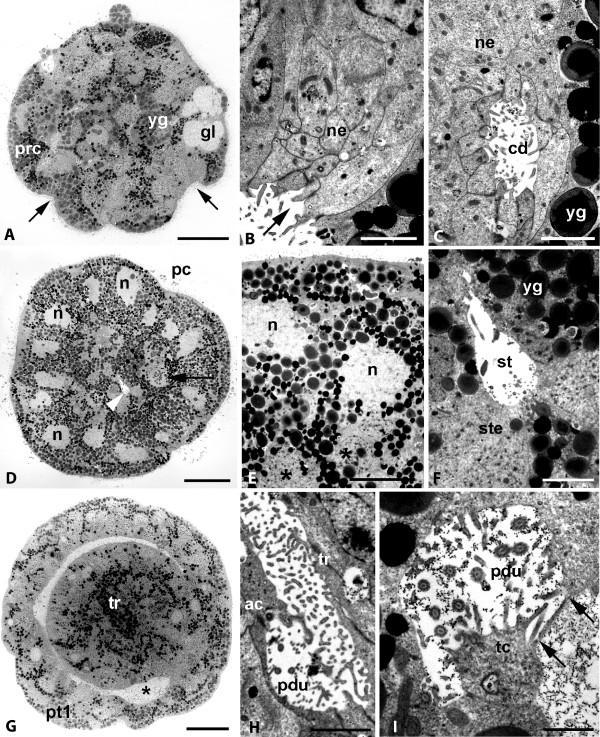
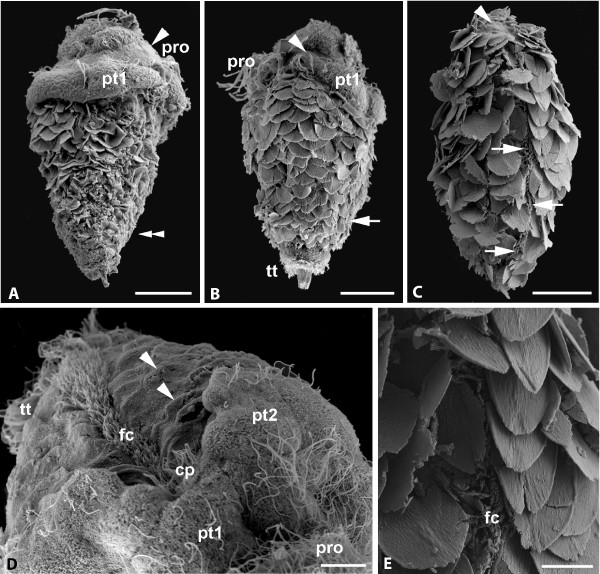
Wirenia argentea deposit small batches of uncleaved embryos that are tightly enclosed by a smooth and transparent egg hull. Cleavage is spiral and unequal. The ciliated larvae hatch about 45 hours after deposition and swim actively in the water column. Within 48-60 hours after hatching they become mushroom-shaped with a pronounced apical cap partly enclosing a posterior trunk. The cells covering the apical cap are large and cleavage arrested. On the apical cap there is a prominent prototrochal band of compound cilia and an apical ciliary tuft and the trunk bears a terminal ciliary band (telotroch). Obscured by the apical cap, a ciliary band originates in the stomodaeal pore and surrounds the trunk. As development is proceeding, the trunk elongates and becomes covered by cuticle with the exception of a ventral ciliary band, the future foot. The larvae have a pair of protonephridia. At 5 days after hatching they begin to settle and within the following 7-9 days the apical cap is gradually reduced. Scattered epidermal sclerites form under the cuticle. Wirenia argentea lack iterated groups of sclerites at any developmental stage. At 40 days after hatching, the postlarvae have a fully developed foregut, but the midgut and hindgut are not yet interconnected.
Solenogastres develop via a trochophore-like lecitotrophic larva with a preoral apical cap that at least partly represents an enlarged prototrochal area. Homology of this larval type (pericalymma larva) to test cell larvae of other spiralian clades is doubtful. The ontogeny of W. argentea does not provide any evidence for a derived status of Solenogastres within Mollusca.
无板纲软体动物分类群 Solenogastres(Neomeniomorpha)的系统发育地位存在争议。一些作者提出该类群代表软体动物中最基础的分支,而另一些作者则认为无板纲软体动物(Solenogastres 和 Caudofoveata)是衍生的。幼虫特征是这些讨论的核心,特别是幼虫的壳(calymma,顶帽)、表皮硬化体的个体发生以及缺乏幼虫原肾管的假设。迄今为止,已有 5 种 solenogaster 物种的发育数据,但大多数报道不完整,需要确认。
Wirenia argentea 产下少量未分裂的胚胎,这些胚胎被光滑透明的蛋壳紧密包裹。卵裂是螺旋的且不均匀的。约在卵产下 45 小时后,具纤毛的幼虫孵化,并在水柱中活跃地游动。孵化后 48-60 小时,幼虫变成蘑菇状,顶帽部分包围后部躯干。覆盖顶帽的细胞较大且分裂停滞。顶帽上有明显的原担轮带和一个顶生纤毛簇,躯干带有末端纤毛带(telotroch)。被顶帽遮蔽的纤毛带起源于口孔并环绕躯干。随着发育的进行,躯干伸长并被角质层覆盖,除了腹侧纤毛带(未来的脚)。幼虫有一对原肾管。孵化后 5 天,它们开始定居,在接下来的 7-9 天内,顶帽逐渐缩小。角质层下形成散在的表皮硬化体。在任何发育阶段,Wirenia argentea 都没有迭代的硬化体群。孵化后 40 天,幼体具有完全发育的前肠,但中肠和后肠尚未连通。
Solenogastres 通过类似于轮虫的 lecitotrophic 幼虫发育,具有一个前口顶帽,该顶帽至少部分代表扩大的原担轮区。这种幼虫类型(pericalymma 幼虫)与其他螺旋类群的壳幼虫的同源性值得怀疑。W. argentea 的个体发生没有为 Solenogastres 在软体动物中的衍生地位提供任何证据。