Department of Pharmacology, Dalhousie University, Sir Charles Tupper Medical Building, Halifax, NS, Canada.
J Ovarian Res. 2010 Feb 26;3:5. doi: 10.1186/1757-2215-3-5.
Activation of bone morphogenetic protein (BMP)4 signalling in human ovarian cancer cells induces a number of phenotypic changes in vitro, including altered cell morphology, adhesion, motility and invasion, relative to normal human ovarian surface epithelial cells. From these in vitro analyses, we had hypothesized that active BMP signalling promotes the metastatic potential of ovarian cancer.
To test this directly, we engineered OVCA429 human ovarian cancer cells possessing doxycycline-inducible expression of a constitutively-active mutant BMP receptor, ALK3QD, and administered these cells to immunocompromised mice. Further characterization was performed in vitro to address the role of activated BMP signalling on the EOC phenotype, with particular emphasis on epithelial-mesenchymal transition (EMT) and cell adhesion.
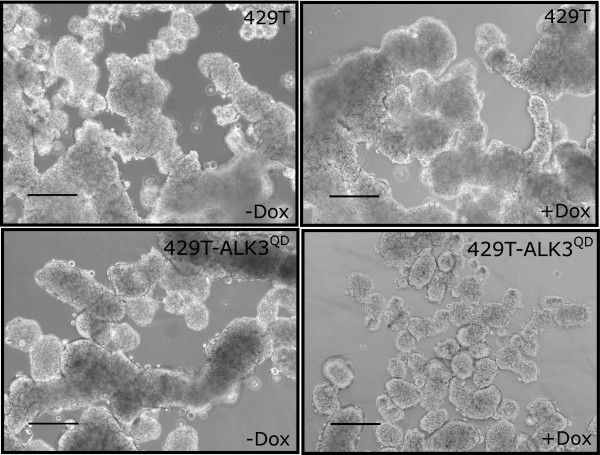
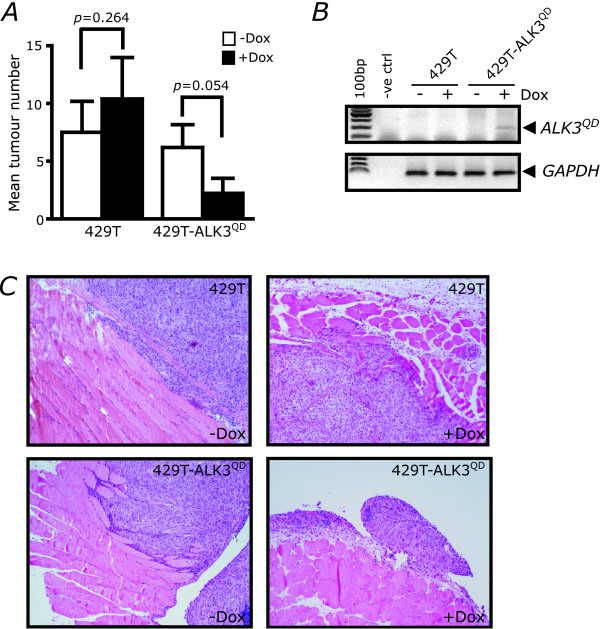
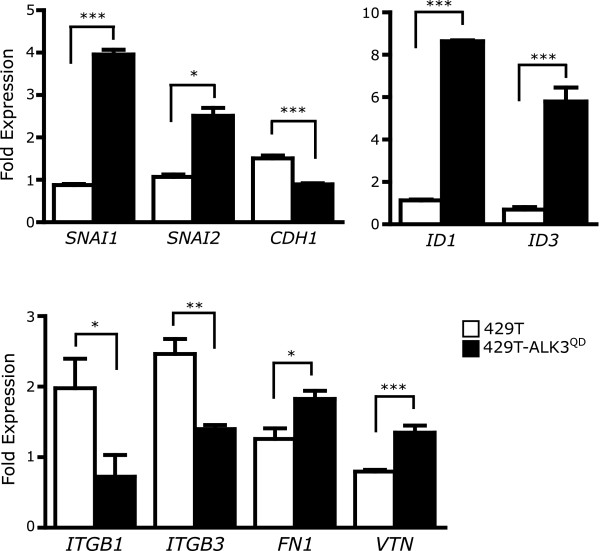
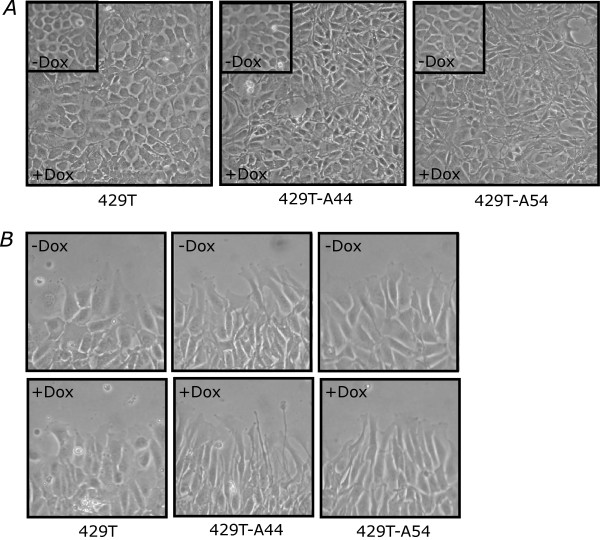
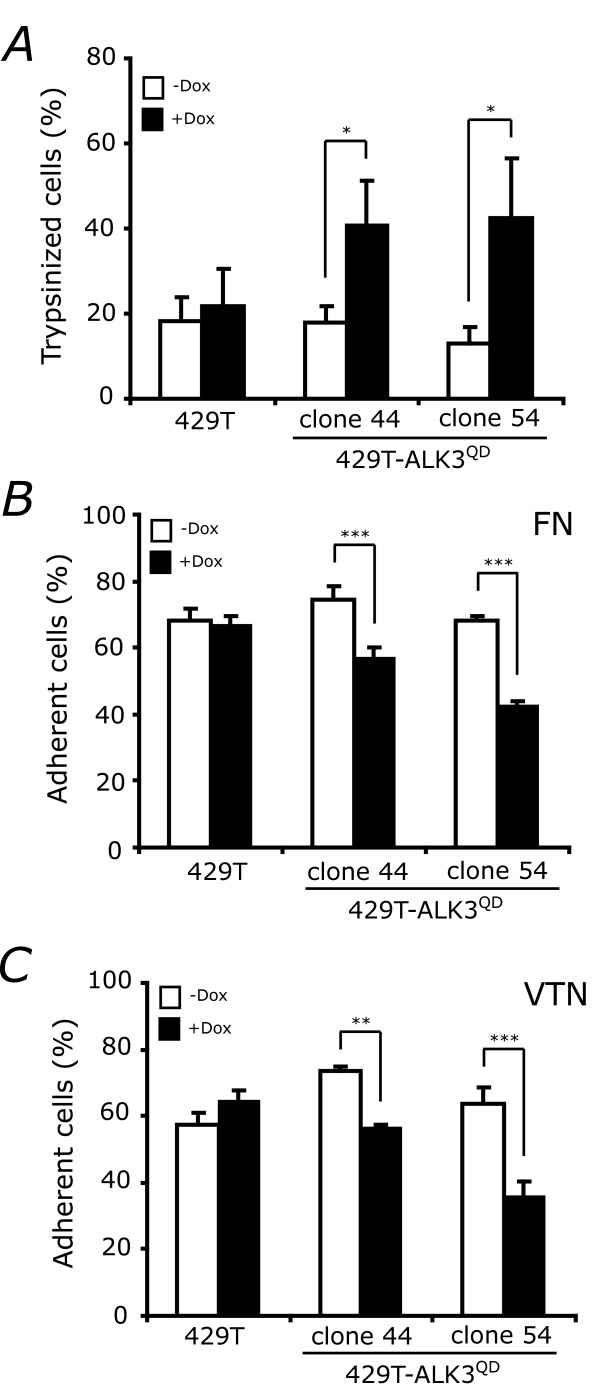
Unexpectedly, doxycycline-induced ALK3QD expression in OVCA429 cells reduced tumour implantation on peritoneal surfaces and ascites formation when xenografted into immunocompromised mice by intraperitoneal injection. To determine the potential mechanisms controlling this in vivo observation, we followed with several cell culture experiments. Doxycycline-induced ALK3QD expression enhanced the refractile, spindle-shaped morphology of cultured OVCA429 cells eliciting an EMT-like response. Using in vitro wound healing assays, we observed that ALK3QD-expressing cells migrated with long, cytoplasmic projections extending into the wound space. The phenotypic alterations of ALK3QD-expressing cells correlated with changes in specific gene expression patterns of EMT, including increased Snail and Slug and reduced E-cadherin mRNA expression. In addition, ALK3QD signalling reduced beta1- and beta3-integrin expression, critical molecules involved in ovarian cancer cell adhesion. The combination of reduced E-cadherin and beta-integrin expression correlates directly with the reduced EOC cell cohesion in spheroids and reduced cell adhesion to the extracellular matrix substrates fibronectin and vitronectin that was observed.
We propose that the key steps of ovarian cancer metastasis, specifically cell cohesion of multicellular aggregates in ascites and cell adhesion for reattachment to secondary sites, may be inhibited by overactive BMP signalling, thereby decreasing the ultimate malignant potential of ovarian cancer in this model system.
在人卵巢癌细胞中激活骨形态发生蛋白 4 信号会引起许多表型变化,包括与正常人类卵巢表面上皮细胞相比改变细胞形态、黏附、运动和侵袭。从这些体外分析中,我们假设活性 BMP 信号促进卵巢癌的转移潜能。
为了直接验证这一点,我们构建了 OVCA429 人卵巢癌细胞,该细胞具有四环素诱导的组成性激活型 BMP 受体 ALK3QD 的表达,并将这些细胞注入免疫缺陷小鼠。进一步在体外进行了特征描述,以解决激活的 BMP 信号对 EOC 表型的作用,特别强调上皮-间充质转化 (EMT) 和细胞黏附。
出乎意料的是,四环素诱导的 OVCA429 细胞中 ALK3QD 的表达,当通过腹腔内注射将其异种移植到免疫缺陷小鼠中时,减少了肿瘤在腹膜表面的植入和腹水的形成。为了确定控制这种体内观察的潜在机制,我们随后进行了几项细胞培养实验。四环素诱导的 ALK3QD 表达增强了培养的 OVCA429 细胞的折射、纺锤形形态,引发 EMT 样反应。通过体外划痕愈合实验,我们观察到表达 ALK3QD 的细胞通过延伸到伤口空间的长细胞质突起进行迁移。表达 ALK3QD 的细胞的表型改变与 EMT 特定基因表达模式的变化相关,包括 Snail 和 Slug 的增加和 E-钙黏蛋白 mRNA 表达的减少。此外,ALK3QD 信号降低了β1-和β3-整联蛋白的表达,这是卵巢癌细胞黏附所涉及的关键分子。E-钙黏蛋白和β-整联蛋白表达的减少与球体中 EOC 细胞凝聚力的降低以及细胞对纤维连接蛋白和纤连蛋白等细胞外基质底物的黏附能力的降低直接相关。
我们提出,卵巢癌转移的关键步骤,特别是腹水中小细胞聚集体的细胞内聚和重新附着到次级部位的细胞黏附,可能被过度活跃的 BMP 信号抑制,从而降低该模型系统中卵巢癌的最终恶性潜能。