Department of Radiology, Zhujiang Hospital, Southern Medical University, Guangzhou, Guangdong, China.
Neuroimage. 2010 Jun;51(2):616-22. doi: 10.1016/j.neuroimage.2010.02.050. Epub 2010 Feb 24.
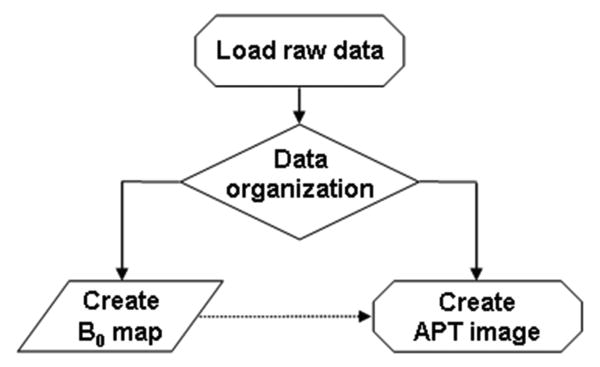
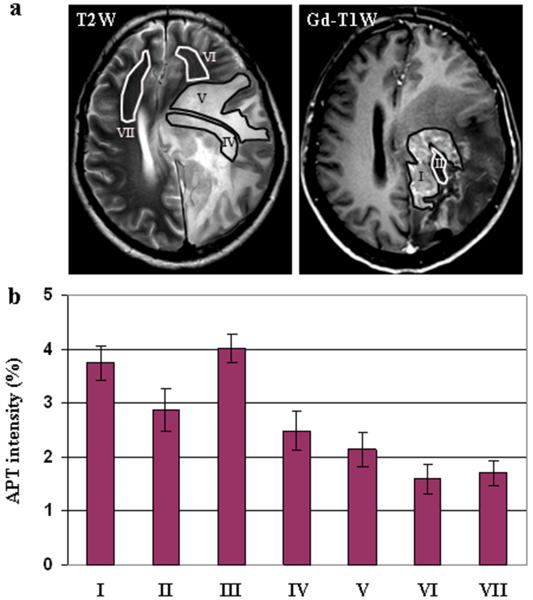
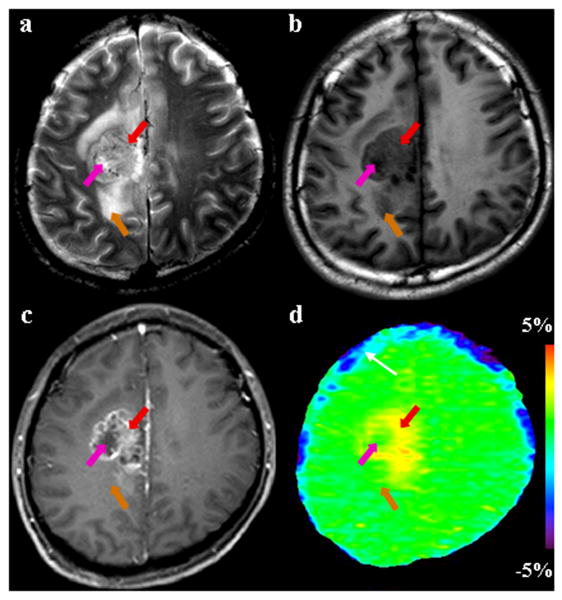
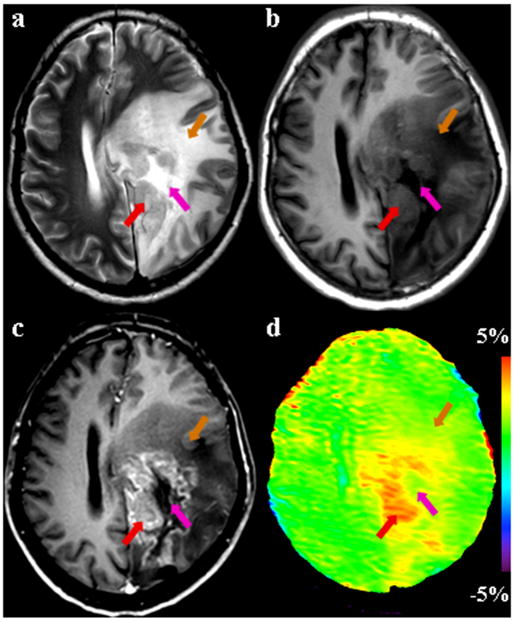
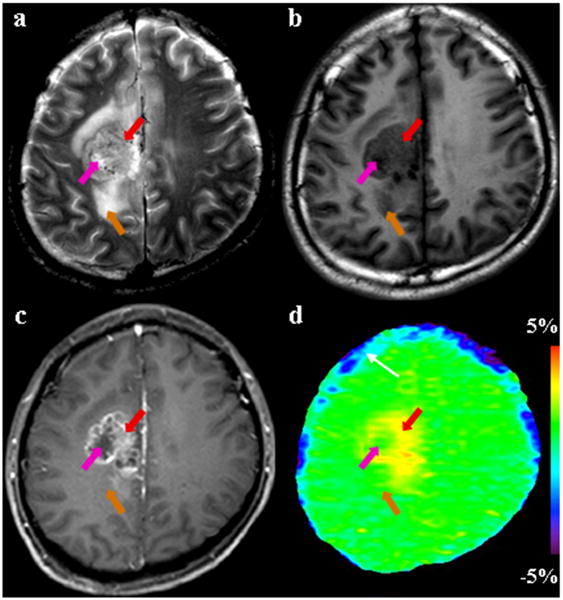
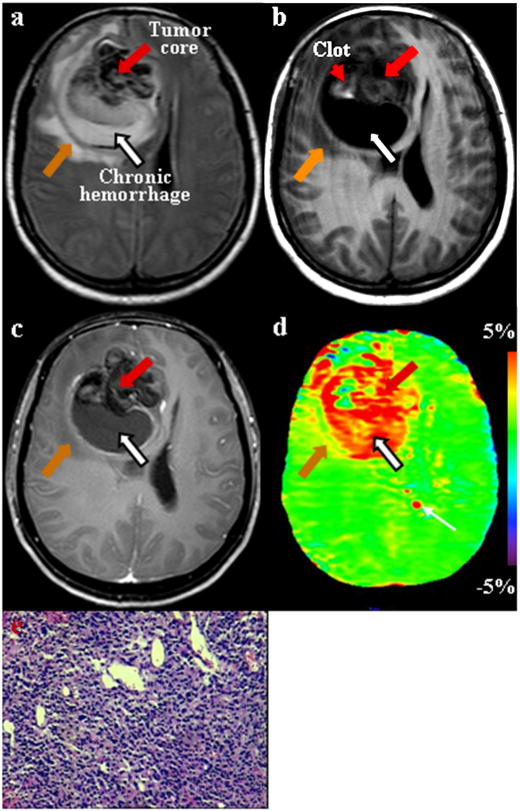
Amide proton transfer (APT) imaging is a novel MRI technique, in which the amide protons of endogenous proteins and peptides are irradiated to accomplish indirect detection using the bulk water signal. In this paper, the APT approach was added to a standard brain MRI protocol at 3T, and twelve patients with high-grade gliomas confirmed by histopathology were scanned. It is shown that all tumors, including one with minor gadolinium enhancement, showed heterogeneous hyperintensity on the APT images. The average APT signal intensities of the viable tumor cores were significantly higher than those of peritumoral edema and normal-appearing white matter (P<0.001). The average APT signal intensities were significantly lower in the necrotic regions than in the viable tumor cores (P=0.004). The APT signal intensities of the cystic cavities were similar to those of the viable tumor cores (P>0.2). The initial results show that APT imaging at the protein and peptide level may enhance non-invasive identification of tissue heterogeneity in high-grade brain tumors.
酰胺质子转移(APT)成像是一种新的 MRI 技术,利用该技术对内源性蛋白质和肽的酰胺质子进行照射,利用体纯水信号实现间接检测。在本文中,APT 方法被添加到标准的 3T 脑部 MRI 方案中,并对 12 名经组织病理学证实的高级别脑胶质瘤患者进行了扫描。结果显示,所有肿瘤,包括一个增强程度较小的肿瘤,在 APT 图像上均显示出不均匀的高信号。存活肿瘤核心的平均 APT 信号强度明显高于肿瘤周围水肿和正常白质(P<0.001)。坏死区的平均 APT 信号强度明显低于存活肿瘤核心(P=0.004)。囊性腔的 APT 信号强度与存活肿瘤核心相似(P>0.2)。初步结果表明,在蛋白质和肽水平上进行 APT 成像可能增强对高级别脑肿瘤组织异质性的无创识别。