Department of Urology, College of Medicine, The Catholic University of Korea, Seoul, Korea.
Yonsei Med J. 2010 Mar;51(2):244-7. doi: 10.3349/ymj.2010.51.2.244. Epub 2010 Feb 12.
We performed this study in order to evaluate the incidence and characteristics of urolithiasis in patients with malignant hematologic diseases.
Nine hundred one patients who underwent medical treatment for malignant hematologic disease and 40,543 patients who visited the emergency room and without malignant hematologic diseases were included in our study. The patients with malignant hematologic diseases were divided into two groups depending on their primary treatment. Group I included patients with acute and chronic leukemia (AML, ALL, CML, CLL) for which chemotherapy and steroid therapy was necessary, and group II included patients with anaplastic anemia and myelodysplastic syndrome and who had undergone repeated transfusion for treatment. Comparisons were made between the two groups in respect to the incidence of urolithiasis and the stones' radiopacity.
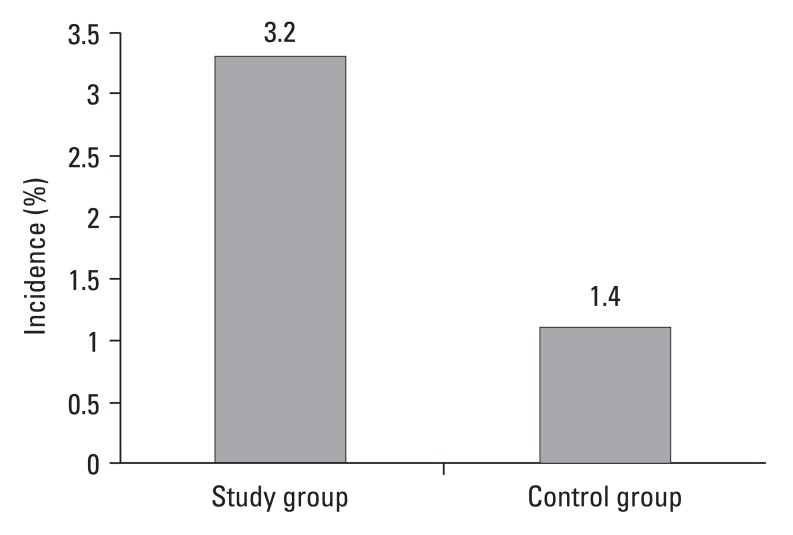
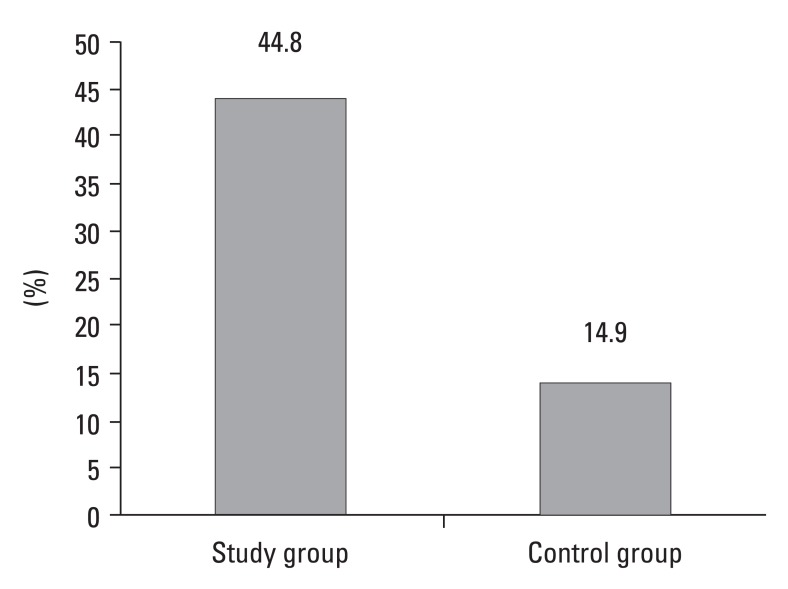
Twenty nine patients (3.2%) of the 901 malignant hematologic patients were diagnosed with urolithiasis, compared to 575 patients (1.4%) of 40,543 emergency room patients. There was a significant increase of the incidence of urolithiasis in the malignant hematologic group. Compared to the general patients, the patients with malignant hematologic diseases had a higher rate of radiolucent stones (46.6% versus 16.3%, respectively), and the difference was significant.
The incidence of urolithiasis for malignant hematologic patients was significantly higher than that for the control group.
我们进行这项研究是为了评估恶性血液病患者中尿路结石的发生率和特征。
本研究纳入了 901 名接受恶性血液病治疗的患者和 40543 名因恶性血液病以外的疾病就诊急诊室的患者。根据主要治疗方法将恶性血液病患者分为两组。组 I 包括接受化疗和类固醇治疗的急性和慢性白血病(AML、ALL、CML、CLL)患者,组 II 包括接受反复输血治疗的再生障碍性贫血和骨髓增生异常综合征患者。比较两组尿路结石的发生率和结石的放射密度。
901 例恶性血液病患者中,29 例(3.2%)诊断为尿路结石,而 40543 例急诊室患者中,575 例(1.4%)诊断为尿路结石。恶性血液病组尿路结石的发生率明显增加。与普通患者相比,恶性血液病患者的透光性结石发生率更高(分别为 46.6%和 16.3%),差异有统计学意义。
恶性血液病患者尿路结石的发生率明显高于对照组。