Pasula Satish, Chakraborty Samujjwal, Choi Jae H, Kim Jeong-Ho
The Mississippi Functional Genomics Network, Department of Biological Sciences, The University of Southern Mississippi, Hattiesburg, MS 39406, USA.
BMC Cell Biol. 2010 Mar 7;11:17. doi: 10.1186/1471-2121-11-17.
In yeast, glucose-dependent degradation of the Mth1 protein, a corepressor of the glucose transporter gene (HXT) repressor Rgt1, is a crucial event enabling expression of several HXT. This event occurs through a signaling pathway that involves the Rgt2 and Snf3 glucose sensors and yeast casein kinase 1 and 2 (Yck1/2). In this study, we examined whether the glucose sensors directly couple with Yck1/2 to convert glucose binding into an intracellular signal that leads to the degradation of Mth1.
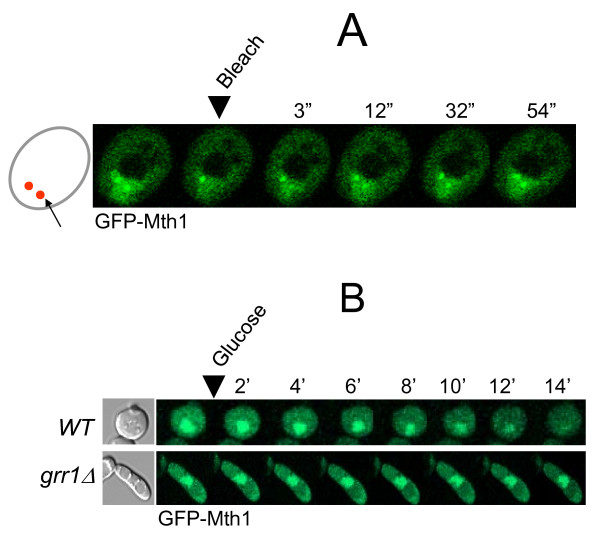
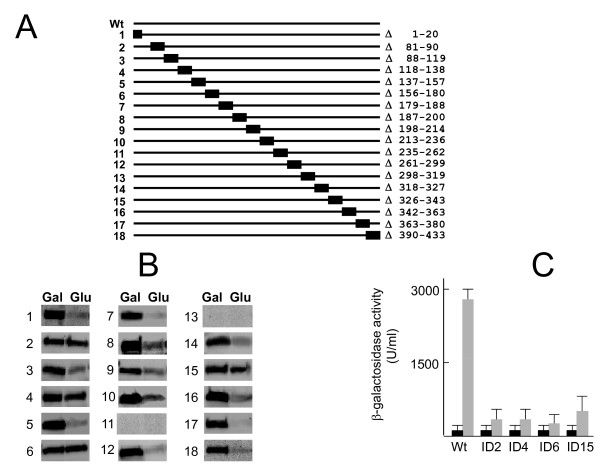
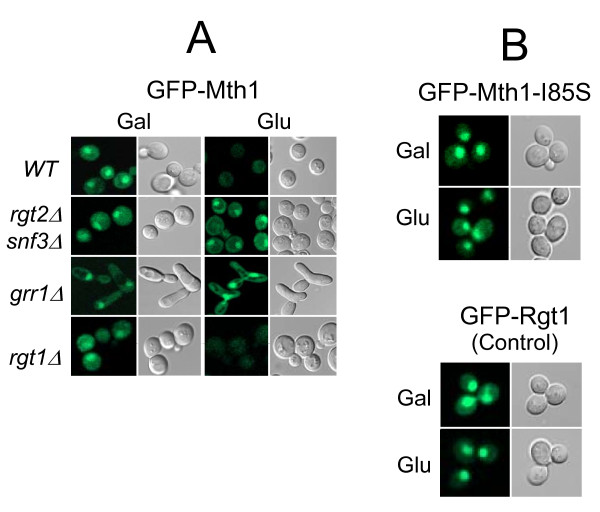
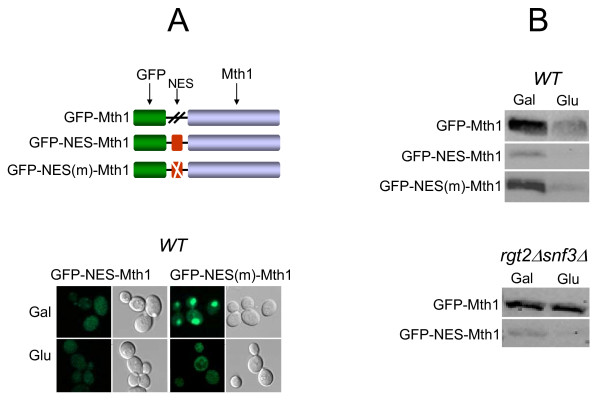
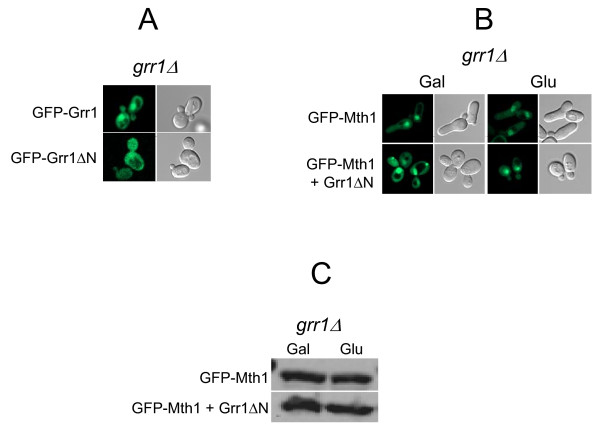
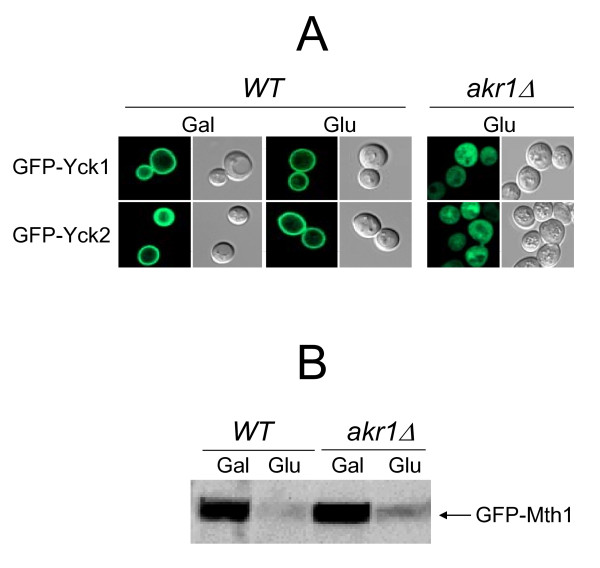
High levels of glucose induce degradation of Mth1 through the Rgt2/Snf3 glucose signaling pathway. Fluorescence microscopy analysis indicates that, under glucose-limited conditions, GFP-Mth1 is localized in the nucleus and does not shuttle between the nucleus and cytoplasm. If glucose-induced degradation is prevented due to disruption of the Rgt2/Snf3 pathway, GFP-Mth1 accumulates in the nucleus. When engineered to be localized to the cytoplasm, GFP-Mth1 is degraded regardless of the presence of glucose or the glucose sensors. In addition, removal of Grr1 from the nucleus prevents degradation of GFP-Mth1. These results suggest that glucose-induced, glucose sensor-dependent Mth1 degradation occurs in the nucleus. We also show that, like Yck2, Yck1 is localized to the plasma membrane via C-terminal palmitoylation mediated by the palmitoyl transferase Akr1. However, glucose-dependent degradation of Mth1 is not impaired in the absence of Akr1, suggesting that a direct interaction between the glucose sensors and Yck1/2 is not required for Mth1 degradation.
Glucose-induced, glucose sensor-regulated degradation of Mth1 occurs in the nucleus and does not require direct interaction of the glucose sensors with Yck1/2.
在酵母中,葡萄糖转运蛋白基因(HXT)阻遏物Rgt1的共阻遏物Mth1蛋白的葡萄糖依赖性降解是使多个HXT得以表达的关键事件。这一事件通过一条涉及Rgt2和Snf3葡萄糖传感器以及酵母酪蛋白激酶1和2(Yck1/2)的信号通路发生。在本研究中,我们检测了葡萄糖传感器是否直接与Yck1/2偶联,将葡萄糖结合转化为导致Mth1降解的细胞内信号。
高水平葡萄糖通过Rgt2/Snf3葡萄糖信号通路诱导Mth1降解。荧光显微镜分析表明,在葡萄糖受限条件下,GFP-Mth1定位于细胞核,且不在细胞核与细胞质之间穿梭。如果由于Rgt2/Snf3通路的破坏而阻止了葡萄糖诱导的降解,GFP-Mth1会在细胞核中积累。当被设计定位于细胞质时,无论有无葡萄糖或葡萄糖传感器,GFP-Mth1都会被降解。此外,从细胞核中去除Grr1可阻止GFP-Mth1的降解。这些结果表明,葡萄糖诱导的、葡萄糖传感器依赖性的Mth1降解发生在细胞核中。我们还表明,与Yck2一样,Yck1通过棕榈酰转移酶Akr1介导的C末端棕榈酰化定位于质膜。然而,在没有Akr1的情况下,Mth1的葡萄糖依赖性降解并未受损,这表明Mth1降解不需要葡萄糖传感器与Yck1/2之间的直接相互作用。
葡萄糖诱导的、葡萄糖传感器调节的Mth1降解发生在细胞核中,且不需要葡萄糖传感器与Yck1/2的直接相互作用。