
鉴定人类 XIST 侧翼的调控元件揭示了物种差异。
Identification of regulatory elements flanking human XIST reveals species differences.
机构信息
Department of Medical Genetics, Molecular Epigenetics Group, Life Sciences Institute, University of British Columbia 2350 Health Sciences Mall, Vancouver BC V6T 1Z3, Canada.
出版信息
BMC Mol Biol. 2010 Mar 8;11:20. doi: 10.1186/1471-2199-11-20.
BACKGROUND
The transcriptional silencing of one X chromosome in eutherians requires transcription of the long non-coding RNA gene, XIST. Many regulatory elements have been identified downstream of the mouse Xist gene, including the antisense Tsix gene. However, these elements do not show sequence conservation with humans, and the human TSIX gene shows critical differences from the mouse. Thus we have undertaken an unbiased identification of regulatory elements both downstream and upstream of the human XIST gene using DNase I hypersensitivity mapping.
RESULTS
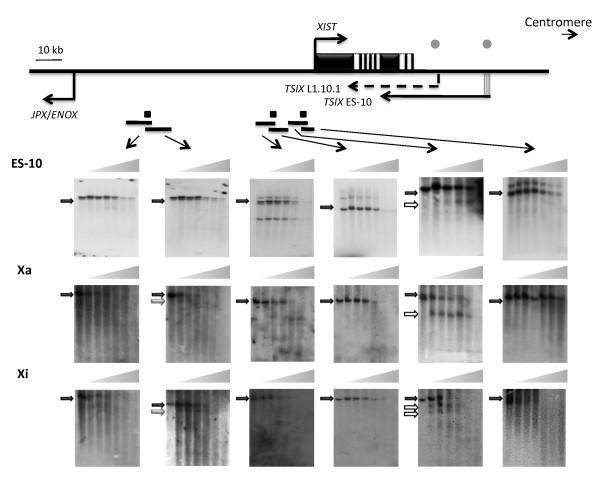
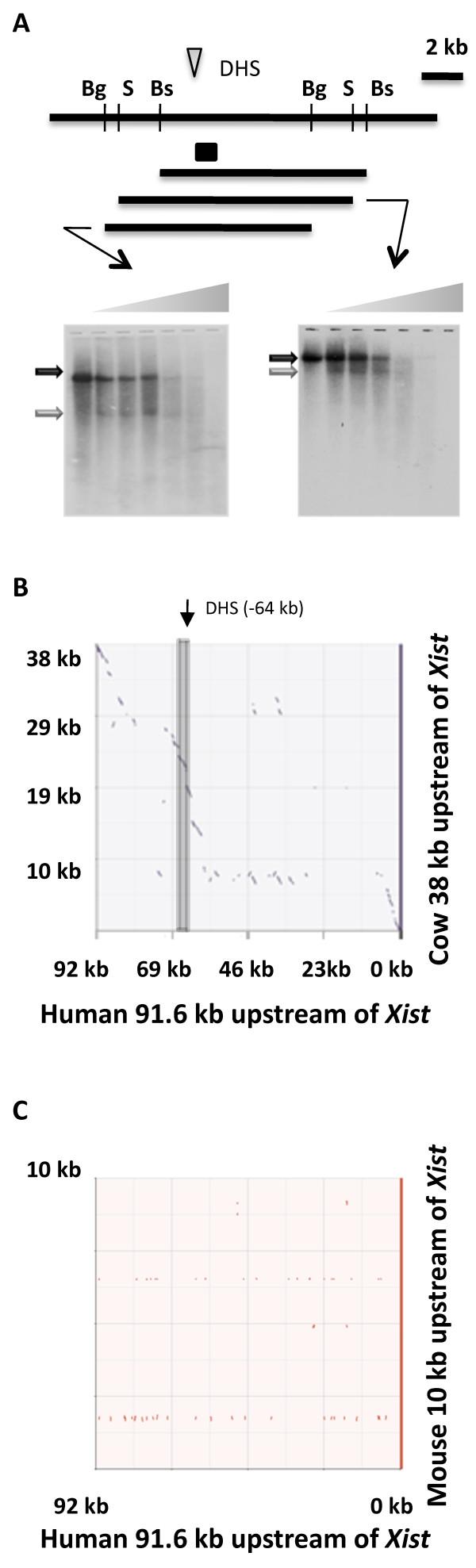
Downstream of XIST a single DNase I hypersensitive site was identified in a mouse undifferentiated ES cell line containing an integration of the human XIC region. This site was not observed in somatic cells. Upstream of XIST, the distance to the flanking JPX gene is expanded in humans relative to mice, and we observe a hypersensitive site 65 kb upstream of XIST, in addition to hypersensitive sites near the XIST promoter. This -65 region has bi-directional promoter activity and shows sequence conservation in non-rodent eutheria.
CONCLUSIONS
The lack of regulatory elements corresponding to human TSIX lends further support to the argument that TSIX is not a regulator of XIST in humans. The upstream hypersensitive sites we identify show sequence conservation with other eutheria, but not with mice. Therefore the regulation of XIST seems to be different between mice and man, and regulatory sequences upstream of XIST may be important regulators of XIST in non-rodent eutheria instead of Tsix which is critical for Xist regulation in rodents.
背景
在真兽类动物中,一条 X 染色体的转录沉默需要长非编码 RNA 基因 XIST 的转录。在小鼠 Xist 基因的下游已经鉴定出许多调控元件,包括反义 Tsix 基因。然而,这些元件与人类没有序列保守性,并且人类 TSIX 基因与小鼠有很大的差异。因此,我们使用 DNase I 超敏性作图技术,对人类 XIST 基因的上下游进行了无偏见的调控元件鉴定。
结果
在包含人类 XIC 区域整合的未分化 ES 细胞系的小鼠中,XIST 下游鉴定出一个单一的 DNase I 超敏位点。在体细胞中未观察到该位点。在 XIST 的上游,相对于小鼠,人类的 JPX 基因侧翼的距离扩大,我们在 XIST 上游 65kb 处观察到一个超敏位点,以及在 XIST 启动子附近的超敏位点。这个-65 区域具有双向启动子活性,并在非啮齿类真兽类中具有序列保守性。
结论
缺乏与人类 TSIX 相对应的调控元件进一步支持了 TSIX 不是人类 XIST 调控因子的观点。我们鉴定的上游超敏位点与其他真兽类具有序列保守性,但与小鼠没有。因此,XIST 的调控在小鼠和人类之间似乎不同,并且 XIST 上游的调控序列可能是除 Tsix 之外的非啮齿类真兽类 XIST 的重要调控因子,而 Tsix 对小鼠 Xist 的调控至关重要。


 Zotero 插件