Department of Chemistry, University of Michigan, Ann Arbor, Michigan 48109, USA.
Proteins. 2010 Jun;78(8):1926-38. doi: 10.1002/prot.22706.
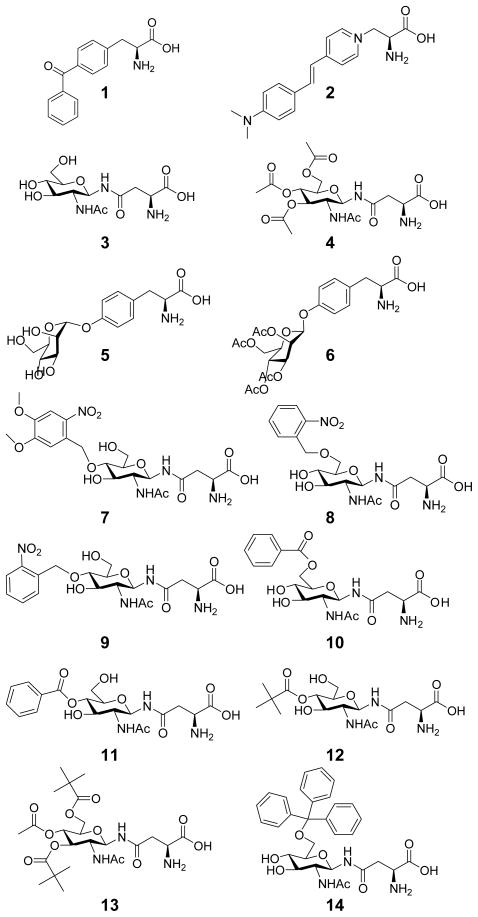
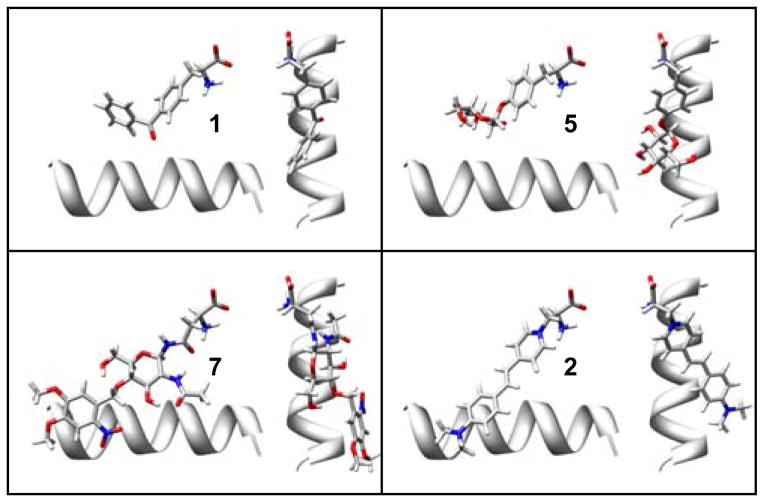
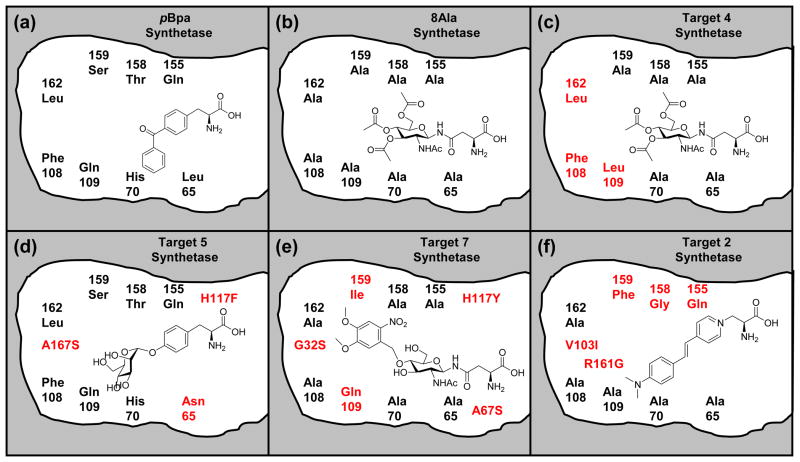
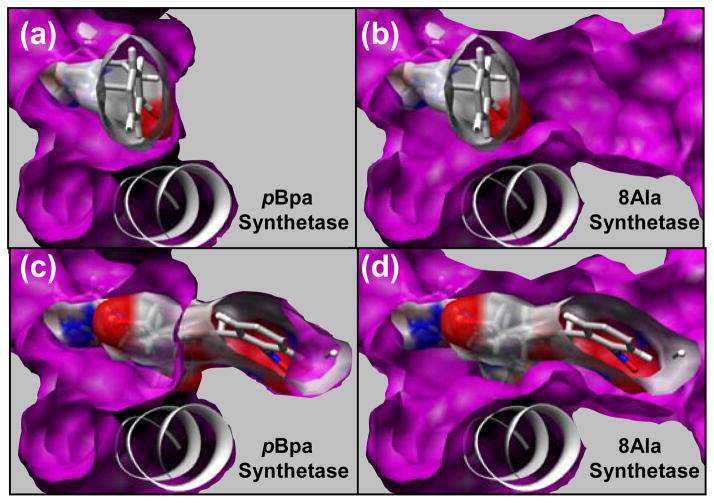
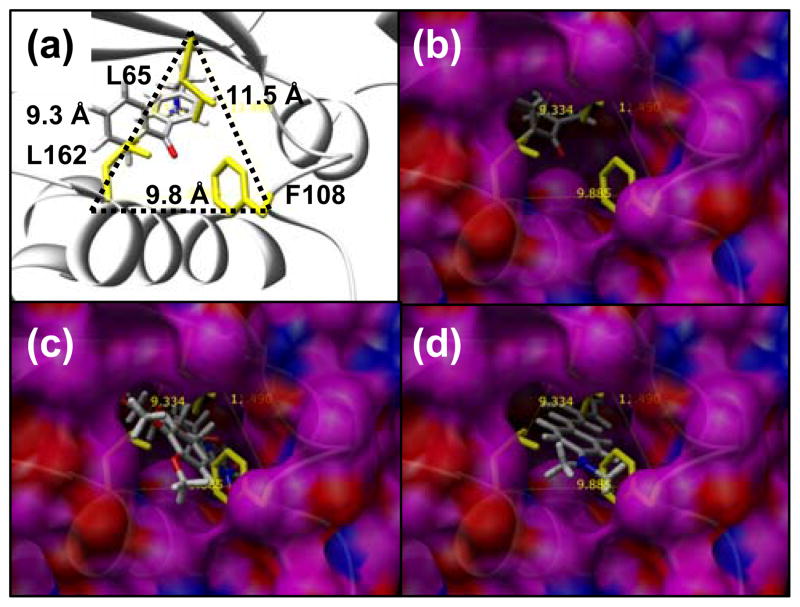
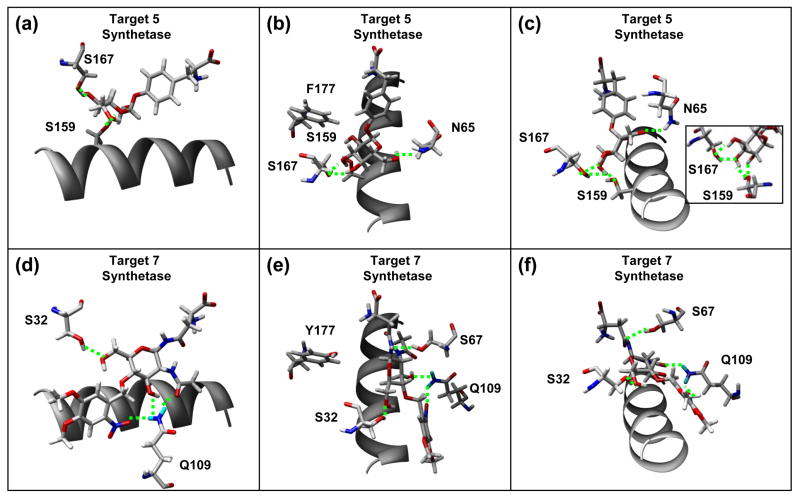
Orthogonal aminoacyl-tRNA synthetase/tRNA pairs from archaea have been evolved to facilitate site specific in vivo incorporation of unnatural amino acids into proteins in Escherichia coli. Using this approach, unnatural amino acids have been successfully incorporated with high translational efficiency and fidelity. In this study, CHARMM-based molecular docking and free energy calculations were used to evaluate rational design of specific protein-ligand interactions for aminoacyl-tRNA synthetases. A series of novel unnatural amino acid ligands were docked into the p-benzoyl-L-phenylalanine tRNA synthetase, which revealed that the binding pocket of the enzyme does not provide sufficient space for significantly larger ligands. Specific binding site residues were mutated to alanine to create additional space to accommodate larger target ligands, and then mutations were introduced to improve binding free energy. This approach was used to redesign binding sites for several different target ligands, which were then tested against the standard 20 amino acids to verify target specificity. Only the synthetase designed to bind Man-alpha-O-Tyr was predicted to be sufficiently selective for the target ligand and also thermodynamically stable. Our study suggests that extensive redesign of the tRNA synthatase binding pocket for large bulky ligands may be quite thermodynamically unfavorable.
已从古菌中进化出正交的氨酰-tRNA 合成酶/tRNA 对,以促进大肠杆菌中蛋白质的定点体内掺入非天然氨基酸。使用这种方法,可以以高翻译效率和保真度成功掺入非天然氨基酸。在这项研究中,使用基于 CHARMM 的分子对接和自由能计算来评估氨酰-tRNA 合成酶的合理设计的特定蛋白-配体相互作用。一系列新型非天然氨基酸配体被对接进入 p-苯甲酰-L-苯丙氨酸 tRNA 合成酶,这表明酶的结合口袋没有为明显更大的配体提供足够的空间。将特定的结合位点残基突变为丙氨酸以创建额外的空间来容纳更大的靶标配体,然后引入突变以提高结合自由能。该方法用于重新设计针对几种不同靶标配体的结合位点,然后针对标准的 20 种氨基酸进行测试以验证靶标特异性。只有设计用于结合 Man-alpha-O-Tyr 的合成酶被预测对靶标配体具有足够的选择性,并且热力学稳定。我们的研究表明,为大体积配体广泛重新设计 tRNA synthatase 结合口袋可能在热力学上非常不利。