Department of Biomedical Engineering and Materials, School of Medicine, Soonchunhyang University, 366-1 Ssangyoung-Dong, 330-090 Cheonan, Republic of Korea.
J Mater Sci Mater Med. 2010 Jun;21(6):1867-74. doi: 10.1007/s10856-010-4058-9. Epub 2010 Mar 24.
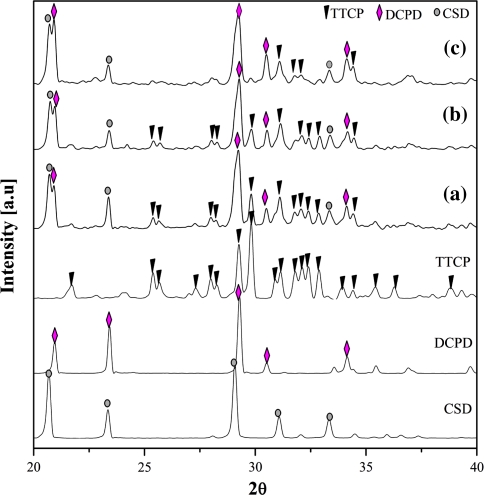
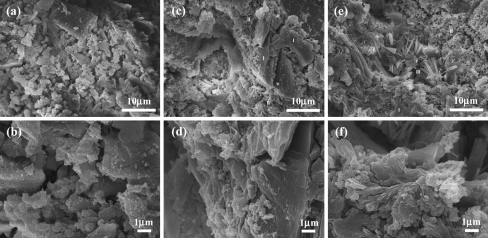
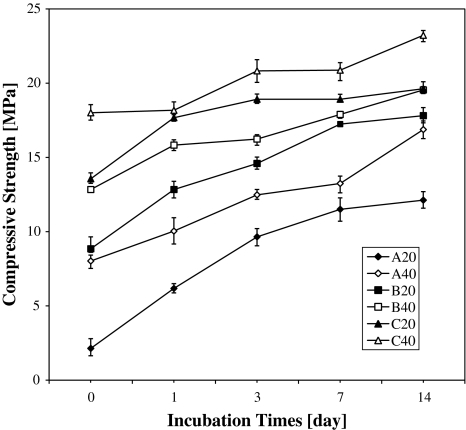
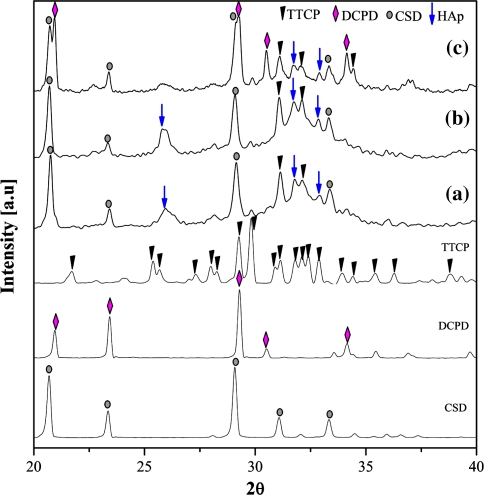
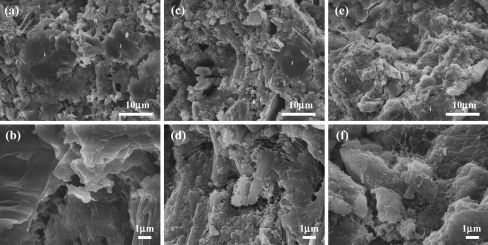
In this study, an injectable bone substitute (IBS) consisting of citric acid, chitosan, and hydroxyl propyl methyl cellulose (HPMC) as the liquid phase and tetra calcium phosphate (TTCP), dicalcium phosphate dihydrate (DCPD) and calcium sulfate dehydrate (CSD, CaSO4 x 2H2O) powders as the solid phase, were fabricated. Two groups were classified based on the percent of citric acid in the liquid phase (20, 40 wt%). In each groups, the HPMC percentage was 0, 2, and 4 wt%. An increase in compressive strength due to changes in morphology was confirmed by scanning electron microscopy images. A good conversion rate of HAp at 20% citric acid was observed in the XRD profiles. In addition, HPMC was not obviously affected by apatite formation. However, both HPMC and citric acid increased the compressive strength of IBS. The maximum compressive strength for IBS was with 40% citric acid and 4% HPMC after 14 days of incubation in 100% humidity at 37 degrees C.
在这项研究中,制备了一种由柠檬酸、壳聚糖和羟丙基甲基纤维素(HPMC)作为液相,以及磷酸四钙(TTCP)、二水磷酸二钙(DCPD)和硫酸钙脱水(CSD,CaSO4 x 2H2O)粉末作为固相组成的可注射骨替代物(IBS)。根据液相中柠檬酸的百分比(20、40wt%)将两组进行分类。在每组中,HPMC 的百分比分别为 0、2 和 4wt%。通过扫描电子显微镜图像证实,由于形态变化,抗压强度增加。在 XRD 图谱中观察到 20%柠檬酸时 HAp 的转化率很好。此外,HPMC 对磷灰石的形成没有明显影响。然而,HPMC 和柠檬酸都增加了 IBS 的抗压强度。在 37 摄氏度 100%湿度下孵育 14 天后,含有 40%柠檬酸和 4%HPMC 的 IBS 的抗压强度达到最大值。