Department of Organismic & Evolutionary Biology, Museum of Comparative Zoology, Harvard University, Cambridge, MA 02138, USA.
BMC Biol. 2010 Apr 1;8:29. doi: 10.1186/1741-7007-8-29.
Due to its high polymorphism and importance for disease resistance, the major histocompatibility complex (MHC) has been an important focus of many vertebrate genome projects. Avian MHC organization is of particular interest because the chicken Gallus gallus, the avian species with the best characterized MHC, possesses a highly streamlined minimal essential MHC, which is linked to resistance against specific pathogens. It remains unclear the extent to which this organization describes the situation in other birds and whether it represents a derived or ancestral condition. The sequencing of the zebra finch Taeniopygia guttata genome, in combination with targeted bacterial artificial chromosome (BAC) sequencing, has allowed us to characterize an MHC from a highly divergent and diverse avian lineage, the passerines.
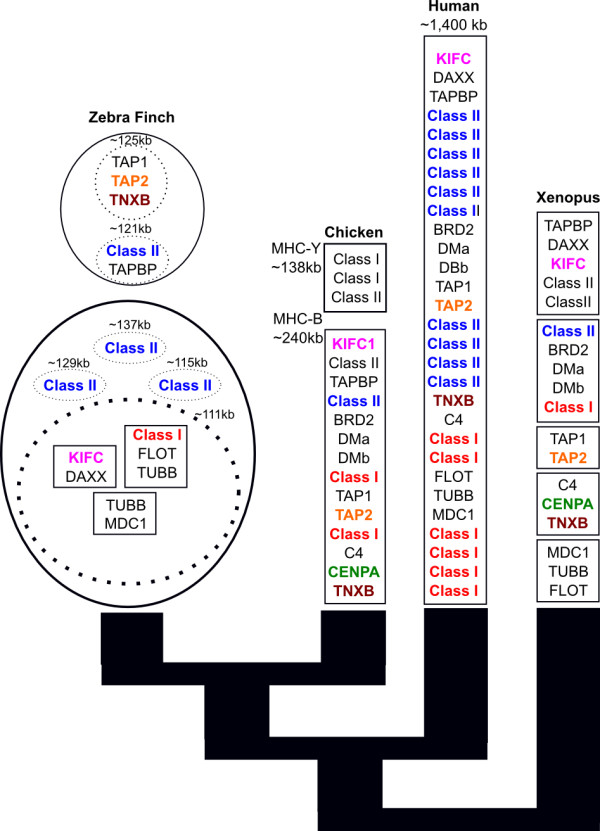
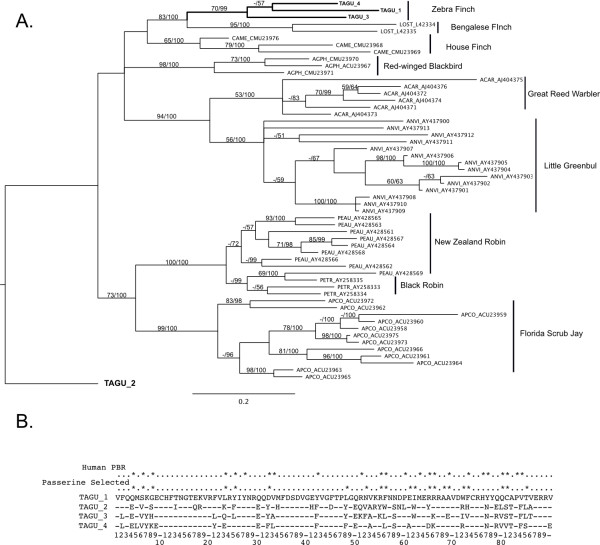
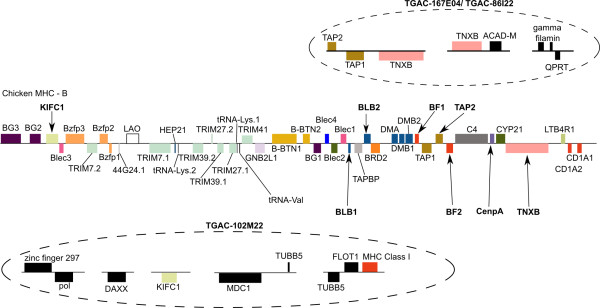
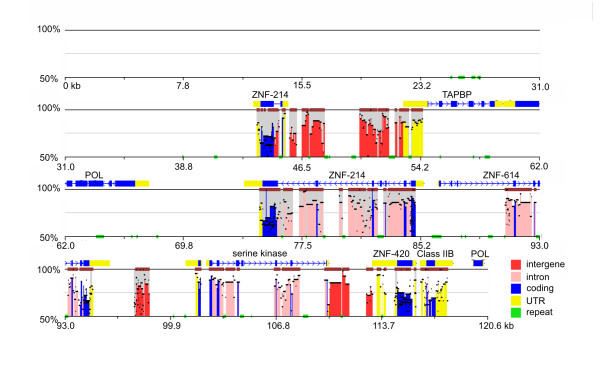
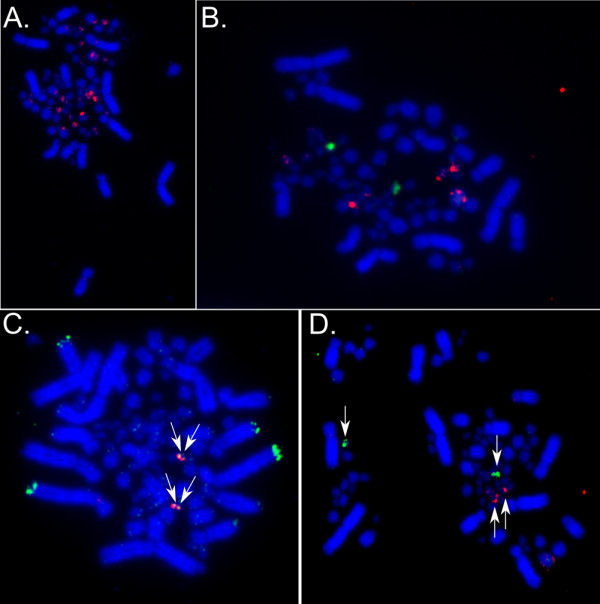
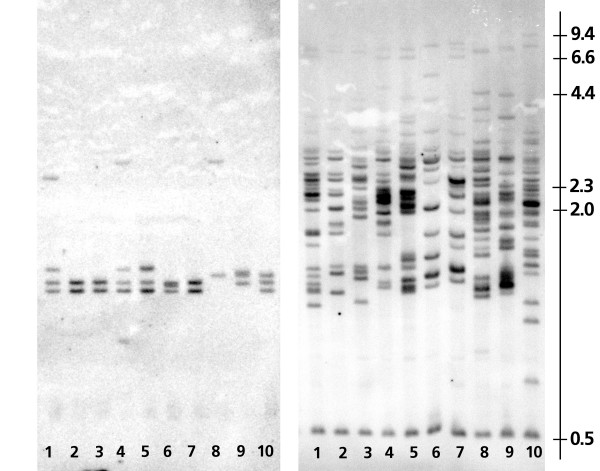
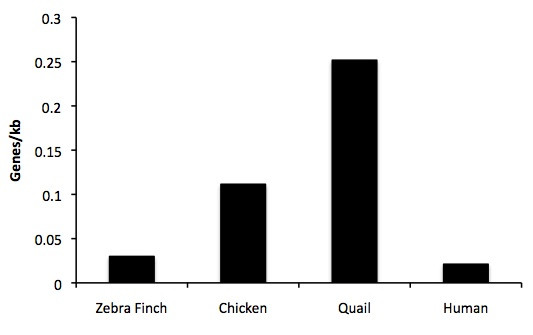
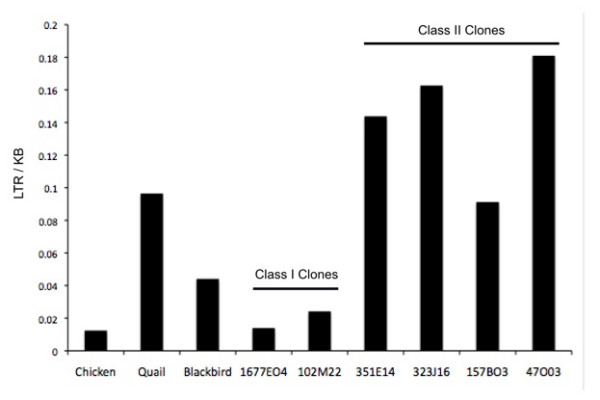
The zebra finch MHC exhibits a complex structure and history involving gene duplication and fragmentation. The zebra finch MHC includes multiple Class I and Class II genes, some of which appear to be pseudogenes, and spans a much more extensive genomic region than the chicken MHC, as evidenced by the presence of MHC genes on each of seven BACs spanning 739 kb. Cytogenetic (FISH) evidence and the genome assembly itself place core MHC genes on as many as four chromosomes with TAP and Class I genes mapping to different chromosomes. MHC Class II regions are further characterized by high endogenous retroviral content. Lastly, we find strong evidence of selection acting on sites within passerine MHC Class I and Class II genes.
The zebra finch MHC differs markedly from that of the chicken, the only other bird species with a complete genome sequence. The apparent lack of synteny between TAP and the expressed MHC Class I locus is in fact reminiscent of a pattern seen in some mammalian lineages and may represent convergent evolution. Our analyses of the zebra finch MHC suggest a complex history involving chromosomal fission, gene duplication and translocation in the history of the MHC in birds, and highlight striking differences in MHC structure and organization among avian lineages.
由于其高度多态性和对疾病抗性的重要性,主要组织相容性复合体 (MHC) 一直是许多脊椎动物基因组项目的重要焦点。禽类 MHC 的组织是特别有趣的,因为鸡 Gallus gallus 是 MHC 特征最明显的禽类物种,拥有高度简化的最小必需 MHC,与针对特定病原体的抗性有关。目前尚不清楚这种组织在其他鸟类中的程度,以及它是否代表衍生或祖先条件。斑马雀 Taeniopygia guttata 基因组的测序,结合靶向细菌人工染色体 (BAC) 测序,使我们能够描述来自高度分化和多样化的鸟类谱系,即雀形目鸟类的 MHC。
斑马雀 MHC 表现出复杂的结构和历史,涉及基因重复和片段化。斑马雀 MHC 包括多个 Class I 和 Class II 基因,其中一些似乎是假基因,并且跨越的基因组区域比鸡 MHC 广泛得多,这可以从存在于七个 BAC 中的 MHC 基因证明,这些 BAC 跨越 739 kb。细胞遗传学 (FISH) 证据和基因组组装本身将核心 MHC 基因放置在多达四个染色体上,TAP 和 Class I 基因映射到不同的染色体上。MHC Class II 区域进一步以高内源性逆转录病毒含量为特征。最后,我们发现强有力的证据表明选择作用于 passerine MHC Class I 和 Class II 基因中的位点。
斑马雀 MHC 与鸡明显不同,鸡是唯一具有完整基因组序列的鸟类物种。事实上,TAP 和表达的 MHC Class I 基因座之间缺乏同线关系让人想起在一些哺乳动物谱系中看到的模式,可能代表趋同进化。我们对斑马雀 MHC 的分析表明,在鸟类 MHC 的历史中,涉及染色体分裂、基因重复和易位的复杂历史,并突出了不同禽类谱系 MHC 结构和组织之间的显著差异。