Department of Chemistry and The Skaggs Institute for Chemical Biology, The Scripps Research Institute, 10550 North Torrey Pines Road, La Jolla, California 92037, USA.
J Am Chem Soc. 2010 May 19;132(19):6855-61. doi: 10.1021/ja102260q.
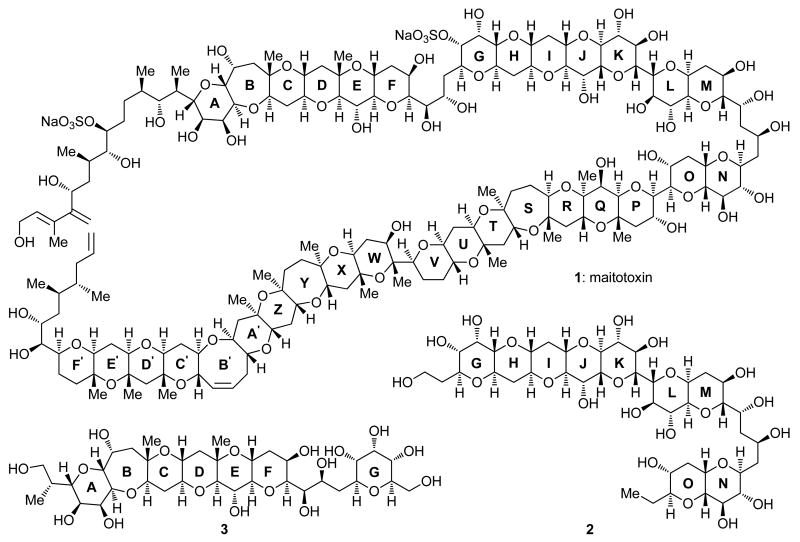
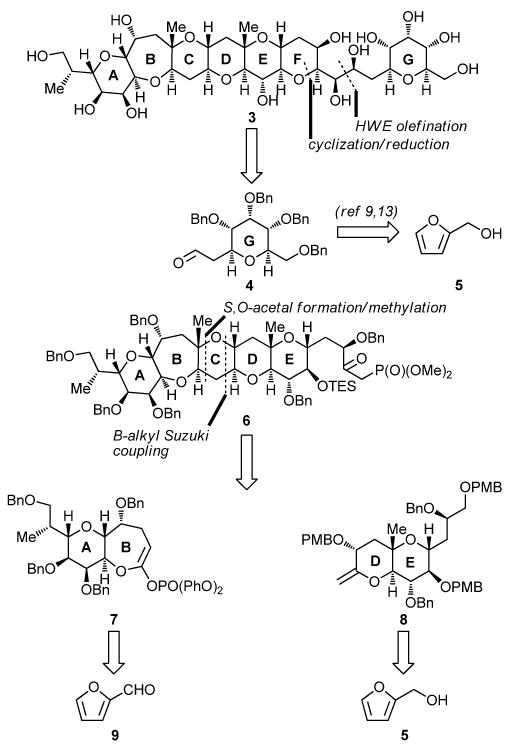
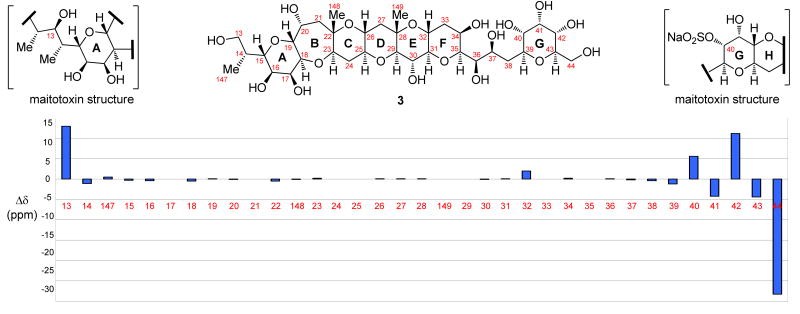
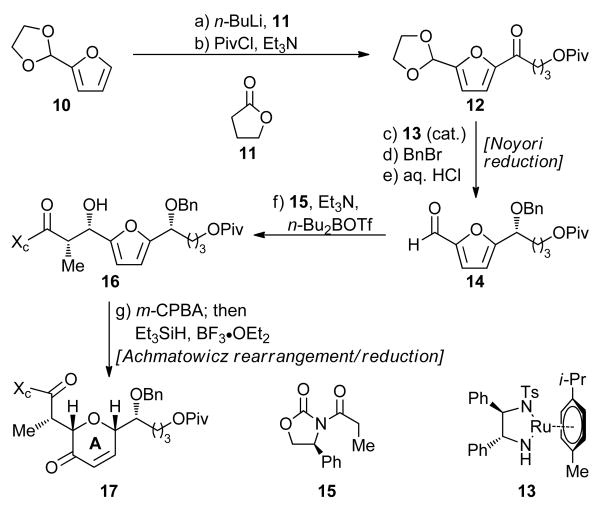
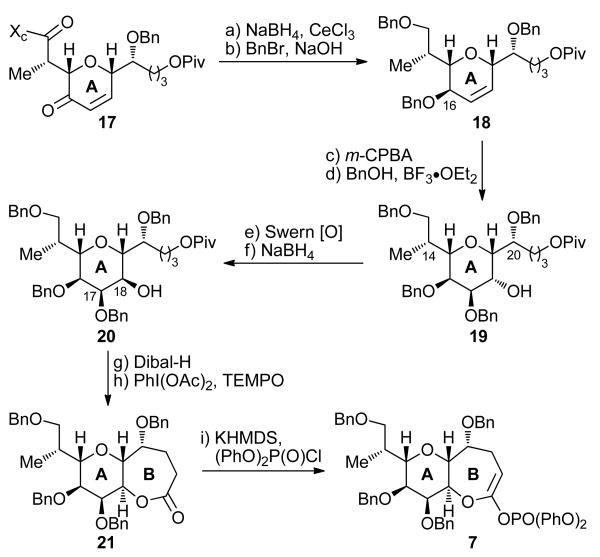
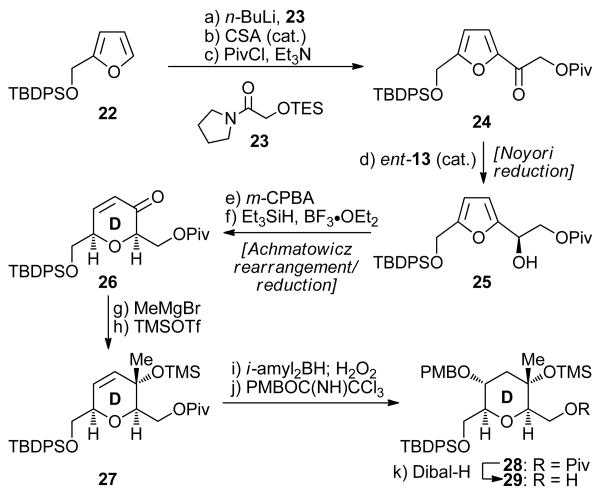
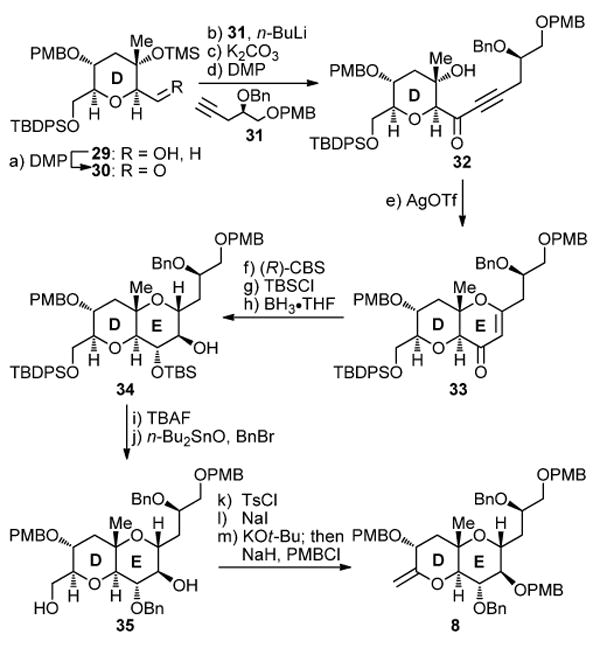
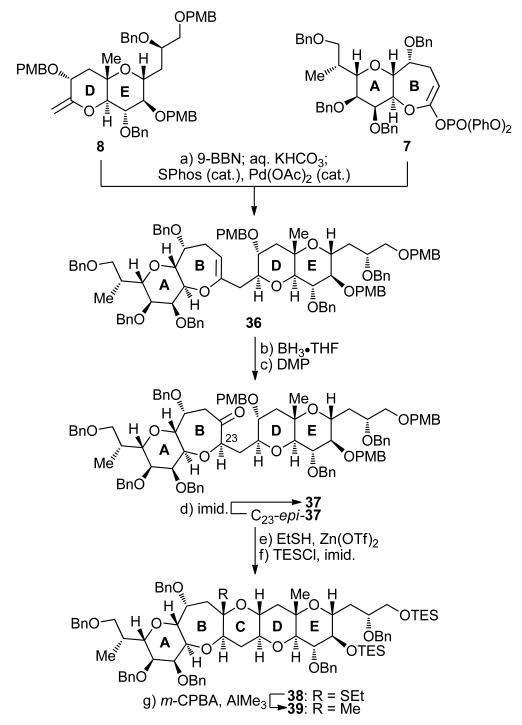
Maitotoxin (1) continues to fascinate scientists not only because of its size and potent neurotoxicity but also due to its molecular architecture. To provide further support for its structure and facilitate fragment-based biological studies, we developed an efficient chemical synthesis of the ABCDEFG segment 3 of maitotoxin. (13)C NMR chemical shift comparisons of synthetic 3 with the corresponding values for the same carbons of maitotoxin revealed a close match, providing compelling evidence for the correctness of the originally assigned structure to this polycyclic system of the natural product. The synthetic strategy for the synthesis of 3 relied heavily on our previously developed furan-based technology involving sequential Noyori asymmetric reduction and Achmatowicz rearrangement for the construction of the required tetrahydropyran building blocks, and employed a B-alkyl Suzuki coupling and a Horner-Wadsworth-Emmons olefination to accomplish their assembly and elaboration to the final target molecule.
马鲛毒素(1)不仅因其巨大的分子结构和强烈的神经毒性而令科学家着迷,还因其分子结构而令科学家着迷。为了进一步支持其结构并促进基于片段的生物学研究,我们开发了一种高效的马鲛毒素 ABCDEFG 片段 3 的化学合成方法。(13)C NMR 化学位移比较表明,合成的 3 与马鲛毒素中相同碳原子的相应值非常吻合,为该天然产物中环多萜系统的原始结构提供了令人信服的证据。3 的合成策略主要依赖于我们之前开发的基于呋喃的技术,该技术涉及连续的 Noyori 不对称还原和 Achmatowicz 重排,用于构建所需的四氢吡喃砌块,并采用 B-烷基 Suzuki 偶联和 Horner-Wadsworth-Emmons 烯烃化反应来完成它们的组装和最后目标分子的修饰。