Department of Neurobiology, University of Massachusetts Medical School, Worcester, Massachusetts, United States of America.
PLoS One. 2010 Apr 22;5(4):e10303. doi: 10.1371/journal.pone.0010303.
Casein kinase 1 delta (CK1delta) plays a more prominent role in the regulation of circadian cycle length than its homologue casein kinase 1 epsilon (CK1epsilon) in peripheral tissues such as liver and embryonic fibroblasts. Mice lacking CK1delta die shortly after birth, so it has not been possible to assess the impact of loss of CK1delta on behavioral rhythms controlled by the master circadian oscillator in the suprachiasmatic nuclei (SCN).
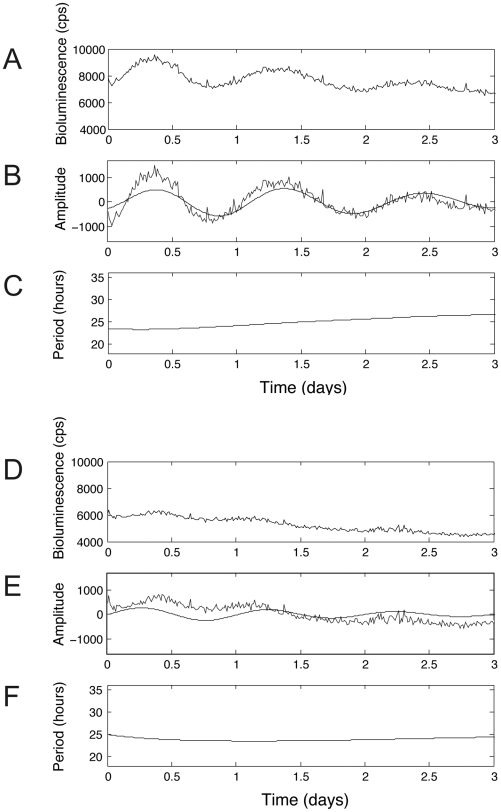
METHODOLOGY/PRINCIPAL FINDINGS: In the present study, mPER2::LUCIFERASE bioluminescence rhythms were monitored from SCN explants collected from neonatal mice. The data demonstrate that SCN explants from neonatal CK1delta-deficient mice oscillate, but with a longer circadian period than littermate controls. The cycle length of rhythms recorded from neonatal SCN explants of CK1epsilon-deficient mice did not differ from control explants.
CONCLUSIONS/SIGNIFICANCE: The results indicate that CK1delta plays a more prominent role than CK1epsilon in the maintenance of 24-hour rhythms in the master circadian oscillator.
在肝脏和胚胎成纤维细胞等外周组织中,酪蛋白激酶 1 德尔塔(CK1delta)在调节昼夜节律周期长度方面比其同源物酪蛋白激酶 1 埃普西隆(CK1epsilon)发挥更重要的作用。缺乏 CK1delta 的小鼠在出生后不久就会死亡,因此无法评估 CK1delta 缺失对视交叉上核(SCN)中主生物钟振荡器控制的行为节律的影响。
方法/主要发现:在本研究中,从新生小鼠的 SCN 外植体中监测 mPER2::LUCIFERASE 生物发光节律。数据表明,来自新生 CK1delta 缺陷型小鼠的 SCN 外植体振荡,但昼夜节律周期比同窝对照长。从 CK1epsilon 缺陷型小鼠的新生 SCN 外植体记录的节律的周期长度与对照外植体没有差异。
结论/意义:结果表明,CK1delta 在维持主生物钟振荡器的 24 小时节律方面比 CK1epsilon 发挥更重要的作用。