Section of Ophthalmology, Department of Clinical Studies School of Veterinary Medicine, University of Pennsylvania, Philadelphia, PA 19104, USA.
Gene Ther. 2010 Sep;17(9):1162-74. doi: 10.1038/gt.2010.56. Epub 2010 Apr 29.
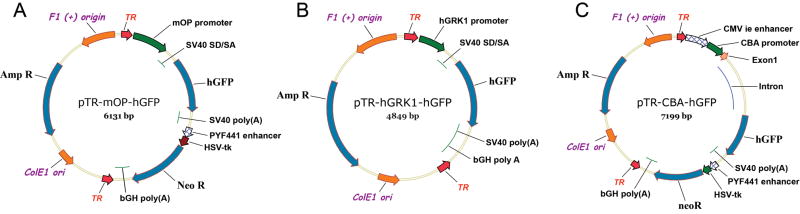
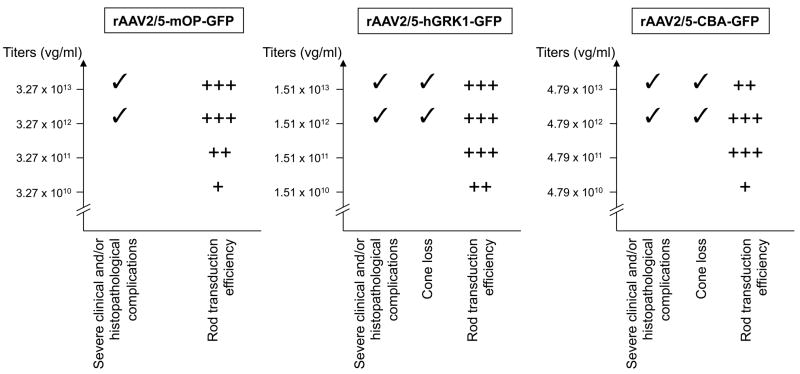
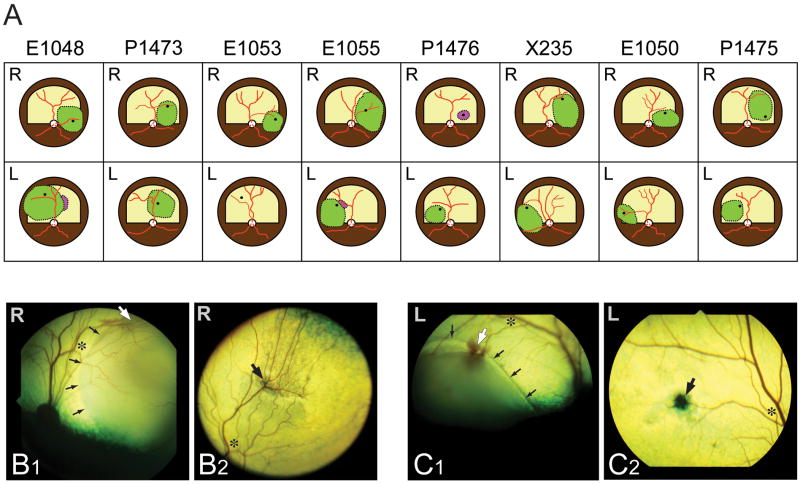
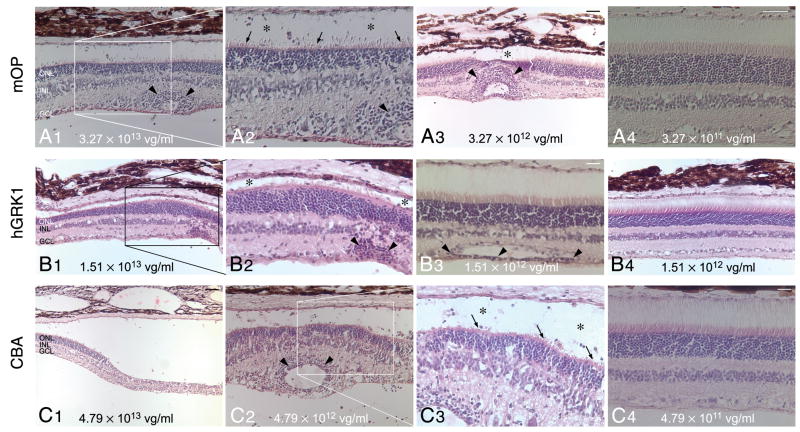
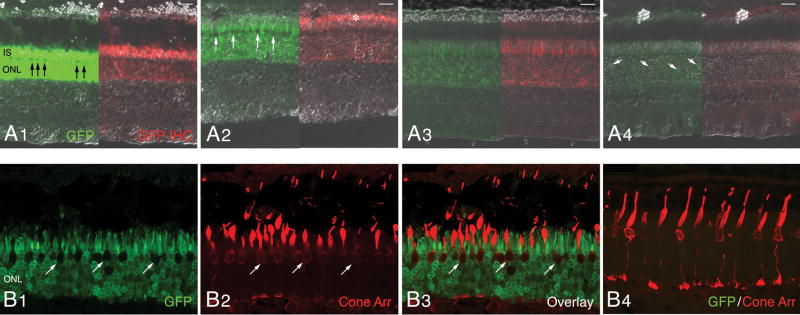
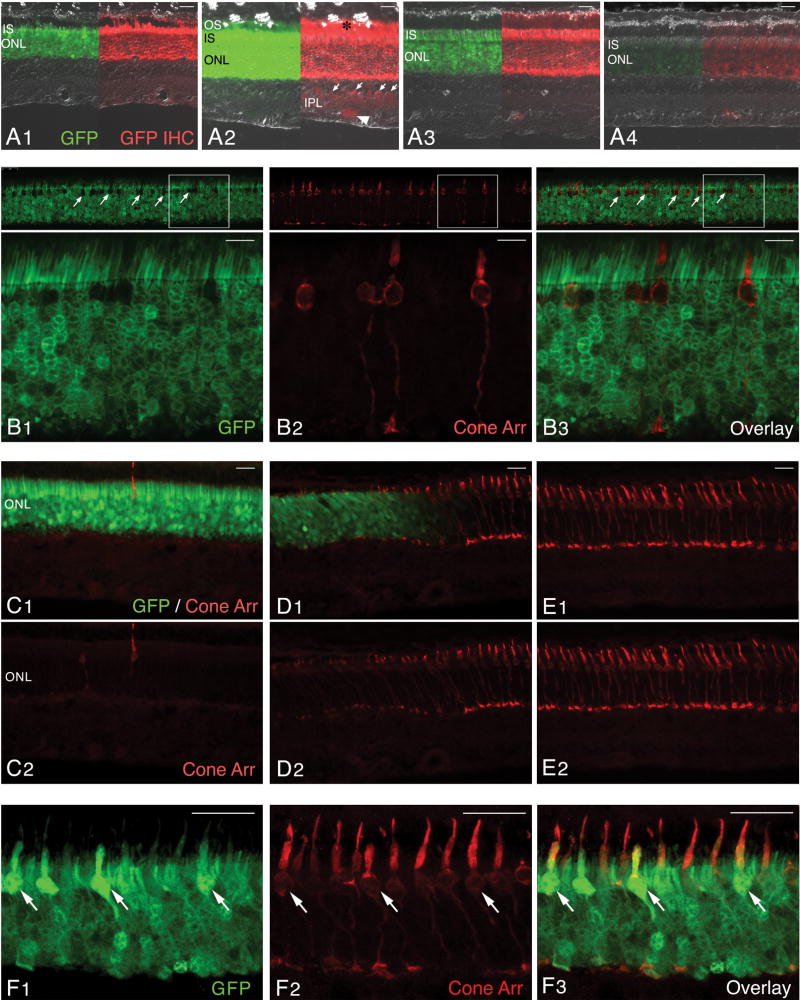
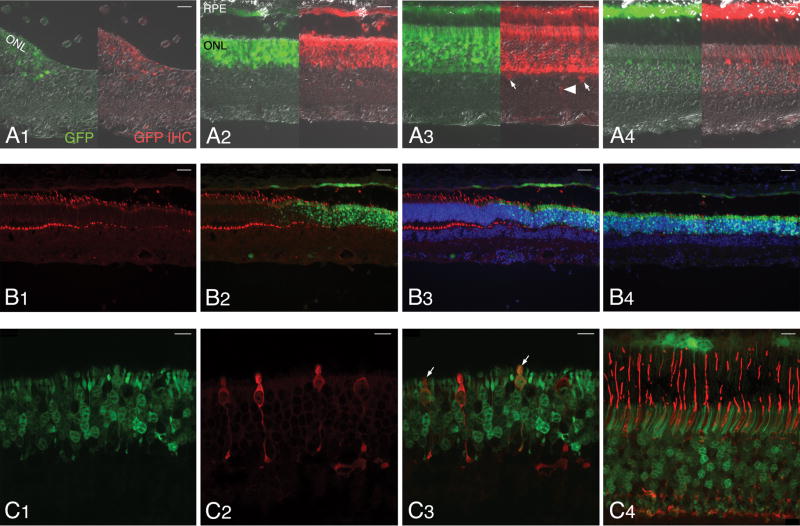
A prerequisite for using corrective gene therapy to treat humans with inherited retinal degenerative diseases that primarily affect rods is to develop viral vectors that target specifically this population of photoreceptors. The delivery of a viral vector with photoreceptor tropism coupled with a rod-specific promoter is likely to be the safest and most efficient approach to target expression of the therapeutic gene to rods. Three promoters that included a fragment of the proximal mouse opsin promoter (mOP), the human G-protein-coupled receptor protein kinase 1 promoter (hGRK1), or the cytomegalovirus immediate early enhancer combined with the chicken β actin proximal promoter CBA were evaluated for their specificity and robustness in driving GFP reporter gene expression in rods, when packaged in a recombinant adeno-associated viral vector of serotype 2/5 (AAV2/5), and delivered via subretinal injection to the normal canine retina. Photoreceptor-specific promoters (mOP, hGRK1) targeted robust GFP expression to rods, whereas the ubiquitously expressed CBA promoter led to transgene expression in the retinal pigment epithelium, rods, cones and rare Müller, horizontal and ganglion cells. Late onset inflammation was frequently observed both clinically and histologically with all three constructs when the highest viral titers were injected. Cone loss in the injected regions of the retinas that received the highest titers occurred with both the hGRK1 and CBA promoters. Efficient and specific rod transduction, together with preservation of retinal structure was achieved with both mOP and hGRK1 promoters when viral titers in the order of 10(11)vg ml(-1) were used.
使用矫正基因疗法治疗主要影响视杆细胞的遗传性视网膜退行性疾病患者的前提是开发靶向特定这种光感受器的病毒载体。携带光感受器亲嗜性和视杆细胞特异性启动子的病毒载体的递呈,可能是将治疗基因靶向表达到视杆细胞的最安全、最有效的方法。评估了三个启动子,包括近端小鼠视蛋白启动子(mOP)的片段、人 G 蛋白偶联受体蛋白激酶 1 启动子(hGRK1)或巨细胞病毒立即早期增强子与鸡β肌动蛋白近端启动子 CBA 的组合,以评估它们在重组腺相关病毒 2/5 型(AAV2/5)包装并通过视网膜下注射递送至正常犬视网膜时在视杆细胞中驱动 GFP 报告基因表达的特异性和稳健性。特异性的光感受器启动子(mOP、hGRK1)靶向视杆细胞,产生强烈的 GFP 表达,而普遍表达的 CBA 启动子导致视网膜色素上皮、视杆细胞、视锥细胞和罕见的 Muller 细胞、水平细胞和节细胞中转基因表达。当注射最高病毒滴度时,三种构建体都在临床上和组织学上经常观察到迟发性炎症。当注射最高病毒滴度时,hGRK1 和 CBA 启动子均可导致接受注射的视网膜区域中的视锥细胞丢失。当病毒滴度约为 10(11)vg ml(-1)时,mOP 和 hGRK1 启动子均可实现高效、特异性的视杆细胞转导,并保留视网膜结构。