Enns Linda C, Pettan-Brewer Christina, Ladiges Warren
Department of Comparative Medicine, School of Medicine, University of Washington, Seattle, WA 98195, USA.
Aging (Albany NY). 2010 Apr;2(4):238-43. doi: 10.18632/aging.100138.
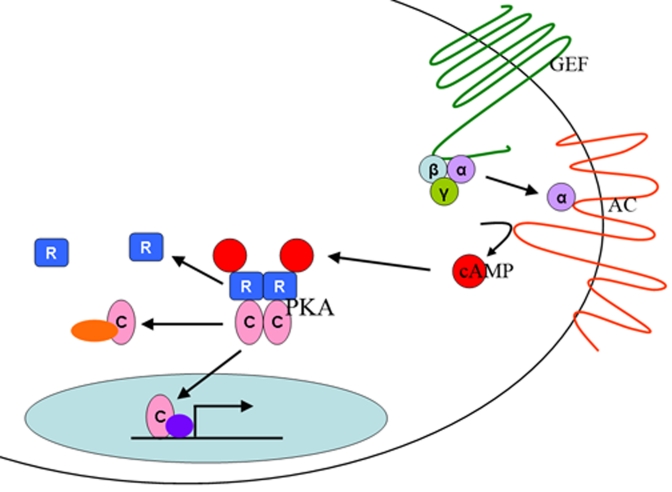
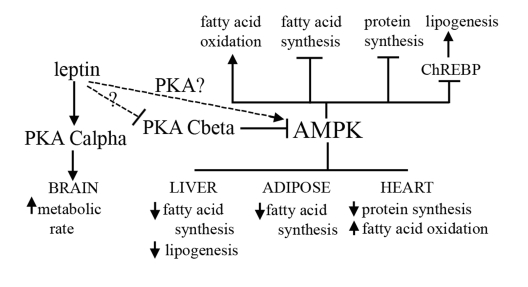
PKA is an important mediator of signal transduction downstream of G-protein-coupled receptors and plays a key role in the regulation of metabolism and triglyceride storage. It is a ubiquitous cellular kinase that phosphorylates serine and threonine residues in response to cAMP. PKA consists of two regulatory subunits, RI and RII, that are activated by cAMP to release two catalytic subunits, Calpha and Cbeta. We have shown that C57/BL6J male mice lacking the regulatory RIIbeta subunit have extended lifespan and are resistant to age-related conditions including cardiac decline. In addition to being protected from diet-induced pathologies, PKA Cbeta null mutant mice are protected from age-related problems such as weight gain and enlarged livers, as well as cardiac dysfunction and hypertrophy. Several possible mechanisms for the age sparing effects of PKA inhibition are discussed including A kinase anchoring protein signaling, alterations in the beta-adrenergic pathway, and activation of AMPK. Since PKA is a major metabolic regulator of gene signaling, the human gene homologs are potential pharmacological targets for age-related conditions including heart disease associated with declining cardiac performance.
蛋白激酶A(PKA)是G蛋白偶联受体下游信号转导的重要介质,在代谢调节和甘油三酯储存中起关键作用。它是一种普遍存在的细胞激酶,可响应环磷酸腺苷(cAMP)使丝氨酸和苏氨酸残基磷酸化。PKA由两个调节亚基RI和RII组成,它们被cAMP激活后释放出两个催化亚基Cα和Cβ。我们已经表明,缺乏调节性RIIβ亚基的C57/BL6J雄性小鼠寿命延长,并且对包括心脏功能衰退在内的与年龄相关的病症具有抗性。除了免受饮食诱导的病变影响外,PKA Cβ基因敲除突变小鼠还能免受与年龄相关的问题,如体重增加、肝脏肿大以及心脏功能障碍和肥大。文中讨论了PKA抑制产生年龄延缓效应的几种可能机制,包括A激酶锚定蛋白信号传导、β-肾上腺素能途径的改变以及AMPK的激活。由于PKA是基因信号传导的主要代谢调节因子,其人类基因同源物是包括与心脏功能下降相关的心脏病在内的与年龄相关病症的潜在药理学靶点。