Smid Marcela, Bourgois Philippe, Auerswald Colette L
obstetrics and gynecology at University of Chicago, USA.
J Health Care Poor Underserved. 2010 May;21(2 Suppl):140-56. doi: 10.1353/hpu.0.0318.
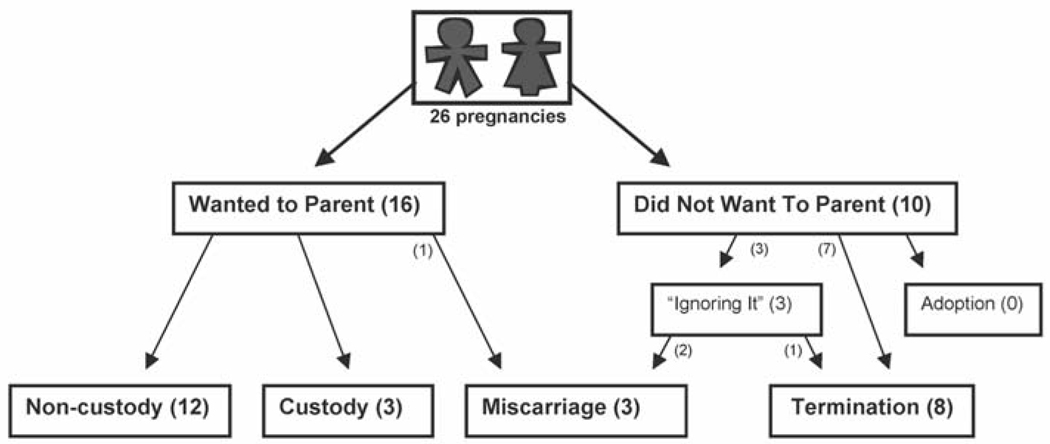
Young, homeless women often become pregnant, but little is known about how street youth experience their pregnancies. We documented 26 pregnancy outcomes among 13 homeless women (ages 18-26) and eight homeless men through interviews and participant-observation. Eight pregnancies were voluntarily terminated, three were miscarried, and fifteen were carried to term. Regardless of pregnancy outcome, street youths' narratives focused on ambivalence about parenting, traumatic childhood experiences, and current challenges. Despite significant obstacles, almost all were convinced of their personal capacity to change their lives. While most wanted to be parents, the majority lost custody of their newborns and consequently associated contact with medical and social services with punitive outcomes. Most of the youth who chose to terminate successfully sought safe medical care. We offer recommendations for changing the approach of services to take full advantage of pregnancy as a potential catalyst event for change in this highly vulnerable and underserved population.
年轻的无家可归女性常常怀孕,但对于街头青年如何经历她们的孕期却知之甚少。我们通过访谈和参与观察记录了13名无家可归女性(年龄在18至26岁之间)和8名无家可归男性的26次怀孕结局。8次怀孕被自愿终止,3次流产,15次足月分娩。无论怀孕结局如何,街头青年的叙述都集中在对为人父母的矛盾心理、童年创伤经历以及当前面临的挑战上。尽管存在重大障碍,但几乎所有人都坚信自己有改变生活的个人能力。虽然大多数人想成为父母,但大多数人失去了对新生儿的监护权,因此将与医疗和社会服务机构的接触与惩罚性后果联系在一起。大多数选择成功终止妊娠的青年都寻求了安全的医疗护理。我们提出了一些建议,以改变服务方式,充分利用怀孕这一潜在的催化事件,促使这一高度脆弱且服务不足的人群发生改变。