Department of Biology, Lund University, Lund, Sweden.
PLoS One. 2010 Apr 29;5(4):e10402. doi: 10.1371/journal.pone.0010402.
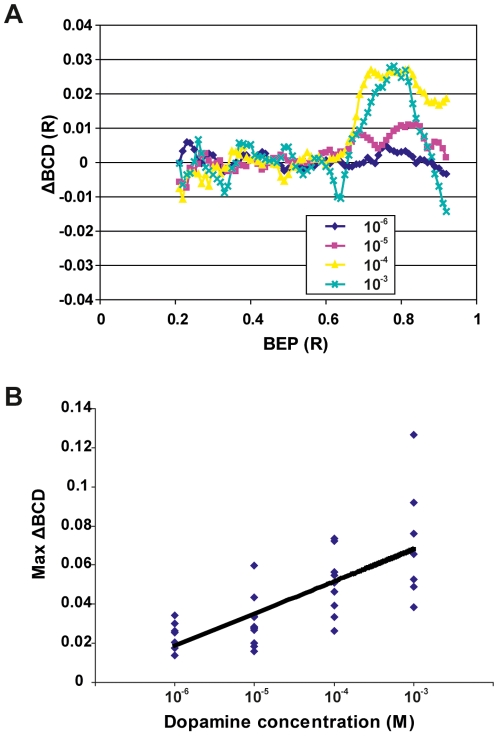
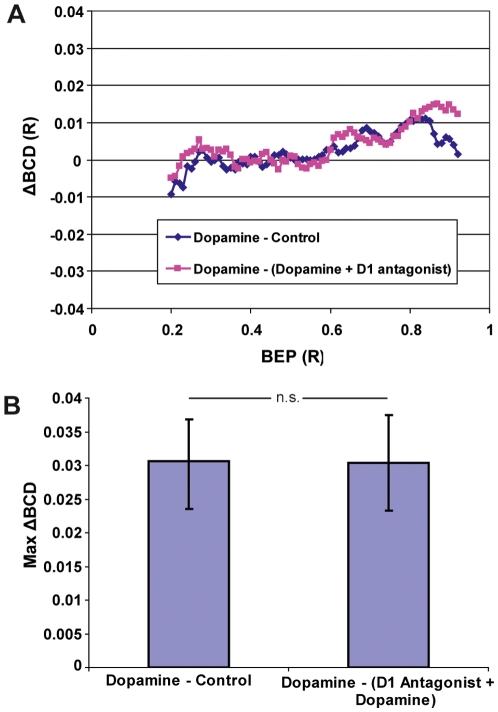
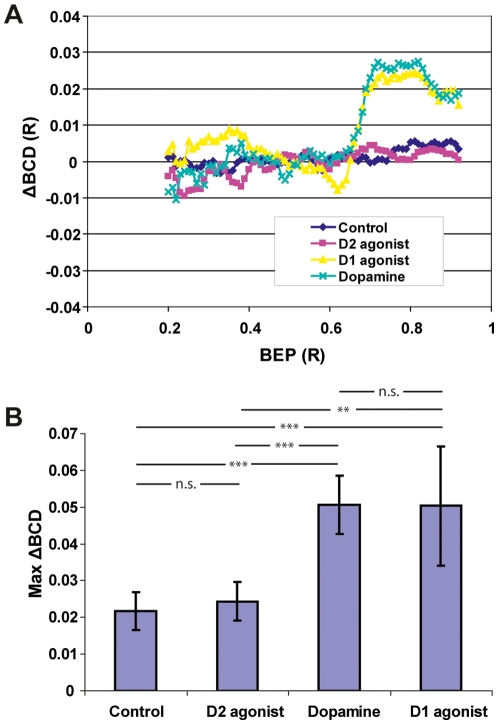
The crystalline lens in the cichlid fish Aequidens pulcher undergoes a transformation of its optical properties every dawn and dusk as the eye adapts to changes in light conditions. During dusk the transformation result in an increase of the refractive power in the lens cortex, the outermost 40 percent. The change is thought to match the optical properties of the lens to the requirements of the retina. Using a short term in vitro lens culturing system together with optical measurements we here present data that confirm that the optical properties of the lens can change within hours and that dopamine influences the optical properties of the lens. Dopamine yields dose-dependent decrease of the refractive power in the lens cortex. The D1-agonist SKF-38393 induces a similar decrease of the refractive power in the cortex, while the D2-agonist quinpirole has no effect. The effect of dopamine can be blocked by using the D1-antagonist SCH 23390. Our results suggest that dopamine alone could be responsible for the light/dark adaptive optical changes in the lens, but the involvement of other signaling substances cannot be ruled out.
杂色丽鱼的晶状体在每天的黎明和黄昏都会经历光学性质的转变,以适应光照条件的变化。在黄昏时,晶状体皮层(最外层的 40%)的折射率会增加,这种变化被认为是使晶状体的光学性质与视网膜的要求相匹配。我们使用短期的体外晶状体培养系统和光学测量方法,提供了数据证实晶状体的光学性质可以在数小时内发生变化,并且多巴胺会影响晶状体的光学性质。多巴胺会导致晶状体皮层的折射率呈剂量依赖性降低。D1-激动剂 SKF-38393 可诱导皮层折射率相似的降低,而 D2-激动剂喹吡罗则没有效果。多巴胺的作用可以通过使用 D1-拮抗剂 SCH 23390 来阻断。我们的结果表明,多巴胺本身可能负责晶状体的光/暗适应光学变化,但不能排除其他信号物质的参与。