MRC Clinical Sciences Centre, Faculty of Medicine ICSTM, Hammersmith Hospital, London, UK.
Epigenetics Chromatin. 2010 May 7;3(1):10. doi: 10.1186/1756-8935-3-10.
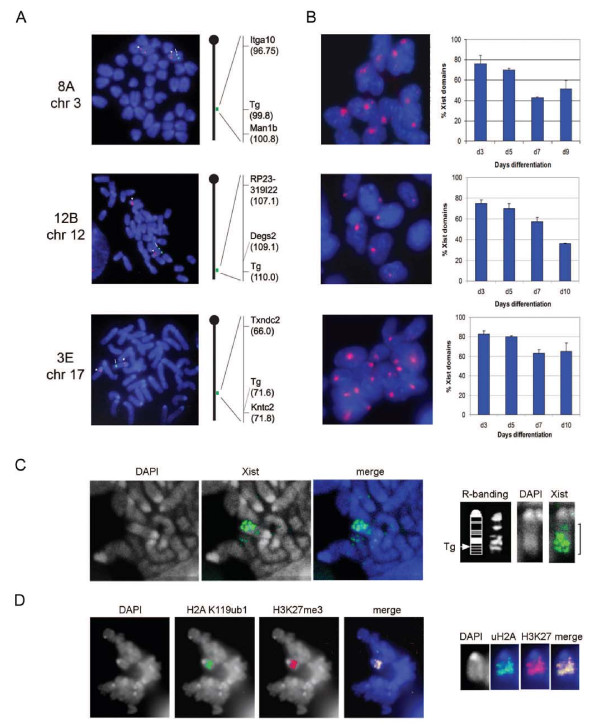
X chromosome inactivation, the mechanism used by mammals to equalise dosage of X-linked genes in XX females relative to XY males, is triggered by chromosome-wide localisation of a cis-acting non-coding RNA, Xist. The mechanism of Xist RNA spreading and Xist-dependent silencing is poorly understood. A large body of evidence indicates that silencing is more efficient on the X chromosome than on autosomes, leading to the idea that the X chromosome has acquired sequences that facilitate propagation of silencing. LINE-1 (L1) repeats are relatively enriched on the X chromosome and have been proposed as candidates for these sequences. To determine the requirements for efficient silencing we have analysed the relationship of chromosome features, including L1 repeats, and the extent of silencing in cell lines carrying inducible Xist transgenes located on one of three different autosomes.
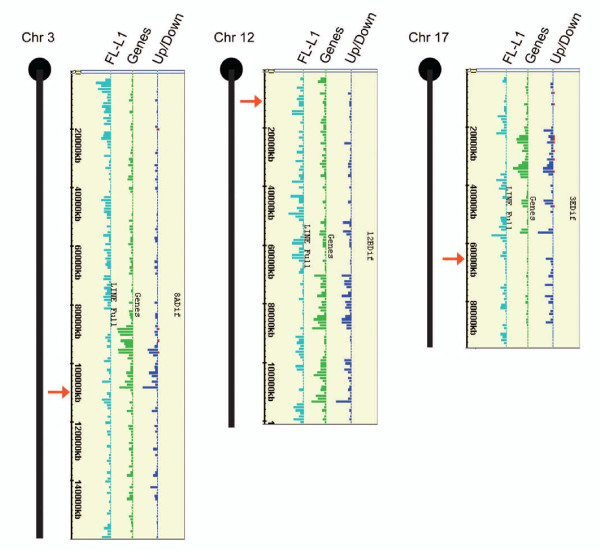
Our results show that the organisation of the chromosome into large gene-rich and L1-rich domains is a key determinant of silencing efficiency. Specifically genes located in large gene-rich domains with low L1 density are relatively resistant to Xist-mediated silencing whereas genes located in gene-poor domains with high L1 density are silenced more efficiently. These effects are observed shortly after induction of Xist RNA expression, suggesting that chromosomal domain organisation influences establishment rather than long-term maintenance of silencing. The X chromosome and some autosomes have only small gene-rich L1-depleted domains and we suggest that this could confer the capacity for relatively efficient chromosome-wide silencing.
This study provides insight into the requirements for efficient Xist mediated silencing and specifically identifies organisation of the chromosome into gene-rich L1-depleted and gene-poor L1-dense domains as a major influence on the ability of Xist-mediated silencing to be propagated in a continuous manner in cis.
X 染色体失活是哺乳动物在 XX 雌性中使 X 连锁基因剂量与 XY 雄性相等所使用的机制,它是由顺式作用的非编码 RNA Xist 在染色体范围内的局部化触发的。Xist RNA 扩散和 Xist 依赖性沉默的机制尚不清楚。大量证据表明,沉默在 X 染色体上比在常染色体上更有效,这导致了 X 染色体获得了促进沉默传播的序列的想法。LINE-1(L1)重复序列在 X 染色体上相对丰富,并被提议作为这些序列的候选者。为了确定有效沉默的要求,我们分析了染色体特征之间的关系,包括 L1 重复序列,以及携带诱导性 Xist 转基因的细胞系中沉默程度,这些转基因位于三条不同常染色体之一上。
我们的结果表明,染色体的组织成大基因丰富和 L1 丰富的区域是沉默效率的关键决定因素。具体来说,位于大基因丰富区域且 L1 密度低的基因相对抵抗 Xist 介导的沉默,而位于基因贫乏区域且 L1 密度高的基因则更容易被沉默。这些效应在诱导 Xist RNA 表达后不久即可观察到,这表明染色体结构域组织影响沉默的建立而不是长期维持。X 染色体和一些常染色体只有小的基因丰富 L1 耗尽的区域,我们认为这可能赋予了相对有效的染色体范围沉默的能力。
本研究提供了对高效 Xist 介导沉默的要求的深入了解,特别是确定了染色体的组织成富含基因的 L1 耗尽区和富含基因的 L1 密集区,这是 Xist 介导的沉默在顺式中以连续方式传播的能力的主要影响因素。