Budu-Grajdeanu Paula, Schugart Richard C, Friedman Avner, Birmingham Daniel J, Rovin Brad H
Department of Mathematics, Ohio State University, Columbus OH 43210, USA.
Theor Biol Med Model. 2010 May 17;7:14. doi: 10.1186/1742-4682-7-14.
Although the prognosis for Lupus Nephritis (LN) has dramatically improved with aggressive immunosuppressive therapies, these drugs carry significant side effects. To improve the effectiveness of these drugs, biomarkers of renal flare cycle could be used to detect the onset, severity, and responsiveness of kidney relapses, and to modify therapy accordingly. However, LN is a complex disease and individual biomarkers have so far not been sufficient to accurately describe disease activity. It has been postulated that biomarkers would be more informative if integrated into a pathogenic-based model of LN.
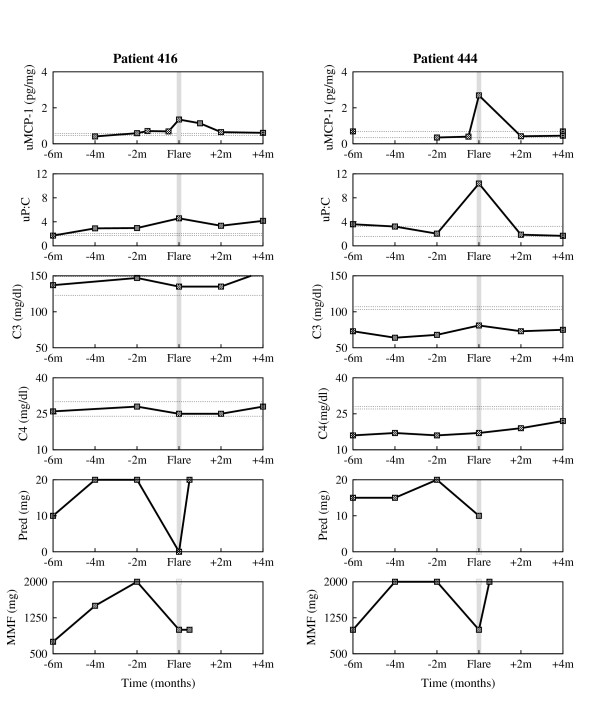
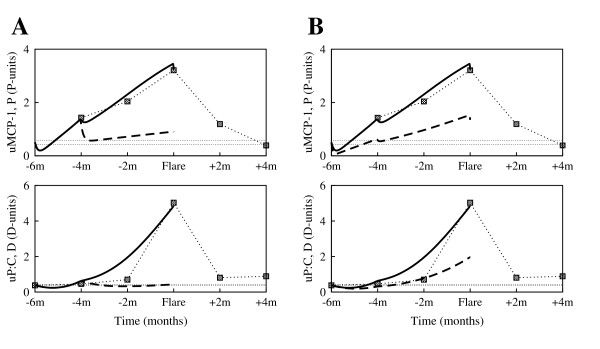
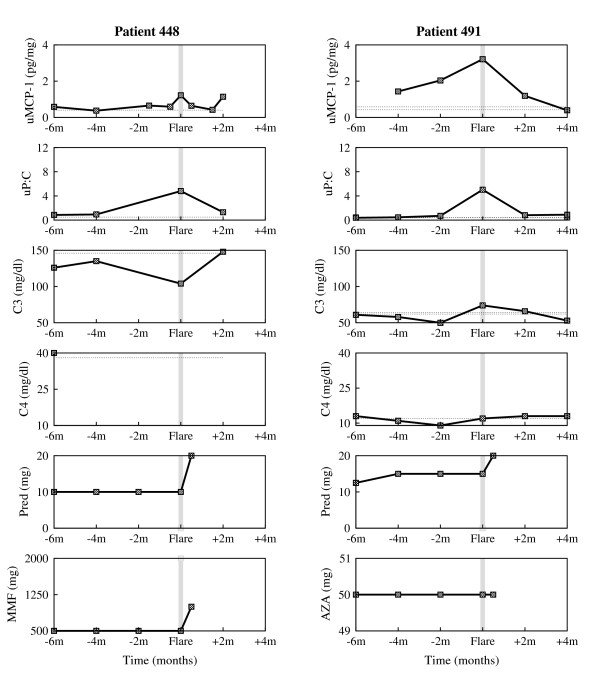
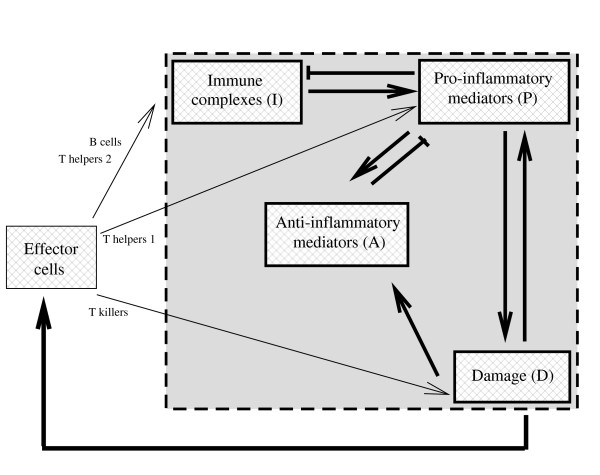
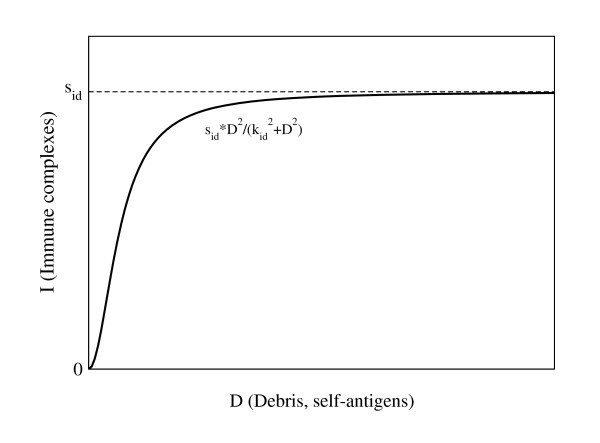
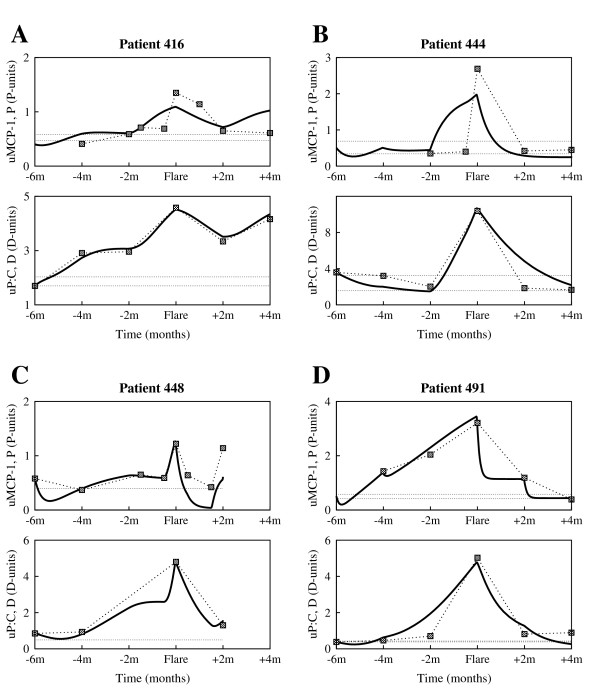
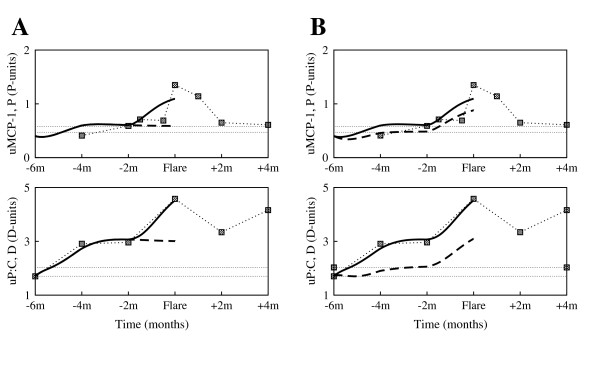
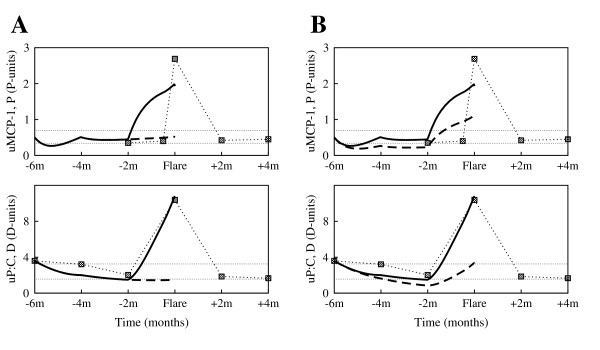
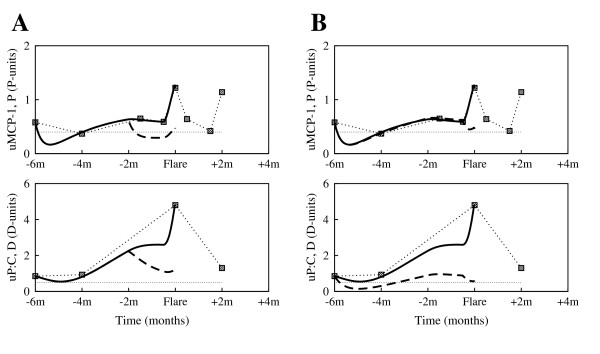
This work is a first attempt to integrate human LN biomarkers data into a model of kidney inflammation. Our approach is based on a system of differential equations that capture, in a simplified way, the complexity of interactions underlying disease activity. Using this model, we have been able to fit clinical urine biomarkers data from individual patients and estimate patient-specific parameters to reproduce disease dynamics, and to better understand disease mechanisms. Furthermore, our simulations suggest that the model can be used to evaluate therapeutic strategies for individual patients, or a group of patients that share similar data patterns.
We show that effective combination of clinical data and physiologically based mathematical modeling may provide a basis for more comprehensive modeling and improved clinical care for LN patients.
尽管通过积极的免疫抑制疗法,狼疮性肾炎(LN)的预后已得到显著改善,但这些药物具有明显的副作用。为提高这些药物的疗效,可利用肾脏复发周期的生物标志物来检测肾脏复发的发作、严重程度和反应性,并据此调整治疗方案。然而,LN是一种复杂的疾病,迄今为止,单个生物标志物尚不足以准确描述疾病活动。据推测,如果将生物标志物整合到基于发病机制的LN模型中,其信息量会更大。
这项工作首次尝试将人类LN生物标志物数据整合到肾脏炎症模型中。我们的方法基于一个微分方程系统,该系统以简化的方式捕捉疾病活动背后相互作用的复杂性。利用这个模型,我们能够拟合个体患者的临床尿液生物标志物数据,并估计患者特异性参数以重现疾病动态,从而更好地理解疾病机制。此外,我们的模拟表明,该模型可用于评估个体患者或具有相似数据模式的一组患者的治疗策略。
我们表明,临床数据与基于生理学的数学建模的有效结合,可能为更全面的建模和改善LN患者的临床护理提供基础。