• 文献检索
  • 文档翻译
  • 深度研究
  • 学术资讯
  • Suppr Zotero 插件Zotero 插件
  • 邀请有礼
  • 套餐&价格
  • 历史记录
应用&插件
Suppr Zotero 插件Zotero 插件浏览器插件Mac 客户端Windows 客户端微信小程序
定价
高级版会员购买积分包购买API积分包
服务
文献检索文档翻译深度研究API 文档MCP 服务
关于我们
关于 Suppr公司介绍联系我们用户协议隐私条款
关注我们

Suppr 超能文献

核心技术专利:CN118964589B侵权必究
粤ICP备2023148730 号-1Suppr @ 2026

文献检索

告别复杂PubMed语法,用中文像聊天一样搜索,搜遍4000万医学文献。AI智能推荐,让科研检索更轻松。

立即免费搜索

文件翻译

保留排版,准确专业,支持PDF/Word/PPT等文件格式,支持 12+语言互译。

免费翻译文档

深度研究

AI帮你快速写综述,25分钟生成高质量综述,智能提取关键信息,辅助科研写作。

立即免费体验

Chem2Bio2RDF:一个链接和挖掘化学生物组学和系统化学生物学数据的语义框架。

Chem2Bio2RDF: a semantic framework for linking and data mining chemogenomic and systems chemical biology data.

机构信息

School of Informatics and Computing, Indiana University, Bloomington, IN, USA.

出版信息

BMC Bioinformatics. 2010 May 17;11:255. doi: 10.1186/1471-2105-11-255.

DOI:10.1186/1471-2105-11-255
PMID:20478034
原文链接:https://pmc.ncbi.nlm.nih.gov/articles/PMC2881087/
Abstract

BACKGROUND

Recently there has been an explosion of new data sources about genes, proteins, genetic variations, chemical compounds, diseases and drugs. Integration of these data sources and the identification of patterns that go across them is of critical interest. Initiatives such as Bio2RDF and LODD have tackled the problem of linking biological data and drug data respectively using RDF. Thus far, the inclusion of chemogenomic and systems chemical biology information that crosses the domains of chemistry and biology has been very limited

RESULTS

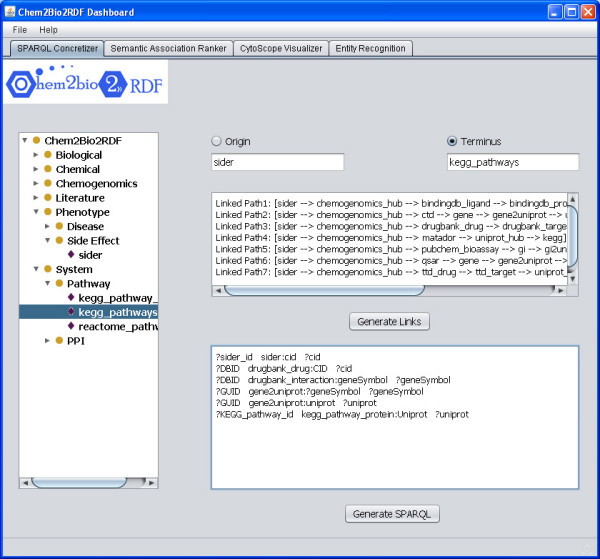
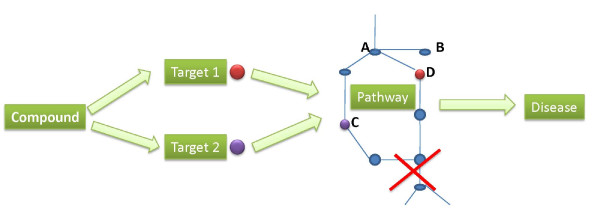
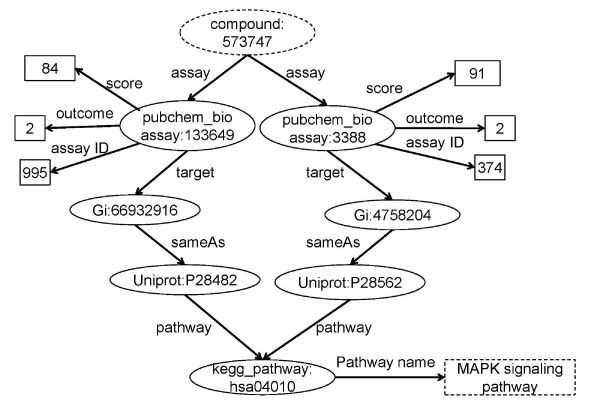
We have created a single repository called Chem2Bio2RDF by aggregating data from multiple chemogenomics repositories that is cross-linked into Bio2RDF and LODD. We have also created a linked-path generation tool to facilitate SPARQL query generation, and have created extended SPARQL functions to address specific chemical/biological search needs. We demonstrate the utility of Chem2Bio2RDF in investigating polypharmacology, identification of potential multiple pathway inhibitors, and the association of pathways with adverse drug reactions.

CONCLUSIONS

We have created a new semantic systems chemical biology resource, and have demonstrated its potential usefulness in specific examples of polypharmacology, multiple pathway inhibition and adverse drug reaction--pathway mapping. We have also demonstrated the usefulness of extending SPARQL with cheminformatics and bioinformatics functionality.

摘要

背景

最近,有关基因、蛋白质、遗传变异、化学化合物、疾病和药物的新数据源呈爆炸式增长。整合这些数据源并识别跨越它们的模式是至关重要的。Bio2RDF 和 LODD 等计划分别使用 RDF 解决了连接生物数据和药物数据的问题。到目前为止,跨越化学和生物学领域的化学基因组学和系统化学生物学信息的包含非常有限。

结果

我们通过聚合来自多个化学基因组学存储库的数据创建了一个名为 Chem2Bio2RDF 的单一存储库,这些数据被交叉链接到 Bio2RDF 和 LODD 中。我们还创建了一个链接路径生成工具,以方便 SPARQL 查询生成,并创建了扩展的 SPARQL 函数来满足特定的化学/生物学搜索需求。我们演示了 Chem2Bio2RDF 在调查多药理学、识别潜在的多途径抑制剂以及将途径与药物不良反应相关联方面的实用性。

结论

我们创建了一个新的语义系统化学生物学资源,并通过多药理学、多途径抑制和药物不良反应-途径映射的具体示例展示了其潜在的有用性。我们还演示了扩展 SPARQL 以结合化学信息学和生物信息学功能的有用性。

https://cdn.ncbi.nlm.nih.gov/pmc/blobs/95f6/2881087/0953eb5cd82c/1471-2105-11-255-8.jpg
https://cdn.ncbi.nlm.nih.gov/pmc/blobs/95f6/2881087/23f5270597fa/1471-2105-11-255-1.jpg
https://cdn.ncbi.nlm.nih.gov/pmc/blobs/95f6/2881087/ec20b323a1f9/1471-2105-11-255-2.jpg
https://cdn.ncbi.nlm.nih.gov/pmc/blobs/95f6/2881087/b4148ebb938e/1471-2105-11-255-3.jpg
https://cdn.ncbi.nlm.nih.gov/pmc/blobs/95f6/2881087/2e81f67320ec/1471-2105-11-255-4.jpg
https://cdn.ncbi.nlm.nih.gov/pmc/blobs/95f6/2881087/0becc0340429/1471-2105-11-255-5.jpg
https://cdn.ncbi.nlm.nih.gov/pmc/blobs/95f6/2881087/5aae7ef09a4c/1471-2105-11-255-6.jpg
https://cdn.ncbi.nlm.nih.gov/pmc/blobs/95f6/2881087/682f1413b9e2/1471-2105-11-255-7.jpg
https://cdn.ncbi.nlm.nih.gov/pmc/blobs/95f6/2881087/0953eb5cd82c/1471-2105-11-255-8.jpg
https://cdn.ncbi.nlm.nih.gov/pmc/blobs/95f6/2881087/23f5270597fa/1471-2105-11-255-1.jpg
https://cdn.ncbi.nlm.nih.gov/pmc/blobs/95f6/2881087/ec20b323a1f9/1471-2105-11-255-2.jpg
https://cdn.ncbi.nlm.nih.gov/pmc/blobs/95f6/2881087/b4148ebb938e/1471-2105-11-255-3.jpg
https://cdn.ncbi.nlm.nih.gov/pmc/blobs/95f6/2881087/2e81f67320ec/1471-2105-11-255-4.jpg
https://cdn.ncbi.nlm.nih.gov/pmc/blobs/95f6/2881087/0becc0340429/1471-2105-11-255-5.jpg
https://cdn.ncbi.nlm.nih.gov/pmc/blobs/95f6/2881087/5aae7ef09a4c/1471-2105-11-255-6.jpg
https://cdn.ncbi.nlm.nih.gov/pmc/blobs/95f6/2881087/682f1413b9e2/1471-2105-11-255-7.jpg
https://cdn.ncbi.nlm.nih.gov/pmc/blobs/95f6/2881087/0953eb5cd82c/1471-2105-11-255-8.jpg

相似文献

1
Chem2Bio2RDF: a semantic framework for linking and data mining chemogenomic and systems chemical biology data.Chem2Bio2RDF:一个链接和挖掘化学生物组学和系统化学生物学数据的语义框架。
BMC Bioinformatics. 2010 May 17;11:255. doi: 10.1186/1471-2105-11-255.
2
PIBAS FedSPARQL: a web-based platform for integration and exploration of bioinformatics datasets.PIBAS FedSPARQL:一个用于生物信息学数据集整合与探索的基于网络的平台。
J Biomed Semantics. 2017 Sep 20;8(1):42. doi: 10.1186/s13326-017-0151-z.
3
Semantic inference using chemogenomics data for drug discovery.利用化学生物组学数据进行药物发现的语义推理。
BMC Bioinformatics. 2011 Jun 23;12:256. doi: 10.1186/1471-2105-12-256.
4
Improving integrative searching of systems chemical biology data using semantic annotation.利用语义注释提高系统化学生物学数据的综合搜索。
J Cheminform. 2012 Mar 8;4(1):6. doi: 10.1186/1758-2946-4-6.
5
Processing SPARQL queries with regular expressions in RDF databases.在 RDF 数据库中使用正则表达式处理 SPARQL 查询。
BMC Bioinformatics. 2011 Mar 29;12 Suppl 2(Suppl 2):S6. doi: 10.1186/1471-2105-12-S2-S6.
6
SPARQL assist language-neutral query composer.SPARQL 辅助语言中立查询生成器。
BMC Bioinformatics. 2012 Jan 25;13 Suppl 1(Suppl 1):S2. doi: 10.1186/1471-2105-13-S1-S2.
7
PepeSearch: Semantic Data for the Masses.PepeSearch:面向大众的语义数据。
PLoS One. 2016 Mar 11;11(3):e0151573. doi: 10.1371/journal.pone.0151573. eCollection 2016.
8
Systems chemical biology and the Semantic Web: what they mean for the future of drug discovery research.系统化学生物学与语义网:对药物研发的未来意味着什么。
Drug Discov Today. 2012 May;17(9-10):469-74. doi: 10.1016/j.drudis.2011.12.019. Epub 2011 Dec 29.
9
SPARQLGraph: a web-based platform for graphically querying biological Semantic Web databases.SPARQLGraph:一个基于网络的平台,用于图形化查询生物语义网数据库。
BMC Bioinformatics. 2014 Aug 15;15(1):279. doi: 10.1186/1471-2105-15-279.
10
Clever generation of rich SPARQL queries from annotated relational schema: application to Semantic Web Service creation for biological databases.从带注释的关系模式中生成丰富的 SPARQL 查询:应用于生物数据库语义 Web 服务创建。
BMC Bioinformatics. 2013 Apr 15;14:126. doi: 10.1186/1471-2105-14-126.

引用本文的文献

1
Multiomics-Driven Drug-Cell Interaction Network for Chemotherapy Sensitivity Prediction in Metabolically Defined Triple-Negative Breast Cancer Subtypes.用于代谢定义的三阴性乳腺癌亚型化疗敏感性预测的多组学驱动药物-细胞相互作用网络
J Cell Mol Med. 2025 Jun;29(11):e70572. doi: 10.1111/jcmm.70572.
2
DTGHAT: multi-molecule heterogeneous graph transformer based on multi-molecule graph for drug-target identification.DTGHAT:基于多分子图的用于药物靶点识别的多分子异构图变换器
Front Pharmacol. 2025 Apr 28;16:1596216. doi: 10.3389/fphar.2025.1596216. eCollection 2025.
3
Semantic Data Visualisation for Biomedical Database Catalogues.

本文引用的文献

1
Mining large heterogeneous data sets in drug discovery.药物发现中的大规模异构数据集挖掘。
Expert Opin Drug Discov. 2009 Oct;4(10):995-1004. doi: 10.1517/17460440903233738. Epub 2009 Aug 28.
2
BioGateway: a semantic systems biology tool for the life sciences.生物网关:生命科学的语义系统生物学工具。
BMC Bioinformatics. 2009 Oct 1;10 Suppl 10(Suppl 10):S11. doi: 10.1186/1471-2105-10-S10-S11.
3
A journey to Semantic Web query federation in the life sciences.生命科学中的语义网查询联邦之旅。
生物医学数据库目录的语义数据可视化
Healthcare (Basel). 2022 Nov 15;10(11):2287. doi: 10.3390/healthcare10112287.
4
MedGraph: A semantic biomedical information retrieval framework using knowledge graph embedding for PubMed.MedGraph:一种使用知识图谱嵌入技术进行PubMed语义生物医学信息检索的框架。
Front Big Data. 2022 Oct 19;5:965619. doi: 10.3389/fdata.2022.965619. eCollection 2022.
5
Knowledge graph analytics platform with LINCS and IDG for Parkinson's disease target illumination.具有 LINCS 和 IDG 的知识图谱分析平台,用于帕金森病靶点照明。
BMC Bioinformatics. 2022 Jan 12;23(1):37. doi: 10.1186/s12859-021-04530-9.
6
Investigating ADR mechanisms with Explainable AI: a feasibility study with knowledge graph mining.运用可解释人工智能研究药物不良反应机制:基于知识图谱挖掘的可行性研究。
BMC Med Inform Decis Mak. 2021 May 26;21(1):171. doi: 10.1186/s12911-021-01518-6.
7
IDSM ChemWebRDF: SPARQLing small-molecule datasets.IDSM化学网络资源描述框架:对小分子数据集进行SPARQL查询
J Cheminform. 2021 May 12;13(1):38. doi: 10.1186/s13321-021-00515-1.
8
A review of computational drug repositioning: strategies, approaches, opportunities, challenges, and directions.计算药物重新定位综述:策略、方法、机遇、挑战及方向
J Cheminform. 2020 Jul 22;12(1):46. doi: 10.1186/s13321-020-00450-7.
9
Understanding Drug Repurposing From the Perspective of Biomedical Entities and Their Evolution: Bibliographic Research Using Aspirin.从生物医学实体及其演变的角度理解药物再利用:以阿司匹林为例的文献研究
JMIR Med Inform. 2020 Jun 16;8(6):e16739. doi: 10.2196/16739.
10
Opening up connectivity between documents, structures and bioactivity.开启文档、结构与生物活性之间的连通性。
Beilstein J Org Chem. 2020 Apr 2;16:596-606. doi: 10.3762/bjoc.16.54. eCollection 2020.
BMC Bioinformatics. 2009 Oct 1;10 Suppl 10(Suppl 10):S10. doi: 10.1186/1471-2105-10-S10-S10.
4
PubChem as a source of polypharmacology.作为多药理学来源的PubChem。
J Chem Inf Model. 2009 Sep;49(9):2044-55. doi: 10.1021/ci9001876.
5
PubChem: a public information system for analyzing bioactivities of small molecules.PubChem:一个用于分析小分子生物活性的公共信息系统。
Nucleic Acids Res. 2009 Jul;37(Web Server issue):W623-33. doi: 10.1093/nar/gkp456. Epub 2009 Jun 4.
6
Drug discovery using chemical systems biology: identification of the protein-ligand binding network to explain the side effects of CETP inhibitors.利用化学系统生物学进行药物发现:鉴定蛋白质-配体结合网络以解释CETP抑制剂的副作用
PLoS Comput Biol. 2009 May;5(5):e1000387. doi: 10.1371/journal.pcbi.1000387. Epub 2009 May 15.
7
Gaining insight into off-target mediated effects of drug candidates with a comprehensive systems chemical biology analysis.通过全面的系统化化学生物学分析深入了解候选药物的脱靶介导效应。
J Chem Inf Model. 2009 Feb;49(2):308-17. doi: 10.1021/ci800344p.
8
Semantic web for integrated network analysis in biomedicine.用于生物医学综合网络分析的语义网。
Brief Bioinform. 2009 Mar;10(2):177-92. doi: 10.1093/bib/bbp002.
9
Network pharmacology: the next paradigm in drug discovery.网络药理学:药物研发的下一个范式
Nat Chem Biol. 2008 Nov;4(11):682-90. doi: 10.1038/nchembio.118.
10
BioJava: an open-source framework for bioinformatics.BioJava:一个用于生物信息学的开源框架。
Bioinformatics. 2008 Sep 15;24(18):2096-7. doi: 10.1093/bioinformatics/btn397. Epub 2008 Aug 8.