Institut Jean-Pierre Bourgin, UMR1318 INRA-AgroParisTech, Versailles, France.
PLoS Genet. 2010 May 13;6(5):e1000945. doi: 10.1371/journal.pgen.1000945.
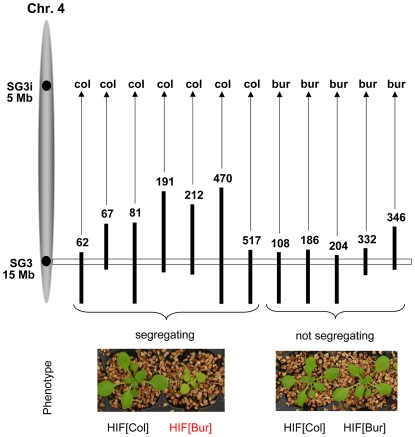
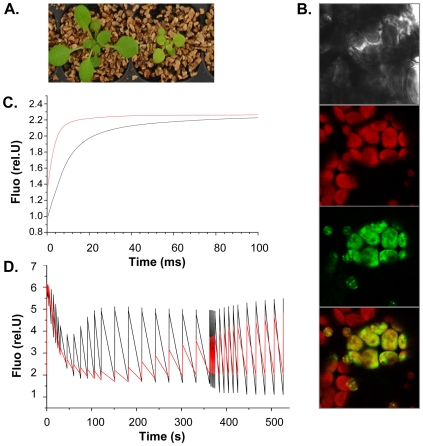
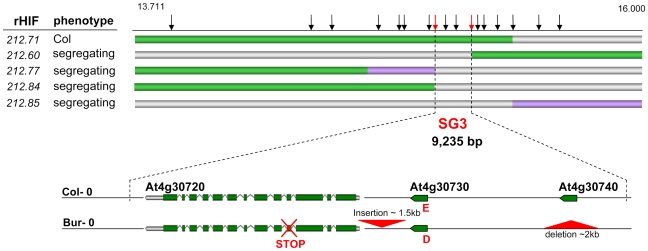
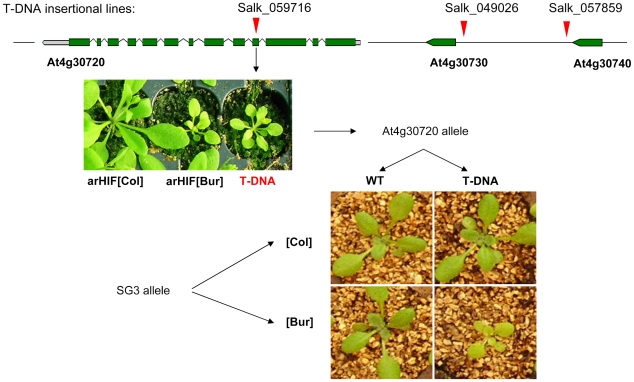
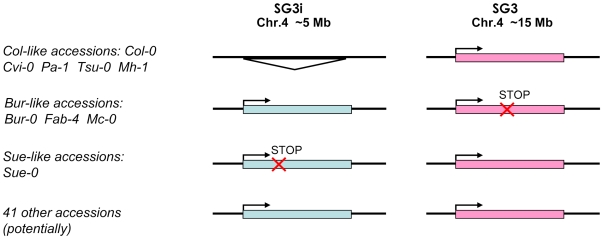
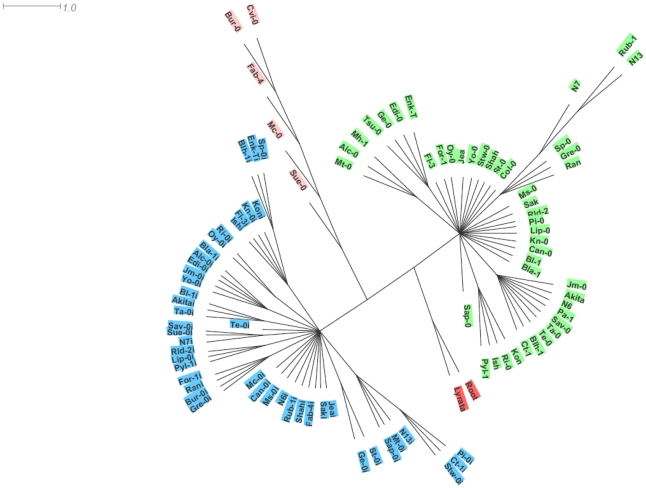
A major challenge in biology is to identify molecular polymorphisms responsible for variation in complex traits of evolutionary and agricultural interest. Using the advantages of Arabidopsis thaliana as a model species, we sought to identify new genes and genetic mechanisms underlying natural variation for shoot growth using quantitative genetic strategies. More quantitative trait loci (QTL) still need be resolved to draw a general picture as to how and where in the pathways adaptation is shaping natural variation and the type of molecular variation involved. Phenotypic variation for shoot growth in the Bur-0 x Col-0 recombinant inbred line set was decomposed into several QTLs. Nearly-isogenic lines generated from the residual heterozygosity segregating among lines revealed an even more complex picture, with major variation controlled by opposite linked loci and masked by the segregation bias due to the defective phenotype of SG3 (Shoot Growth-3), as well as epistasis with SG3i (SG3-interactor). Using principally a fine-mapping strategy, we have identified the underlying gene causing phenotypic variation at SG3: At4g30720 codes for a new chloroplast-located protein essential to ensure a correct electron flow through the photosynthetic chain and, hence, photosynthesis efficiency and normal growth. The SG3/SG3i interaction is the result of a structural polymorphism originating from the duplication of the gene followed by divergent paralogue's loss between parental accessions. Species-wide, our results illustrate the very dynamic rate of duplication/transposition, even over short periods of time, resulting in several divergent--but still functional-combinations of alleles fixed in different backgrounds. In predominantly selfing species like Arabidopsis, this variation remains hidden in wild populations but is potentially revealed when divergent individuals outcross. This work highlights the need for improved tools and algorithms to resolve structural variation polymorphisms using high-throughput sequencing, because it remains challenging to distinguish allelic from paralogous variation at this scale.
生物学的一个主要挑战是确定导致进化和农业感兴趣的复杂性状变异的分子多态性。利用拟南芥作为模式物种的优势,我们试图使用定量遗传策略来识别新的基因和遗传机制,这些基因和遗传机制是导致茎生长自然变异的基础。还需要更多的数量性状位点(QTL)来描绘一幅总体图景,说明适应是如何以及在哪些途径中塑造自然变异以及涉及的分子变异类型。在 Bur-0 x Col-0 重组自交系群体中茎生长的表型变异被分解为几个 QTL。从系间分离的剩余杂合子中产生的近等基因系揭示了更为复杂的情况,主要变异由相反连锁的位点控制,并因 SG3(茎生长 3)的缺陷表型以及与 SG3i(SG3 相互作用因子)的上位性而被掩盖。主要采用精细定位策略,我们确定了导致 SG3 表型变异的潜在基因:At4g30720 编码一种新的质体定位蛋白,对于确保通过光合作用链的正确电子流,从而确保光合作用效率和正常生长是必不可少的。SG3/SG3i 相互作用是基因重复的结构多态性的结果,随后在亲本品系之间发生了分歧的同源基因的丢失。在广泛的物种中,我们的结果说明了重复/转位的动态速率,即使在短时间内,也会导致在不同背景下固定的几个分歧但仍然功能组合的等位基因。在像拟南芥这样主要自交的物种中,这种变异在野生种群中是隐藏的,但当分歧的个体杂交时,这种变异可能会显现出来。这项工作强调了需要改进的工具和算法来使用高通量测序来解决结构变异多态性,因为在这种规模下区分等位基因和同源基因的变异仍然具有挑战性。