Program in BioMolecular Research, King Faisal Specialist Hospital and Research Center, Riyadh, 11211, Saudi Arabia.
Cell Mol Life Sci. 2010 Sep;67(17):2937-55. doi: 10.1007/s00018-010-0383-x. Epub 2010 May 22.
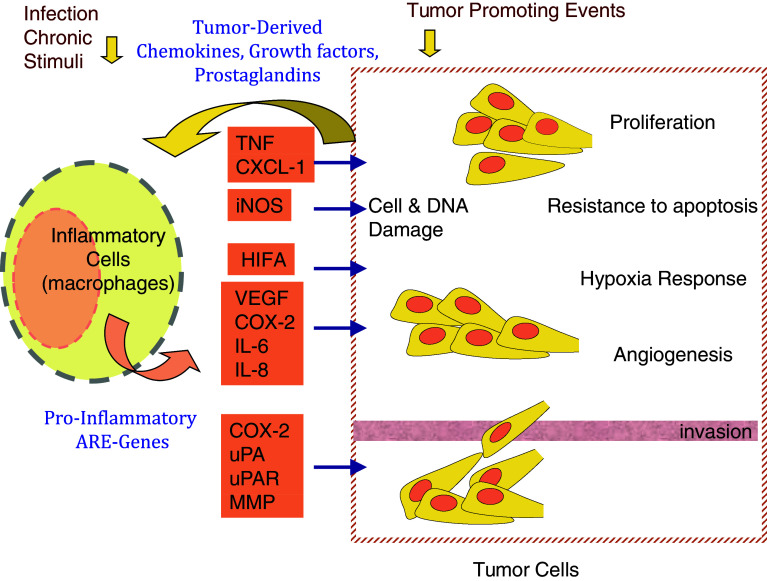
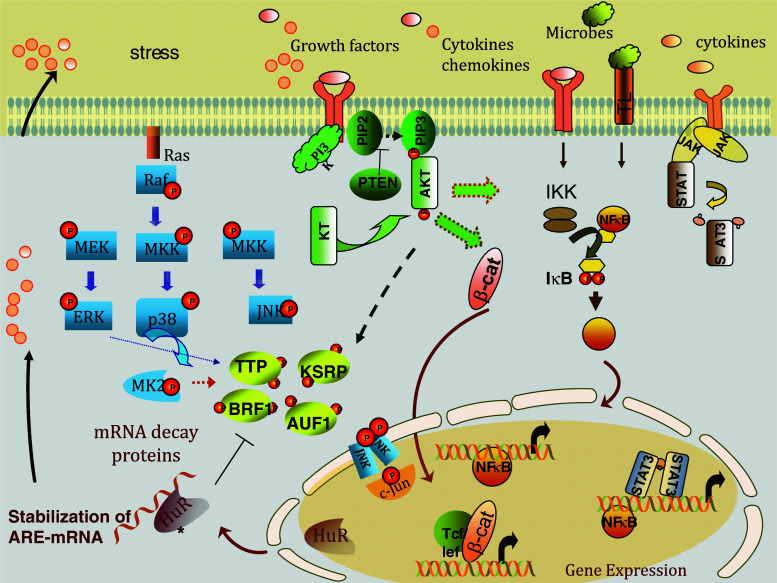
A considerable number of genes that code for AU-rich mRNAs including cytokines, growth factors, transcriptional factors, and certain receptors are involved in both chronic inflammation and cancer. Overexpression of these genes is affected by aberrations or by prolonged activation of several signaling pathways. AU-rich elements (ARE) are important cis-acting short sequences in the 3'UTR that mediate recognition of an array of RNA-binding proteins and affect mRNA stability and translation. This review addresses the cellular and molecular mechanisms that are common between inflammation and cancer and that also govern ARE-mediated post-transcriptional control. The first part examines the role of the ARE-genes in inflammation and cancer and sequence characteristics of AU-rich elements. The second part addresses the common signaling pathways in inflammation and cancer that regulate the ARE-mediated pathways and how their deregulations affect ARE-gene regulation and disease outcome.
相当数量的编码 AU 丰富 mRNAs 的基因,包括细胞因子、生长因子、转录因子和某些受体,都参与了慢性炎症和癌症。这些基因的过度表达受到异常或几种信号通路的长期激活的影响。富含 AU 的元件(ARE)是 3'UTR 中重要的顺式作用短序列,介导对一系列 RNA 结合蛋白的识别,并影响 mRNA 稳定性和翻译。这篇综述讨论了炎症和癌症之间以及控制 ARE 介导的转录后控制的常见细胞和分子机制。第一部分研究了 ARE 基因在炎症和癌症中的作用以及 AU 丰富元件的序列特征。第二部分讨论了调节 ARE 介导途径的炎症和癌症中的常见信号通路,以及它们的失调如何影响 ARE 基因的调节和疾病结果。