Zhu Zijian, Jiang Lai, Ding Xianting
State Key Laboratory of Oncogenes and Related Genes, Institute for Personalized Medicine, Shanghai Jiao Tong University, Shanghai 200030, China.
Department of Anesthesiology and Surgical Intensive Care Unit, Xinhua Hospital, School of Medicine and School of Biomedical Engineering, Shanghai Jiao Tong University, Shanghai 200025, China.
Cancers (Basel). 2023 Aug 18;15(16):4164. doi: 10.3390/cancers15164164.
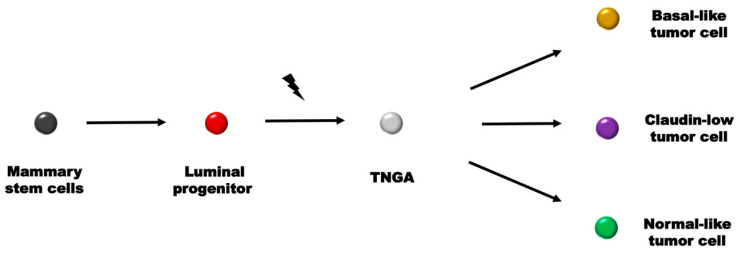
Breast cancer continues to pose a significant healthcare challenge worldwide for its inherent molecular heterogeneity. This review offers an in-depth assessment of the molecular profiling undertaken to understand this heterogeneity, focusing on multi-omics strategies applied both in traditional bulk and single-cell levels. Genomic investigations have profoundly informed our comprehension of breast cancer, enabling its categorization into six intrinsic molecular subtypes. Beyond genomics, transcriptomics has rendered deeper insights into the gene expression landscape of breast cancer cells. It has also facilitated the formulation of more precise predictive and prognostic models, thereby enriching the field of personalized medicine in breast cancer. The comparison between traditional and single-cell transcriptomics has identified unique gene expression patterns and facilitated the understanding of cell-to-cell variability. Proteomics provides further insights into breast cancer subtypes by illuminating intricate protein expression patterns and their post-translational modifications. The adoption of single-cell proteomics has been instrumental in this regard, revealing the complex dynamics of protein regulation and interaction. Despite these advancements, this review underscores the need for a holistic integration of multiple 'omics' strategies to fully decipher breast cancer heterogeneity. Such integration not only ensures a comprehensive understanding of breast cancer's molecular complexities, but also promotes the development of personalized treatment strategies.
乳腺癌因其固有的分子异质性,在全球范围内仍然构成重大的医疗挑战。本综述对为理解这种异质性而进行的分子谱分析进行了深入评估,重点关注在传统批量和单细胞水平上应用的多组学策略。基因组研究极大地增进了我们对乳腺癌的理解,使其能够被分为六种内在分子亚型。除了基因组学,转录组学对乳腺癌细胞的基因表达图谱有了更深入的见解。它还促进了更精确的预测和预后模型的建立,从而丰富了乳腺癌个性化医疗领域。传统转录组学和单细胞转录组学之间的比较确定了独特的基因表达模式,并有助于理解细胞间的变异性。蛋白质组学通过揭示复杂的蛋白质表达模式及其翻译后修饰,进一步深入了解乳腺癌亚型。在这方面,单细胞蛋白质组学的应用发挥了重要作用,揭示了蛋白质调控和相互作用的复杂动态。尽管取得了这些进展,但本综述强调需要对多种“组学”策略进行全面整合,以充分解读乳腺癌的异质性。这种整合不仅能确保全面理解乳腺癌的分子复杂性,还能促进个性化治疗策略的发展。