IFEVA, Facultad de Agronomía, Universidad de Buenos Aires, and Consejo Nacional de Investigaciones Científicas y Técnicas (CONICET), 1417-Buenos Aires, Argentina.
J Exp Bot. 2010 Jun;61(11):3151-62. doi: 10.1093/jxb/erq140. Epub 2010 May 23.
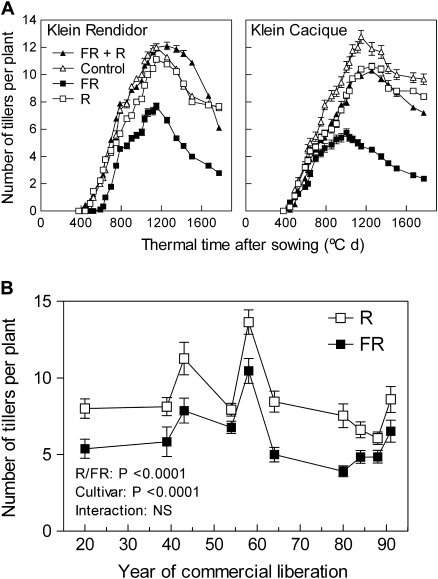
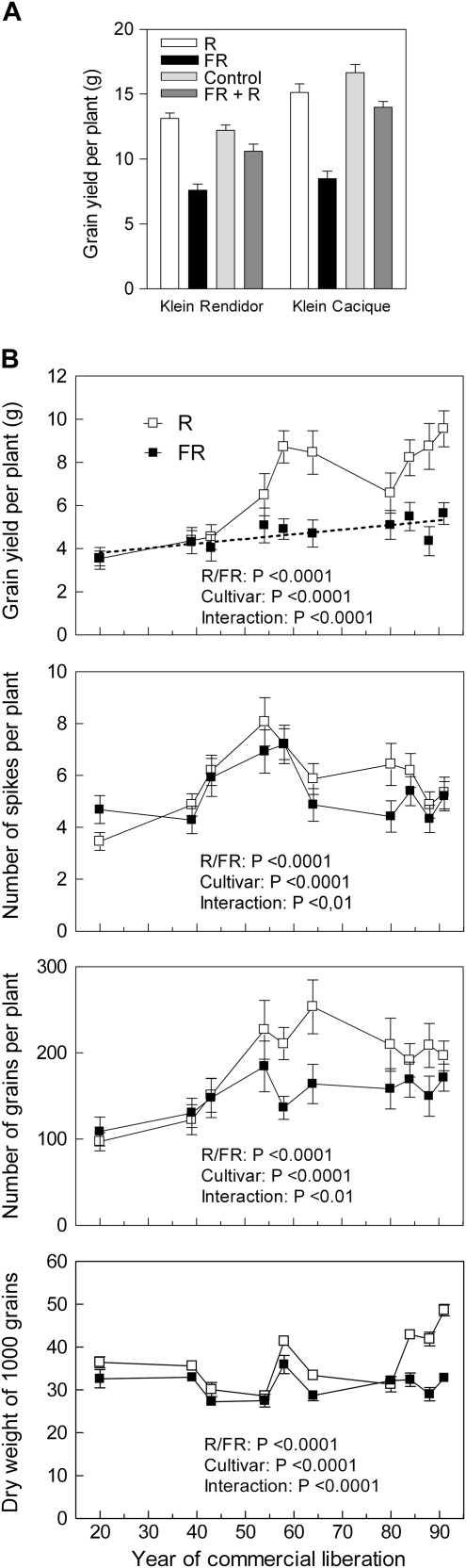
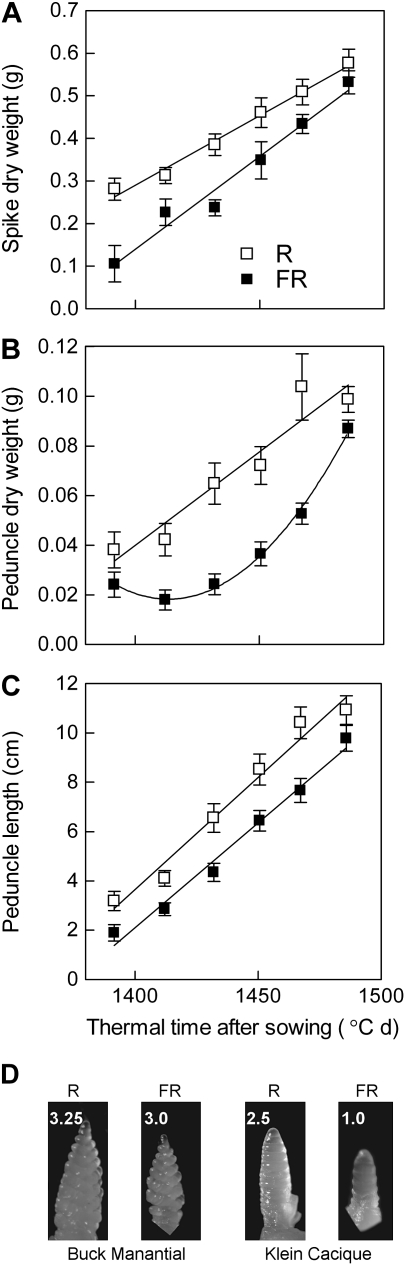
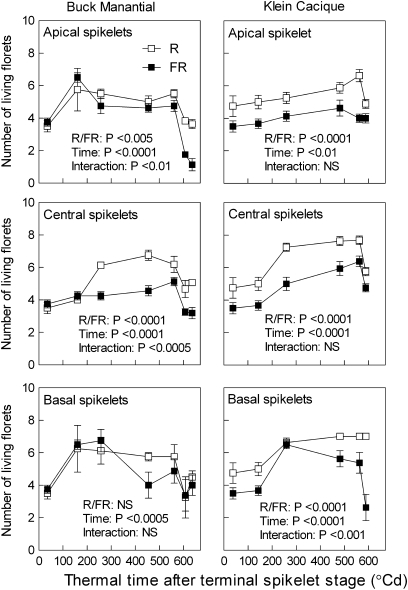
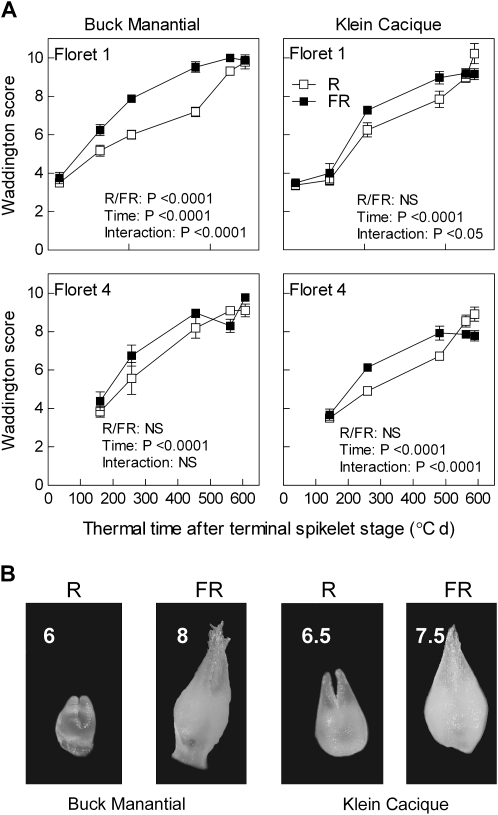
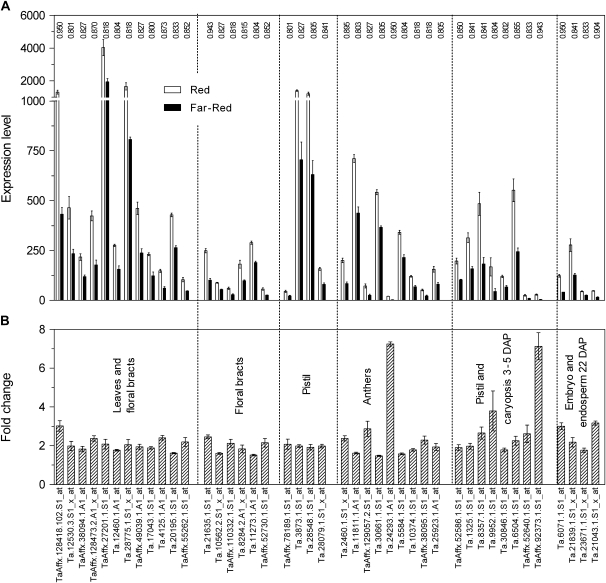
The responses to low red light/far-red light (R/FR) ratios simulating dense stands were evaluated in wheat (Triticum aestivum L) cultivars released at different times in the 20th century and consequently resulting from an increasingly prolonged breeding and selection history. While tillering responses to the R/FR ratio were unaffected by the cultivars, low R/FR ratios reduced grain yield per plant (primarily grain number and secondarily grain weight per plant) particularly in modern cultivars. Low R/FR ratios delayed spike growth and development, reduced the expression of spike marker genes, accelerated the development of florets already initiated, and reduced the number of fertile florets at anthesis. It is noteworthy that low R/FR ratios did not promote stem or leaf sheath growth and therefore the observed reduction of yield cannot be accounted for as a consequence of divergence of resources towards increased plant stature. It is proposed that the regulation of yield components by the R/FR ratio could help plants to adjust to the limited availability of resources under crop conditions.
模拟高密度群体的低红光/远红光(R/FR)比值的响应在不同时间发布的 20 世纪小麦(Triticum aestivum L)品种中进行了评估,这些品种由于不断延长的选育和选择历史而产生。虽然分蘖对 R/FR 比值的响应不受品种的影响,但低 R/FR 比值降低了每株植物的籽粒产量(主要是籽粒数量,其次是每株植物的籽粒重量),特别是在现代品种中。低 R/FR 比值延迟了穗的生长和发育,降低了穗标记基因的表达,加速了已经启动的小花的发育,并减少了开花期可育小花的数量。值得注意的是,低 R/FR 比值并没有促进茎或叶鞘的生长,因此观察到的产量下降不能归因于资源向增加植物株高的方向发散。有人提出,R/FR 比值对产量构成因素的调节可以帮助植物在作物条件下有限的资源供应下进行调整。